
Key points
At a steady red light, stop before the stop line or crosswalk, or before the intersection if there are no lines.
Source: Handbook p. 7
“When there is a STEADY RED LIGHT, you must stop before crossing the marked stop line or crosswalk. If you do not see any lines, stop before entering the intersection.”
Pennsylvania Driver's Manual (PUB 95), Handbook p. 7A steady red arrow means you must stop and may not turn in the arrow's direction.
Source: Handbook p. 7
“A STEADY RED ARROW means you must stop and may not turn in the direction the arrow points.”
Pennsylvania Driver's Manual (PUB 95), Handbook p. 7A flashing red light means the same as a STOP sign: come to a complete stop.
Source: Handbook p. 8
“A flashing red light has the same meaning as a STOP sign. You must come to a complete stop.”
Pennsylvania Driver's Manual (PUB 95), Handbook p. 8A flashing yellow arrow lets you turn with caution, but first yield to oncoming traffic and pedestrians.
Source: Handbook p. 8
“A FLASHING YELLOW ARROW means you may turn in the direction of the arrow with caution, however, you must first yield to oncoming traffic and pedestrians.”
Pennsylvania Driver's Manual (PUB 95), Handbook p. 8If a green arrow becomes a green light, you may still turn, but first yield to pedestrians and oncoming traffic.
Source: Handbook p. 7
“If the green arrow turns into a green light, you may still turn in that direction, but first yield to pedestrians and oncoming traffic.”
Pennsylvania Driver's Manual (PUB 95), Handbook p. 7On a single lane ramp meter, only one car may enter each time the light turns green.
Source: Handbook p. 8
“On single-lane ramps, only one (1) car may enter the highway each time the light turns green.”
Pennsylvania Driver's Manual (PUB 95), Handbook p. 8A steady yellow X over a lane means change lanes; that lane's direction is about to reverse.
Source: Handbook p. 8
“A steady yellow “X” over a traffic lane means you must change lanes because the direction of travel for that lane is about to be reversed.”
Pennsylvania Driver's Manual (PUB 95), Handbook p. 8Near a blind pedestrian with a white cane or guide dog, slow down, always yield and then proceed with caution.
Source: Handbook p. 9
“When driving near a blind pedestrian who is carrying a white cane or walking with a guide dog, you must slow down, always yield the right-of-way and then proceed with caution.”
Pennsylvania Driver's Manual (PUB 95), Handbook p. 9Never stop your vehicle on a railroad track, whether or not a train seems to be coming.
Source: Handbook p. 9
“Do not stop your vehicle on a railroad track, regardless of whether a train appears to be coming.”
Pennsylvania Driver's Manual (PUB 95), Handbook p. 9
Numbers to know
| Number | What it means | Manual |
|---|---|---|
| 1 car | vehicles allowed per green on a single lane ramp | Handbook p. 8 |
Recognize these signs
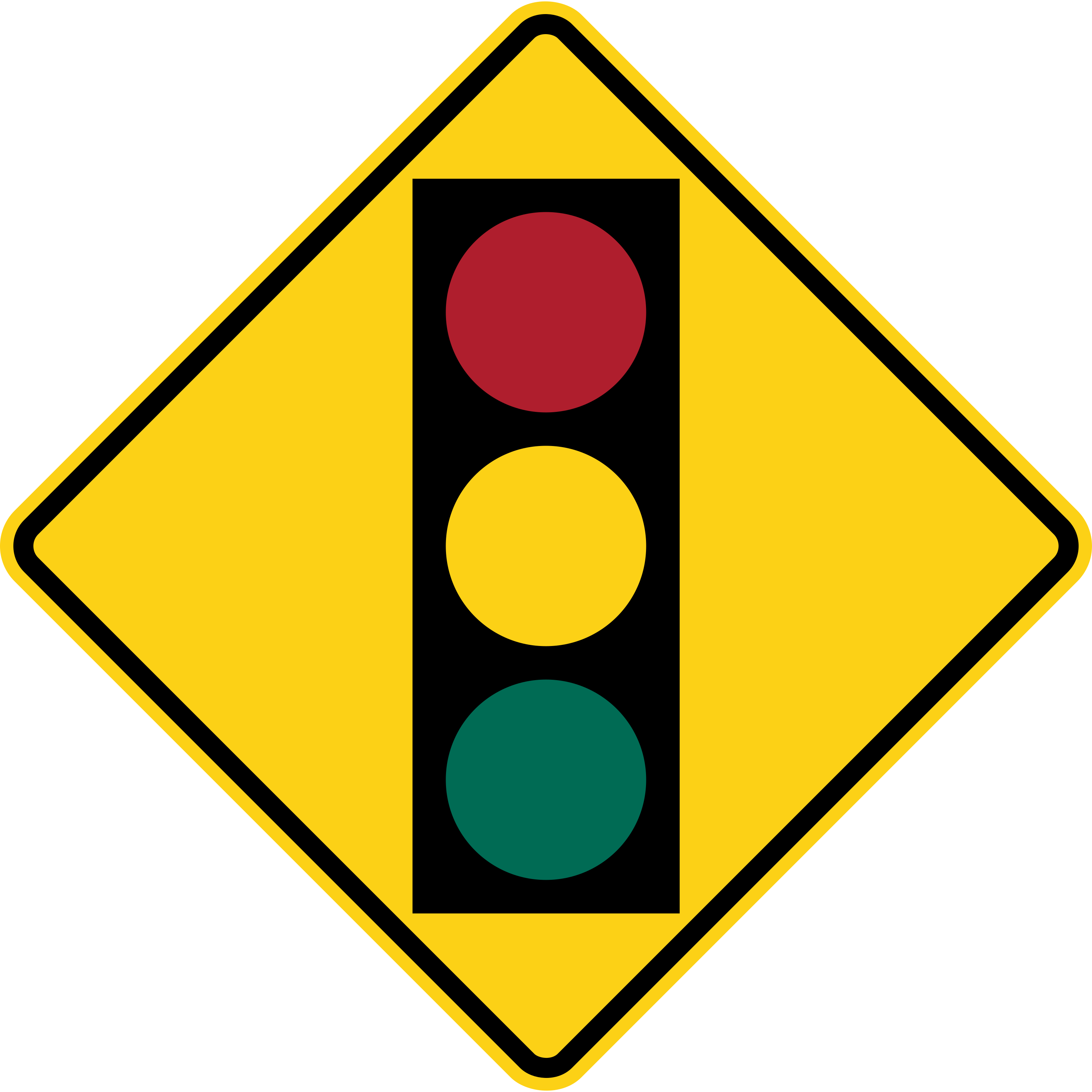
Signal ahead
3 questions from the Pennsylvania practice test
1. How must a Pennsylvania driver respond to a flashing red traffic signal?
- Make a complete stop, then proceed only after the intersection is clear
- Yield only to vehicles approaching from the left
- Wait for the signal to turn solid green
- Slow down and continue without stopping
Show answer
Make a complete stop, then proceed only after the intersection is clear. Pennsylvania gives a flashing red light the same force as a STOP sign. The driver must stop completely, look both ways, and move only after the intersection is clear. Merely slowing down leaves the required stop undone, and checking only traffic from the left overlooks hazards from the other direction. Waiting for a solid green is unnecessary because the signal already supplies stop-control instructions. Treat the indication like a stop sign, scan for vehicles and pedestrians, and proceed when the crossing is safe.
2. At a steady red light in Pennsylvania, where should you stop before waiting for permission to proceed?
- Before the marked stop line or crosswalk
- At the far side of the intersection after checking traffic
- Only when a vehicle is approaching from the side
- After entering the intersection, beside the cross street
Show answer
Before the marked stop line or crosswalk. Pennsylvania places the stopping point before the marked stop line or crosswalk. If neither is visible, stop before entering the intersection, then wait for a green light. The tempting idea of stopping after entering the junction leaves the vehicle in the conflict area and ignores the stated location. A clear cue is the first painted line: the front of the vehicle must not pass it while stopping. A permitted turn on red does not remove the initial stop or the duty to yield afterward.
3. On a two-way street, a steady red arrow pointing left is lit at a Pennsylvania traffic signal. What is required?
- Treat the arrow as a flashing yellow arrow
- Turn left after yielding to oncoming traffic
- Continue straight through the intersection
- Stop and do not turn left until a permitted signal appears
Show answer
Stop and do not turn left until a permitted signal appears. A STEADY RED ARROW means you must stop and may not turn in the direction the arrow points; wait for a Green Arrow or a Flashing Yellow Arrow before you start the left turn. The manual adds that the same turns-on-red allowed at a steady red light are allowed at a red arrow, but the only left turn on red it permits is from a one-way street onto another one-way street, so it does not apply on a two-way street. Yielding to oncoming traffic is the rule for a flashing yellow arrow, not a red one.
Practice this topic
Lock it in with signals and markings questions from the free Pennsylvania practice test. Every answer comes with a plain English explanation.
Source: the Pennsylvania Driver's Manual (PUB 95), Chapter 2: Signals, Signs and Pavement Markings. This lesson is a plain English summary, not the law itself; where it differs, the manual and the statute govern. Last checked 2026-09-27.