
Printable NE Permit Practice Test
25 questions in the real NE exam format, 80 percent (20 of 25) to pass. Answer key on the last page. Last verified 2026-09-05 against the official Nebraska driver manual.
1. What should a driver check immediately before changing lanes?
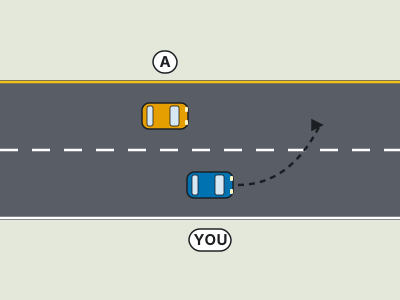
- The destination before using a turn signal
- Only the rearview mirror
- Mirrors, the shoulder blind spot, and other drivers moving into the lane
- The lane ahead without looking beside the vehicle
2. Which roadside vehicles are included in Nebraska's Move Over rule when they are stopped on a controlled-access highway with flashing lights?
- Only marked police cars and ambulances
- Only privately owned tow trucks
- Any vehicle stopped on a highway, whether or not its lights are flashing
- Emergency, road assistance, utility, highway maintenance, and waste or recycling collection vehicles
3. How large a point credit can a Nebraska driver earn by completing a DMV approved driver improvement course before reaching 12 points, and how often?
- 3 points, once a year
- 4 points, once every three years
- 2 points, once every five years
- 6 points, with no limit
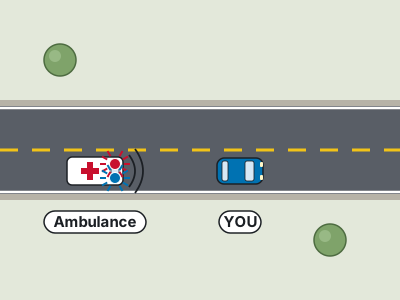
4. When an authorized emergency vehicle activates its siren or flashing lights, where should other drivers stop?
- Anywhere in the lane if the driver turns on hazard lights
- In the center of the nearest intersection
- Along the left edge, facing oncoming traffic
- As close as possible to the right edge or curb, clear of intersections
5. If a driver becomes stranded in a blizzard, which action does the Nebraska manual advise?
- Walk away from the vehicle immediately to find help
- Stay with the vehicle and conserve fuel
- Run the engine continuously with all windows closed
- Park in the travel lane and leave the emergency flashers off
6. How long does a Nebraska Learner's Permit, or LPD, last from its date of issuance?
- Six months
- Two years
- Eighteen months
- One year
7. After stopping for an authorized emergency vehicle, when may the driver proceed?
- As soon as the siren becomes quieter
- After it has passed and the driver checks for other emergency vehicles
- When the vehicle ahead begins moving, without looking again
- Immediately if the stopped vehicle is blocking traffic
8. What does Nebraska prohibit while a motor vehicle is in motion under its graduated driver licensing restrictions?
- Any use of an interactive wireless communication device
- Listening to a radio broadcast
- Using a vehicle's climate controls before moving
- Speaking to a passenger
9. What should a driver do after leaving a protected area and entering an open space during high winds?
- Accelerate to reduce the effect of the wind
- Release the steering wheel so the vehicle can self-correct
- Be ready to make steering corrections as the wind changes
- Move beside a large truck for shelter
10. What BAC threshold applies in Nebraska when a person is operating a commercial motor vehicle?
- .04% or higher
- .02% or higher
- .06% or higher
- .08% or higher only
11. Until what point should a Nebraska child ride rear-facing in a safety seat?
- Until age two or the seat's upper height or weight limit is reached
- Until age eight in every case
- Only until the child can walk
- Until age twelve regardless of the manufacturer's limits
12. How far before turning or moving right or left should a Nebraska driver signal?
- At least 25 feet before the movement
- Only after beginning the turn
- At least 100 feet before the movement
- Only when another vehicle is directly behind
13. A yellow warning sign showing a small STOP sign tells you what is ahead?

- An approaching stop sign
- A new passing lane
- A railroad crossing with gates
- A reduced speed zone only
14. An underage Nebraska driver's license is impounded for a .02% conviction, and the driver is convicted of driving during that impoundment. What does the court do?
- Extends the impoundment by 30 days
- Revokes the license for six months
- Revokes the license for one year
- Adds 12 points to the record
15. What is the minimum age for a Nebraska School Learner's Permit, or LPE?
- 14
- 13
- 15
- 16
16. Before entering a roundabout, to which traffic must a driver yield?
- All traffic on the driver's left already in the roundabout
- Only traffic approaching from the right
- No traffic because entering vehicles have priority
- Only large trucks using the outer lane
17. On a Nebraska multi lane controlled access highway, what lane change does the Move Over law require when you approach a stopped emergency or road assistance vehicle with flashing lights?
- Move onto the shoulder beside the stopped vehicle
- Move into a lane at least one travel lane away
- Stay in the same lane and sound the horn
- Cross two lanes even when the nearest lane is occupied
18. What does a yellow diamond-shaped sign warn a driver about?
- A motorist service such as a hospital
- A mandatory speed limit that applies immediately
- Special conditions or hazards ahead
- A recreation or cultural interest area
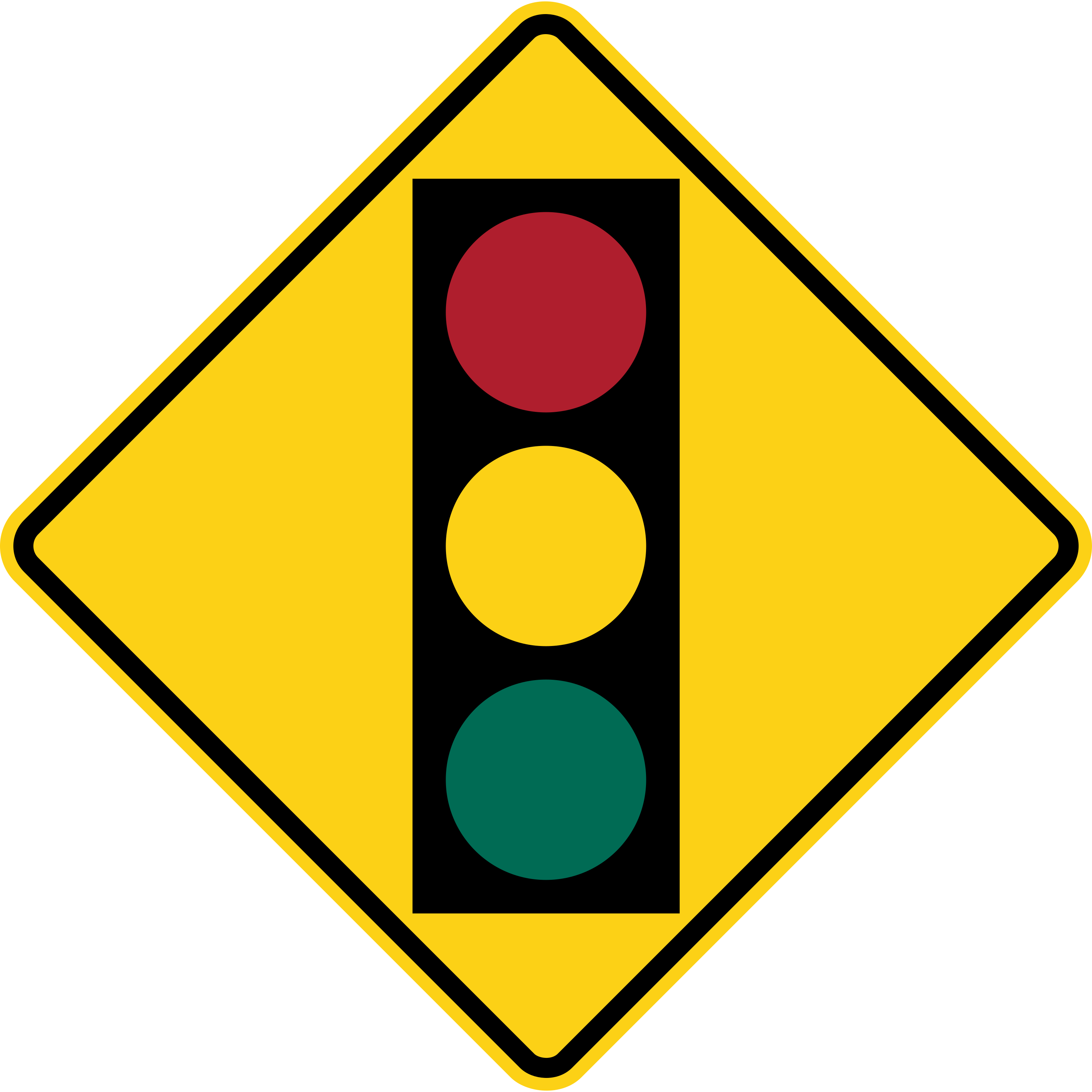
19. What does the traffic signal warning sign shown indicate?
- The next signal is permanently out of service
- A traffic signal is ahead
- A police checkpoint is required ahead
- Streetlights will replace the next intersection signal
20. What range does the Nebraska manual give for the fine for texting and driving?
- $200 to $500
- $100 to $200
- $25 to $100
- $500 to $1,000
21. How far does an average 150 car freight train need to stop from 30 mph, according to the Nebraska manual?
- 300 feet
- One car length
- 10 miles
- 3,150 feet, about three fifths of a mile
22. Why should drivers be alert for steering corrections when meeting a large truck or bus in high wind?
- Large vehicles are allowed to cross the centerline in wind
- Sudden wind changes can affect both vehicles
- Wind makes trucks stop instantly
- The truck's headlights make the road narrower
23. On a multi lane controlled access highway, what is required near a stopped vehicle with flashing lights when a lane change is possible?
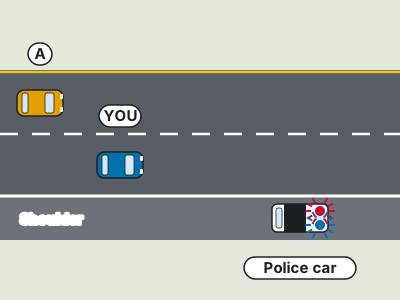
- Move at least one travel lane away from the stopped vehicle
- Stop in the lane next to the stopped vehicle
- Pass at the normal speed without changing lanes
- Use the shoulder to get around the stopped vehicle
24. When are Nebraska handicapped parking stalls reserved for permit holders?
- Only during business hours
- 24 hours a day, 7 days a week
- Only when the lot is full
- Only on weekdays
25. In the manual's example, if car A turns left, which cars must car A yield to?
- Only car B
- Both cars B and C
- Neither car B nor car C
- Only pedestrians
Answer key
- 1. C
- 2. D
- 3. C
- 4. D
- 5. B
- 6. D
- 7. B
- 8. A
- 9. C
- 10. A
- 11. A
- 12. C
- 13. A
- 14. B
- 15. A
- 16. A
- 17. B
- 18. C
- 19. B
- 20. A
- 21. D
- 22. B
- 23. A
- 24. B
- 25. B