
Printable HI Permit Practice Test
30 questions in the real HI exam format, 80 percent (24 of 30) to pass. Answer key on the last page. Last verified 2026-09-05 against the official Hawaii driver manual.
1. What must a driver do when a steady yellow X lane-control signal is displayed?
- Enter the lane and maintain speed
- Move out because the lane will be used for opposite-direction traffic
- Use the lane for passing only
- Stop in the lane and wait for a red X
2. After this HILL warning sign the road drops down a steep grade. According to the Hawaii manual, when should you downshift for engine braking?

- Before starting the downgrade
- Halfway down, once the vehicle has gained speed
- Only after the brakes begin to fade
- At the bottom of the hill
3. What temporary permit does Hawaii describe for a driver who tests at .08 percent BAC or higher?
- A 7 day permit with no restrictions
- A 30 day temporary driving permit
- A 90 day commercial permit
- No temporary permit is issued
4. What maneuver is prohibited by the sign shown here?
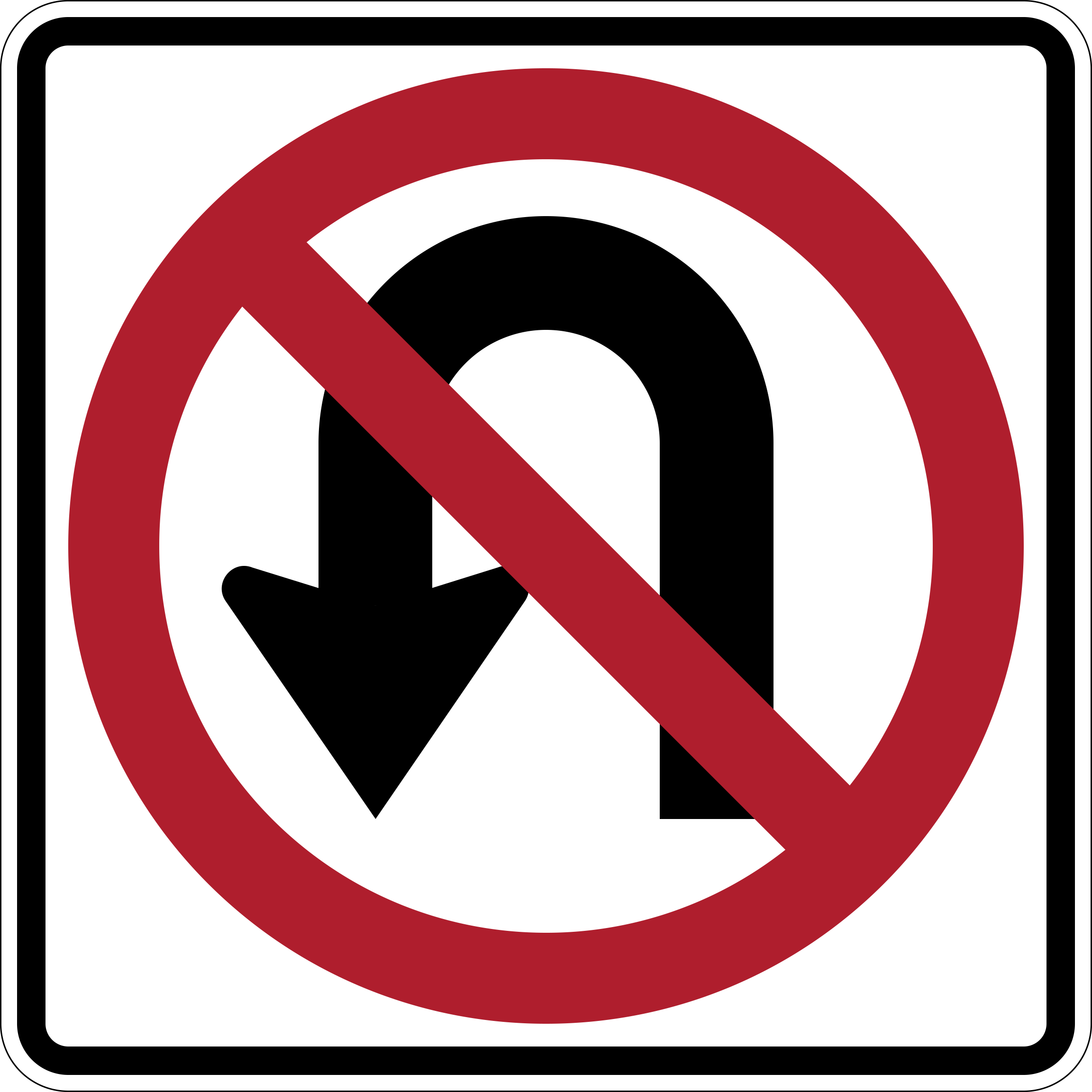
- Driving straight through the controlled lane
- Making any left turn at the next intersection
- Passing a slower vehicle on a marked road
- Making a U-turn at that location
5. What license must a Hawaii driver under age 18 operate on before becoming eligible for a class 3 driver’s license?
- A provisional license
- A full class 3 license
- A commercial driver’s license
- A motorcycle license
6. A person with a white cane or a guide dog is in the roadway ahead. When must you stop?
- Always, regardless of the traffic signal or traffic situation
- Only when your signal is red
- Only when the person is in a marked crosswalk
- Only if the person raises the cane toward traffic
7. Under Hawaii's no fault insurance law, what medical bill amount opens the door to a lawsuit for bodily injury?
- Medical bills over $500
- Any amount, since you can sue for injury at any time
- Medical bills over $5,000
- No amount, since no fault law bars every injury lawsuit
8. What is the lowest BAC threshold for Hawaii's under-21 alcohol driving rule?
- .10 percent or more
- .08 percent or more
- .02 percent or more
- Only a BAC above .15 percent
9. Which Hawaii vehicles display a license plate on the rear only?
- Passenger cars
- Motorcycles, trailers and semitrailers
- Pickup trucks
- All vehicles registered in Hawaii
10. At what age may a person first obtain a Hawaii instruction permit?
- 15 1/2 years
- 14 years
- 18 years
- 19 years
11. According to the Hawaii manual, a driver with a blood alcohol content of more than .05 percent but less than .08 percent may be considered what?
- Under the influence of alcohol
- Completely unaffected by alcohol
- Sober once the driver drinks black coffee
- Impaired
12. What must a Hawaii permit holder do before operating on a highway with an instruction permit?
- Wait until age 16 even if the permit was properly issued
- Drive alone only during daylight hours
- Carry a school identification card instead of a supervising driver
- Drive only when accompanied by a licensed driver at least 21 years old
13. Before applying for a provisional license, how long must a minor hold a valid instruction permit?
- 90 days
- 30 days
- 180 days
- One full year
14. What must a minor under 18 provide before entering Hawaii’s graduated licensing program?
- Consent from any adult neighbor
- Parental consent from each living parent or legal guardian, unless married or emancipated
- Only a school principal’s signature
- No consent when the applicant has passed the vision test
15. What must a Hawaii instruction-permit applicant pass among the preliminary examinations?
- A written test on vehicle repairs and a parking-lot inspection
- Only a road test
- A vision screening test and a rules of the road test
- A medical test and a passenger-limit test
16. You are driving in fog. If you cannot see at least how far ahead should you pull completely off the pavement and stop?
- One car length, about 20 feet
- 100 feet
- 500 feet
- Two car lengths, about 40 feet
17. What is the minimum age for a Hawaii provisional license?
- 16 years
- 15 1/2 years
- 17 years
- 18 years
18. When approaching a roundabout, to whom must an entering driver yield?
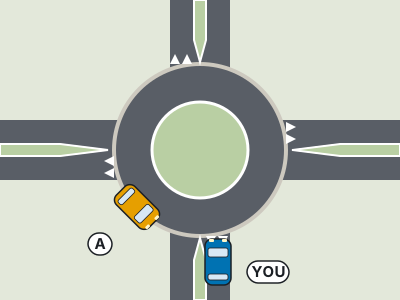
- Only vehicles entering from the left
- Vehicles waiting behind the entry line
- Traffic already circulating in the roundabout
- No one, because entering traffic has priority
19. The vehicle you provide for a Hawaii road test must have which documents?
- A current registration, a current safety inspection certificate and an insurance identification card
- Only a current registration
- The certificate of title and a bill of sale
- Only an insurance identification card
20. Which tests does the Hawaii manual list for a person applying for a driver's license or instruction permit?
- A medical examination, a parking test and a county interview
- Only a written rules test and a vehicle registration check
- Vision, rules of the road and practical road performance tests
- A highway-speed test, a fuel-economy test and a vision waiver
21. How much space should a motorist maintain when passing a bicyclist?
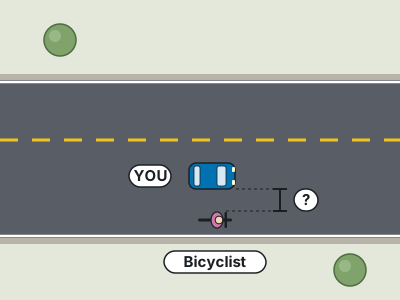
- No fixed space if the bicyclist is in a bike lane
- At least 6 inches until the front wheel clears
- One foot only when traffic is present
- At least 3 feet until safely past
22. When may a Hawaii provisional licensee drive between 11:00 p.m. and 5:00 a.m. under the ordinary nighttime rule?
- When accompanied by a licensed parent or guardian
- Whenever the licensee has no passengers
- Whenever the road is dry and well lit
- Only after holding the provisional license for six months
23. Which single vehicles require a Hawaii class above Category 3 but below a CDL?
- Any vehicle over 10,000 pounds
- Any single vehicle with a GVWR of 18,001 to 26,000 pounds
- Vehicles over 26,001 pounds
- Buses only
24. How many passengers under age 18 may a Hawaii provisional licensee transport when the passenger is not a household member?
- Only one
- Two
- Three
- As many as fit with seat belts
25. What action is prohibited by the red-circle sign shown here?
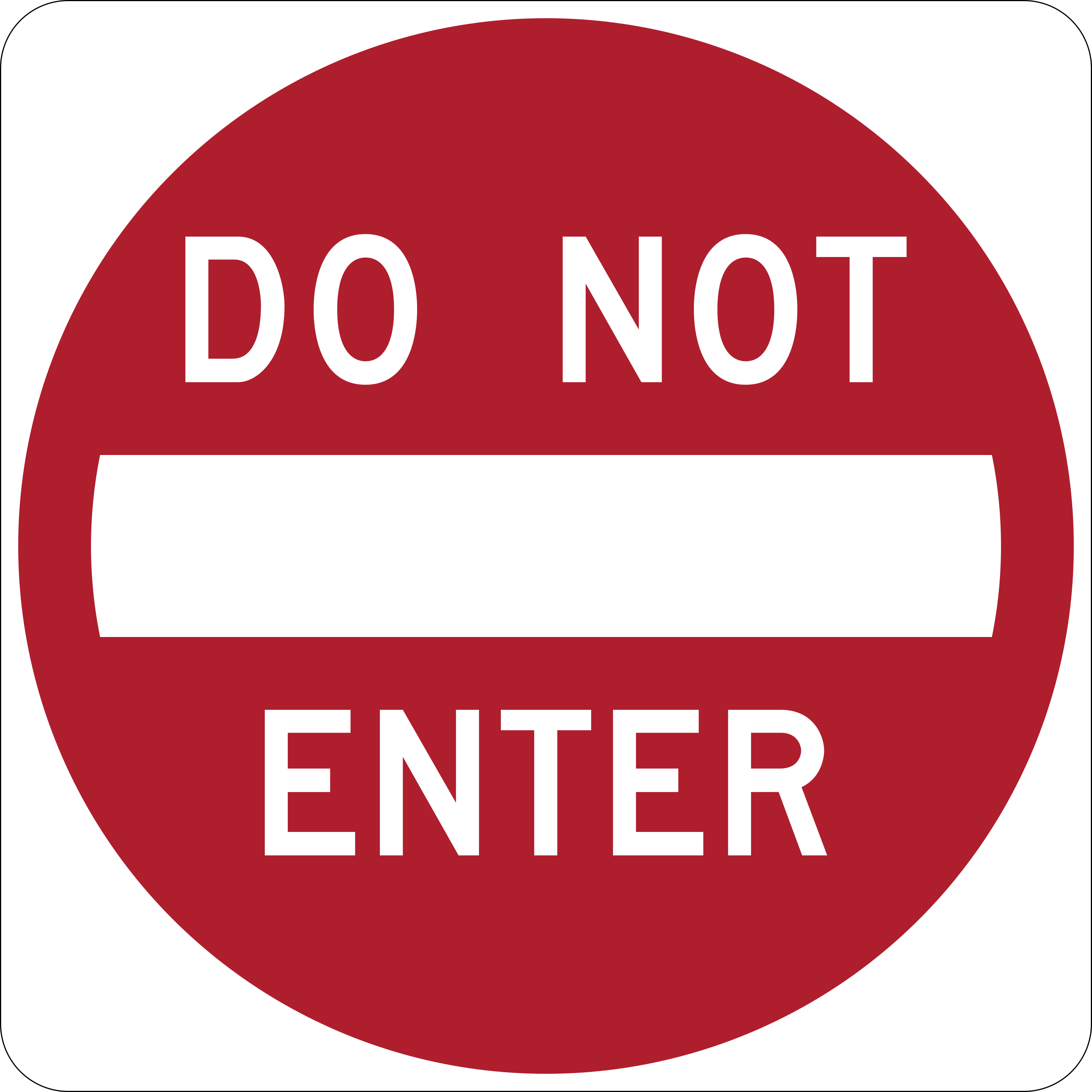
- Turning toward a marked public parking area
- Parking only during daylight hours
- Driving through a school zone at low speed
- Entering the restricted roadway or movement
26. When you stop in traffic behind another vehicle, how far back does the Hawaii manual say you should stop?
- Close enough to its bumper that no one can cut in
- Far enough back to see where its rear tires rest on the road
- Exactly one car length, regardless of the situation
- As close as possible to save space in the lane
27. If a vehicle begins to skid, what does the Hawaii manual recommend?

- Accelerate until the tires regain traction
- Apply the brakes sharply and turn hard
- Take immediate smooth corrective action
- Make a sudden steering change away from the skid
28. How many documents are required to prove principal residence in Hawaii for a REAL ID application?
- One document
- Two documents
- Three documents
- No residence document
29. What does the arrow on this ONE WAY sign tell the driver?

- Turn in that direction only after stopping at a red light
- Travel on the street only in the arrow’s direction
- Use the right lane only for passing
- Expect two-way traffic around the next corner
30. What do black and white traffic signs indicate in Hawaii?
- A guide to scenic areas
- A recreational destination
- A warning of road work
- A required action
Answer key
- 1. B
- 2. A
- 3. B
- 4. D
- 5. A
- 6. A
- 7. C
- 8. C
- 9. B
- 10. A
- 11. D
- 12. D
- 13. C
- 14. B
- 15. C
- 16. D
- 17. A
- 18. C
- 19. A
- 20. C
- 21. D
- 22. A
- 23. B
- 24. A
- 25. D
- 26. B
- 27. C
- 28. B
- 29. B
- 30. D