
QualitySpaceQualitySpace
Display
Auto follows your device setting.
Menu

25 question exam format · Real sign images & audio · Free

NE Permit Practice Test

Practice the Nebraska knowledge test the way it is actually given: 25 questions, 80 percent to pass. Every question has a plain English explanation and narrated audio. 220 questions in the bank, free, no account required.

Question bank
220
State
Nebraska
Format
Fixed question set
Cost
Free

The real Nebraska knowledge test is the DMV exam used for a learner permit. This page contains the full free 220 question study bank, with an explanation after each answer. Use the numbered 20 question tests below when you want a fixed study session.

The real Nebraska knowledge test: 25 questions on the Class O written test (applicant can miss 5); passing score 80% minimum on all written tests; on the 25-question Class O test that means 20 correct (can miss 5) (official source). This practice bank has 220 questions.

Alcohol and DUIEmergenciesLaws and paperworkParkingRight of wayRoad signsSafe drivingSignals and markingsSpeed limits

220-question bank · Sign images & explanations · Free

Nebraska practice test has 220 questions. Every question comes with a plain-English explanation the moment you answer.

Get a day by day study plan

Optional. Three quick answers; the tests below work without it.

Age on test day

No date yet? You get a 7 day plan.

Real exam format: 25 questions, 20 correct to pass.

Start here

Run 20 questions to warm up.

Find your gaps

Diagnose weak topics and retry what you've missed.

Simulate the real thing

Practice under graded exam conditions or run the whole bank.

Practice one topic

Drill a single topic, up to 20 questions with explanations.

Random draw and answer order every attempt. Scored against the real test's pass mark: 20 of 25 correct.

Free means actually free: no subscription, no auto-renew, no card required, no locked features. This site is funded by our insurance work, not by test-prep charges.

See facts and key topics for Nebraska DMV (minimum age, fees, wait times, question counts by topic) before you start, or print it to bring with you on test day.

Study the handbook, chapter by chapter: 27 short free lessons with the key rules, the exact numbers, and 3 check questions each, all quoted from the Nebraska manual.

How to use this NE practice test

  1. Take the 25 question exam-length practice test above once, untimed, to find your weak topics.
  2. Work through the numbered 20 question sets below. Each one is fixed, so a second attempt is a fair comparison.
  3. Read the explanation on every miss. The wording comes from the Nebraska Driver's Manual, which is what the examiners use.
  4. When you pass three sets in a row at 80 percent or better, book the real test.

NE practice tests, 20 questions each

Fixed sets in a fixed order so you can retake one and compare your score.

  1. Test 1
  2. Test 2
  3. Test 3
  4. Test 4
  5. Test 5
  6. Test 6
  7. Test 7
  8. Test 8
  9. Test 9
  10. Test 10
  11. Test 11

Printable NE practice test with answer key

Frequently asked questions

How many questions are in the Nebraska practice bank?

This free page contains the full 220 question bank. The numbered tests each contain 20 fixed questions.

How does this practice test relate to the real Nebraska test?

The real test facts are shown above from the official source. This page is an educational practice bank and is separate from the DMV test.

Can I use the Nebraska practice test for free?

Yes. The practice questions, explanations, and numbered tests are free to use with no account required.

Last verified 2026-09-05 against the Nebraska Driver's Manual, which sets the real exam at 25 questions and 20 correct to pass.

All 25 questions, NE exam length

Every question below comes from the Nebraska question bank on this page. Open a question to see the correct answer and the explanation. Nothing here is hidden behind a signup.

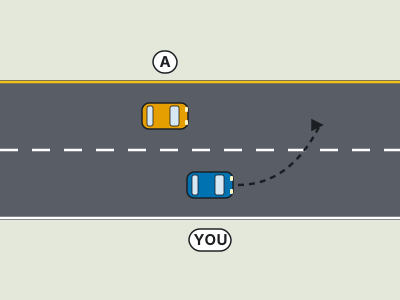
  1. 1. What should a driver check immediately before changing lanes?

    A road with two lanes going the same direction. Your car, blue, is in the right lane and plans to move into the left lane, shown by a dashed arrow. Car A, orange, is in the left lane, just behind your car's left side.
    1. The destination before using a turn signal
    2. Only the rearview mirror
    3. Mirrors, the shoulder blind spot, and other drivers moving into the lane
    4. The lane ahead without looking beside the vehicle
    Show answer

    Mirrors, the shoulder blind spot, and other drivers moving into the lane. Nebraska's lane-change sequence combines communication and observation. Full explanation in Test 1

  2. 2. Which roadside vehicles are included in Nebraska's Move Over rule when they are stopped on a controlled-access highway with flashing lights?

    1. Only marked police cars and ambulances
    2. Only privately owned tow trucks
    3. Any vehicle stopped on a highway, whether or not its lights are flashing
    4. Emergency, road assistance, utility, highway maintenance, and waste or recycling collection vehicles
    Show answer

    Emergency, road assistance, utility, highway maintenance, and waste or recycling collection vehicles. The Nebraska rule covers more than police vehicles. Full explanation in Test 2

  3. 3. How large a point credit can a Nebraska driver earn by completing a DMV approved driver improvement course before reaching 12 points, and how often?

    1. 3 points, once a year
    2. 4 points, once every three years
    3. 2 points, once every five years
    4. 6 points, with no limit
    Show answer

    2 points, once every five years. A driver who completes a DMV approved driver improvement course before 12 points are accumulated may receive a 2 point credit, and the credi Full explanation in Test 3

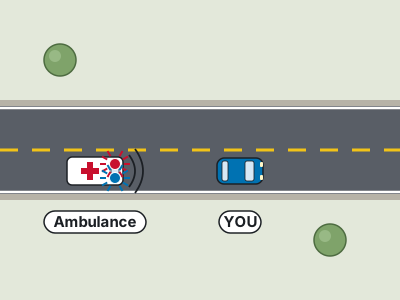
  4. 4. When an authorized emergency vehicle activates its siren or flashing lights, where should other drivers stop?

    A two-lane road with one lane in each direction. Your car, blue, is heading east. An ambulance with its red and blue lights flashing and its siren on is coming up behind your car in the same lane.
    1. Anywhere in the lane if the driver turns on hazard lights
    2. In the center of the nearest intersection
    3. Along the left edge, facing oncoming traffic
    4. As close as possible to the right edge or curb, clear of intersections
    Show answer

    As close as possible to the right edge or curb, clear of intersections. Nebraska requires other drivers to yield, move parallel and as close as possible to the right edge or curb, and stop clear of intersections Full explanation in Test 4

  5. 5. If a driver becomes stranded in a blizzard, which action does the Nebraska manual advise?

    1. Walk away from the vehicle immediately to find help
    2. Stay with the vehicle and conserve fuel
    3. Run the engine continuously with all windows closed
    4. Park in the travel lane and leave the emergency flashers off
    Show answer

    Stay with the vehicle and conserve fuel. A stranded vehicle provides shelter and is easier for work crews to locate than a person walking through a blizzard. Full explanation in Test 5

  6. 6. How long does a Nebraska Learner's Permit, or LPD, last from its date of issuance?

    1. Six months
    2. Two years
    3. Eighteen months
    4. One year
    Show answer

    One year. An LPD lasts one year after the date it is issued. Full explanation in Test 6

  7. 7. After stopping for an authorized emergency vehicle, when may the driver proceed?

    1. As soon as the siren becomes quieter
    2. After it has passed and the driver checks for other emergency vehicles
    3. When the vehicle ahead begins moving, without looking again
    4. Immediately if the stopped vehicle is blocking traffic
    Show answer

    After it has passed and the driver checks for other emergency vehicles. Stopping is only part of the emergency-vehicle response. Full explanation in Test 7

  8. 8. What does Nebraska prohibit while a motor vehicle is in motion under its graduated driver licensing restrictions?

    1. Any use of an interactive wireless communication device
    2. Listening to a radio broadcast
    3. Using a vehicle's climate controls before moving
    4. Speaking to a passenger
    Show answer

    Any use of an interactive wireless communication device. Nebraska's GDL restrictions prohibit use of any type of interactive wireless communication device while the motor vehicle is in motion. Full explanation in Test 8

  9. 9. What should a driver do after leaving a protected area and entering an open space during high winds?

    1. Accelerate to reduce the effect of the wind
    2. Release the steering wheel so the vehicle can self-correct
    3. Be ready to make steering corrections as the wind changes
    4. Move beside a large truck for shelter
    Show answer

    Be ready to make steering corrections as the wind changes. A protected area can hide wind that becomes noticeable as soon as the vehicle reaches an open stretch. Full explanation in Test 9

  10. 10. What BAC threshold applies in Nebraska when a person is operating a commercial motor vehicle?

    1. .04% or higher
    2. .02% or higher
    3. .06% or higher
    4. .08% or higher only
    Show answer

    .04% or higher. The manual lists .04% BAC or higher for operation of a commercial motor vehicle. That is lower than the general . Full explanation in Test 10

  11. 11. Until what point should a Nebraska child ride rear-facing in a safety seat?

    1. Until age two or the seat's upper height or weight limit is reached
    2. Until age eight in every case
    3. Only until the child can walk
    4. Until age twelve regardless of the manufacturer's limits
    Show answer

    Until age two or the seat's upper height or weight limit is reached. Nebraska says children should ride rear-facing up to age two or until they reach the upper height or weight limit allowed by the car-seat ma Full explanation in Test 11

  12. 12. How far before turning or moving right or left should a Nebraska driver signal?

    1. At least 25 feet before the movement
    2. Only after beginning the turn
    3. At least 100 feet before the movement
    4. Only when another vehicle is directly behind
    Show answer

    At least 100 feet before the movement. Nebraska's signaling guidance gives following drivers and other road users advance notice: signal at least 100 feet before turning or moving Full explanation in Test 1

  13. 13. A yellow warning sign showing a small STOP sign tells you what is ahead?

    Yellow sign showing a small STOP sign and arrow
    1. An approaching stop sign
    2. A new passing lane
    3. A railroad crossing with gates
    4. A reduced speed zone only
    Show answer

    An approaching stop sign. The Stop Ahead warning announces that an actual stop sign is approaching. Full explanation in Test 2

  14. 14. An underage Nebraska driver's license is impounded for a .02% conviction, and the driver is convicted of driving during that impoundment. What does the court do?

    1. Extends the impoundment by 30 days
    2. Revokes the license for six months
    3. Revokes the license for one year
    4. Adds 12 points to the record
    Show answer

    Revokes the license for six months. For an underage driver convicted of driving during the impoundment, the court revokes the license for six months. Full explanation in Test 3

  15. 15. What is the minimum age for a Nebraska School Learner's Permit, or LPE?

    1. 14
    2. 13
    3. 15
    4. 16
    Show answer

    14. A School Learner's Permit requires the applicant to be at least 14, and the manual says an application cannot be made before the 14th birthd Full explanation in Test 4

  16. 16. Before entering a roundabout, to which traffic must a driver yield?

    1. All traffic on the driver's left already in the roundabout
    2. Only traffic approaching from the right
    3. No traffic because entering vehicles have priority
    4. Only large trucks using the outer lane
    Show answer

    All traffic on the driver's left already in the roundabout. Drivers entering a Nebraska roundabout must yield to all traffic on the left that is already circulating. Full explanation in Test 5

  17. 17. When two or more lanes travel in the same direction, what lane change does Nebraska require when passing a stopped covered vehicle?

    1. Move onto the shoulder beside the stopped vehicle
    2. Move into a lane at least one travel lane away
    3. Stay in the same lane and sound the horn
    4. Cross two lanes even when the nearest lane is occupied
    Show answer

    Move into a lane at least one travel lane away. When a qualifying vehicle is stopped with flashing lights on a multi-lane controlled-access highway, the driver must move into a lane at lea Full explanation in Test 6

  18. 18. What does a yellow diamond-shaped sign warn a driver about?

    1. A motorist service such as a hospital
    2. A mandatory speed limit that applies immediately
    3. Special conditions or hazards ahead
    4. A recreation or cultural interest area
    Show answer

    Special conditions or hazards ahead. A yellow diamond is a warning sign for special conditions or hazards ahead. Full explanation in Test 7

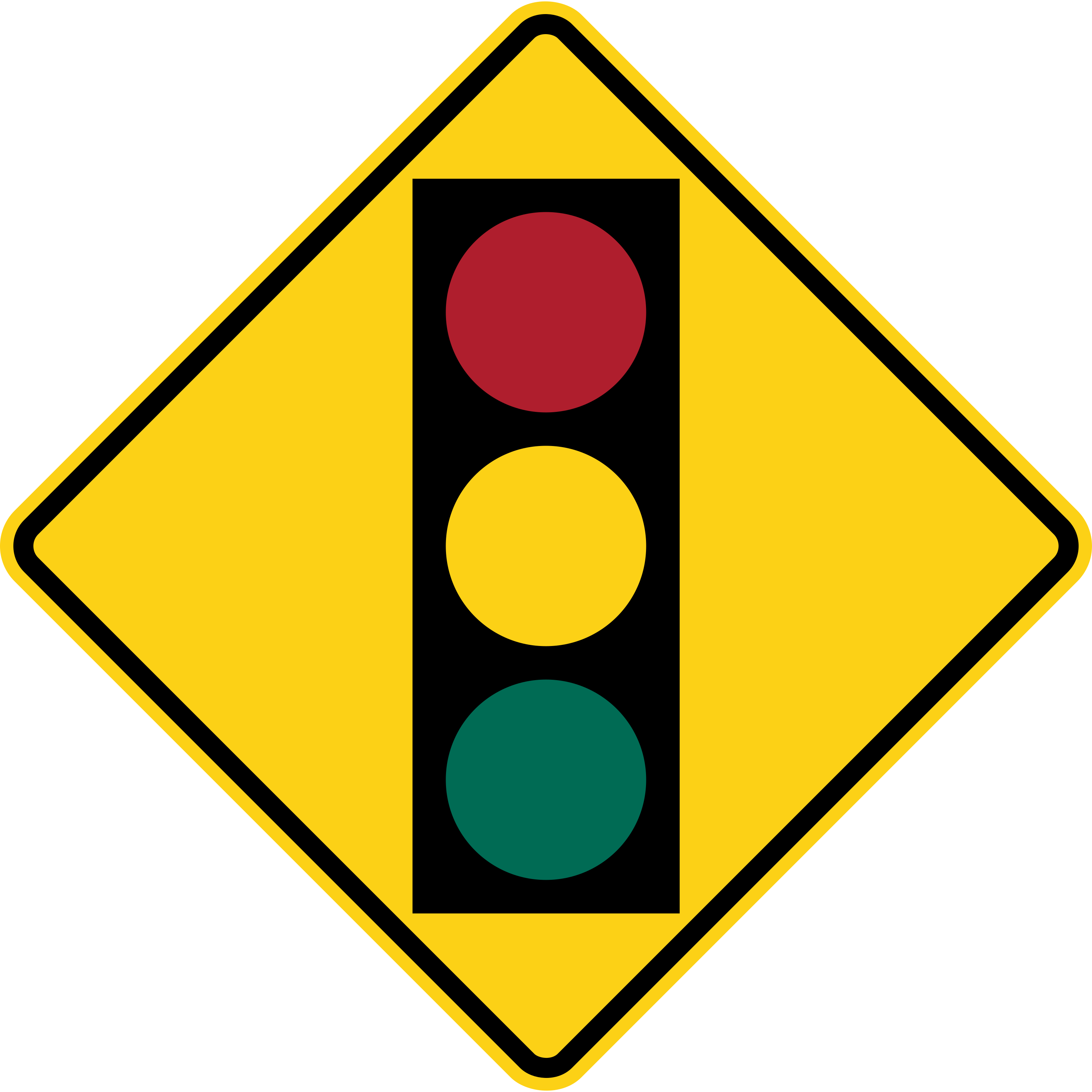
  19. 19. What does the traffic signal warning sign shown indicate?

    Yellow sign with traffic signal symbol
    1. The next signal is permanently out of service
    2. A traffic signal is ahead
    3. A police checkpoint is required ahead
    4. Streetlights will replace the next intersection signal
    Show answer

    A traffic signal is ahead. The Signal Ahead warning means a traffic signal is ahead and the driver should be prepared to stop. Full explanation in Test 8

  20. 20. What range does the Nebraska manual give for the fine for texting and driving?

    1. $200 to $500
    2. $100 to $200
    3. $25 to $100
    4. $500 to $1,000
    Show answer

    $200 to $500. The manual gives a $200 to $500 fine range for texting and driving. Full explanation in Test 9

  21. 21. How far does an average 150 car freight train need to stop from 30 mph, according to the Nebraska manual?

    1. 300 feet
    2. One car length
    3. 10 miles
    4. 3,150 feet, about three fifths of a mile
    Show answer

    3,150 feet, about three fifths of a mile. An average 150 car freight train traveling 30 mph requires a stopping distance of 3,150 feet, about three fifths of a mile, and the same tra Full explanation in Test 10

  22. 22. Why should drivers be alert for steering corrections when meeting a large truck or bus in high wind?

    1. Large vehicles are allowed to cross the centerline in wind
    2. Sudden wind changes can affect both vehicles
    3. Wind makes trucks stop instantly
    4. The truck's headlights make the road narrower
    Show answer

    Sudden wind changes can affect both vehicles. Large trucks and buses present a substantial profile to moving air, and the wind can change suddenly as vehicles meet or pass. Full explanation in Test 11

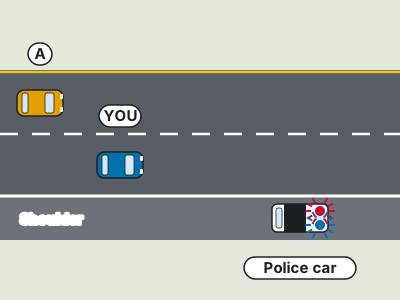
  23. 23. On a multi lane controlled access highway, what is required near a stopped vehicle with flashing lights when a lane change is possible?

    A highway with two lanes going the same direction and a paved shoulder on the right. A police car is stopped on the right shoulder with its lights flashing. Your car, blue, is in the right lane approaching it. Car A, orange, is in the left lane behind you.
    1. Move at least one travel lane away from the stopped vehicle
    2. Stop in the lane next to the stopped vehicle
    3. Pass at the normal speed without changing lanes
    4. Use the shoulder to get around the stopped vehicle
    Show answer

    Move at least one travel lane away from the stopped vehicle. When several lanes are available on a controlled access highway, move at least one travel lane away from a stopped qualifying vehicle displa Full explanation in Test 1

  24. 24. When are Nebraska handicapped parking stalls reserved for permit holders?

    1. Only during business hours
    2. 24 hours a day, 7 days a week
    3. Only when the lot is full
    4. Only on weekdays
    Show answer

    24 hours a day, 7 days a week. Handicapped parking stalls are reserved for vehicles displaying a handicap license plate or permit, from which the handicapped person enters Full explanation in Test 2

  25. 25. In the manual's example, if car A turns left, which cars must car A yield to?

    1. Only car B
    2. Both cars B and C
    3. Neither car B nor car C
    4. Only pedestrians
    Show answer

    Both cars B and C. At an uncontrolled intersection, the Nebraska example says that car A yields to both car B and car C when A turns left. Full explanation in Test 3

How this test works

Study the rules, then check the explanation

This page uses the prepared Nebraska question bank exactly as provided. Start the test, choose an answer, and read the explanation before moving on. Retakes serve the same 220 questions so you can work through the state set without losing your place.

Want a one-page summary to study or print? See the Nebraska DMV cheat sheet, with the most-missed rules from this same question bank.

Looking for another state? Go back to the DMV practice test hub. California remains on the established California DMV practice test page.

Are you a library or school? See the free DMV practice test partner resource for a copy ready listing and referral link.

How we write and check these questions

QualitySpace is expanding to Nebraska

We are a California-based independent insurance brokerage working on licensing in more states. We cannot help with Nebraska insurance yet. Leave your email and we will let you know when we can.