
QualitySpaceQualitySpace
Display
Auto follows your device setting.
Menu

25 question exam format · Real sign images & audio · Free

MD Permit Practice Test

Practice the Maryland knowledge test the way it is actually given: 25 questions, 88 percent to pass. Every question has a plain English explanation and narrated audio. 209 questions in the bank, free, no account required.

Question bank
209
State
Maryland
Format
Fixed question set
Cost
Free

The real Maryland knowledge test is the DMV exam used for a learner permit. This page contains the full free 209 question study bank, with an explanation after each answer. Use the numbered 20 question tests below when you want a fixed study session.

The real Maryland knowledge test: 25 questions (Class C, Class M, and Moped Permit); passing score 88% or higher (official source). This practice bank has 209 questions.

Alcohol and DUIEmergenciesLaws and paperworkParkingRight of wayRoad signsSafe drivingSignals and markingsSpeed limits

209-question bank · Sign images & explanations · Free

Maryland practice test has 209 questions. Every question comes with a plain-English explanation the moment you answer.

Get a day by day study plan

Optional. Three quick answers; the tests below work without it.

Age on test day

No date yet? You get a 7 day plan.

Real exam format: 25 questions, 22 correct to pass.

Start here

Run 20 questions to warm up.

Find your gaps

Diagnose weak topics and retry what you've missed.

Simulate the real thing

Practice under graded exam conditions or run the whole bank.

Practice one topic

Drill a single topic, up to 20 questions with explanations.

Random draw and answer order every attempt. Scored against the real test's pass mark: 22 of 25 correct.

Free means actually free: no subscription, no auto-renew, no card required, no locked features. This site is funded by our insurance work, not by test-prep charges.

See facts and key topics for Maryland DMV (minimum age, fees, wait times, question counts by topic) before you start, or print it to bring with you on test day.

Study the handbook, chapter by chapter: 21 short free lessons with the key rules, the exact numbers, and 3 check questions each, all quoted from the Maryland manual.

How to use this MD practice test

  1. Take the 25 question exam-length practice test above once, untimed, to find your weak topics.
  2. Work through the numbered 20 question sets below. Each one is fixed, so a second attempt is a fair comparison.
  3. Read the explanation on every miss. The wording comes from the Maryland Driver's Manual, which is what the examiners use.
  4. When you pass three sets in a row at 88 percent or better, book the real test.

MD practice tests, 20 questions each

Fixed sets in a fixed order so you can retake one and compare your score.

  1. Test 1
  2. Test 2
  3. Test 3
  4. Test 4
  5. Test 5
  6. Test 6
  7. Test 7
  8. Test 8
  9. Test 9
  10. Test 10

Printable MD practice test with answer key

Frequently asked questions

How many questions are in the Maryland practice bank?

This free page contains the full 209 question bank. The numbered tests each contain 20 fixed questions.

How does this practice test relate to the real Maryland test?

The real test facts are shown above from the official source. This page is an educational practice bank and is separate from the DMV test.

Can I use the Maryland practice test for free?

Yes. The practice questions, explanations, and numbered tests are free to use with no account required.

Last verified 2026-09-05 against the Maryland Driver's Manual, which sets the real exam at 25 questions and 22 correct to pass.

All 25 questions, MD exam length

Every question below comes from the Maryland question bank on this page. Open a question to see the correct answer and the explanation. Nothing here is hidden behind a signup.

  1. 1. What penalty does Maryland list for leaving the scene of a crash that causes serious injury?

    1. Three points
    2. A $100 fine
    3. License revocation, up to 5 years in prison and a fine up to $5,000
    4. A 30 day suspension
    Show answer

    License revocation, up to 5 years in prison and a fine up to $5,000. If you leave the scene of a crash that results in serious injury, your license will be revoked and you could go to prison for up to 5 years Full explanation in Test 1

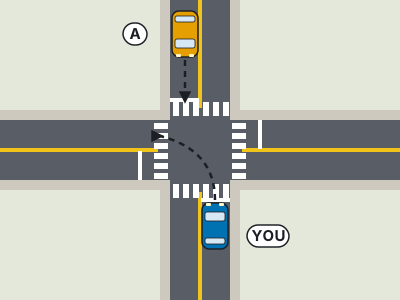
  2. 2. While making a left turn, which traffic has priority over you?

    A four-way intersection. Your car, blue, is heading north and plans to turn left, shown by a dashed arrow. Car A, orange, is coming from the opposite direction, heading south toward the intersection and going straight.
    1. No traffic, once your front wheels enter the intersection
    2. Only vehicles behind you
    3. Only vehicles turning right from the cross street
    4. Drivers in the opposing traffic lane
    Show answer

    Drivers in the opposing traffic lane. A left-turning driver must yield to traffic coming from the opposite direction. Full explanation in Test 2

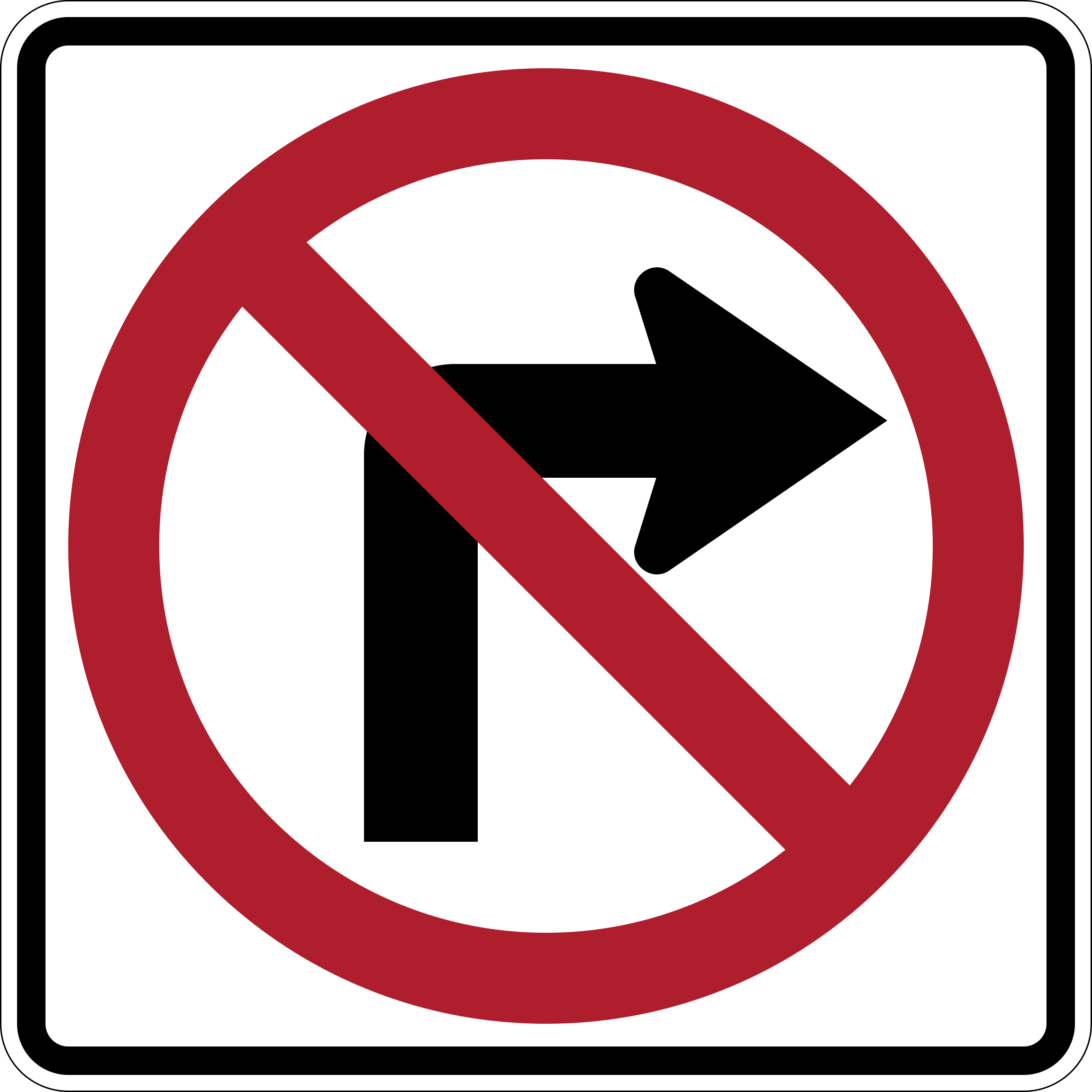
  3. 3. What kind of instruction does the pictured sign provide?

    Right-turn arrow crossed by red slash
    1. An optional suggestion for busy intersections
    2. A traffic-law regulation that must be obeyed
    3. A warning about changing weather
    4. A guide to nearby services
    Show answer

    A traffic-law regulation that must be obeyed. The pictured sign provides a traffic-law regulation, so it must be obeyed at the signed location. Full explanation in Test 3

  4. 4. How old must you be for a Maryland Type 2 Learner's Instructional Permit, and how long does it last?

    1. At least 15, lasting one year
    2. At least 18, lasting 90 days
    3. At least 16 years and 6 months, and it lasts up to 180 days
    4. At least 16, lasting two years
    Show answer

    At least 16 years and 6 months, and it lasts up to 180 days. You must be at least 16 years and 6 months old to apply for a Type 2 Learner's Instructional Permit, which lasts for up to 180 days. Full explanation in Test 4

  5. 5. What information does a yellow traffic sign generally give a driver?

    1. A final legal ruling that replaces traffic signals
    2. A required service stop for fuel or food
    3. A destination distance and route direction
    4. A general warning about conditions or hazards ahead
    Show answer

    A general warning about conditions or hazards ahead. Yellow is Maryland's general warning color. Full explanation in Test 5

  6. 6. A Maryland Move Over Law violation causes no crash, death, or serious injury. What penalty does the manual list?

    1. $750 and three points
    2. $150 and three points
    3. $110 and one point
    4. $110 and three points
    Show answer

    $110 and one point. The basic Maryland Move Over Law penalty the manual lists is a $110 fine and one point on the driver's license. Full explanation in Test 6

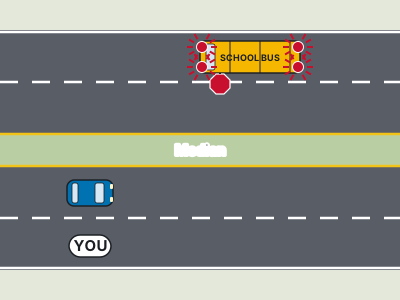
  7. 7. A school bus stops on the other side of a physical barrier on a multiple-lane road. What should you do?

    A divided highway with two lanes in each direction separated by a raised grass median. A school bus is stopped on the far side of the median, in the lanes heading west, with its red lights flashing and its stop arm out. Your car, blue, is on the near side of the median heading east, toward the bus.
    1. Stop only if a child is visible near the barrier
    2. Stop at least 20 feet from the median barrier
    3. Continue without stopping for the bus on the other side
    4. Reverse until the bus driver waves you through
    Show answer

    Continue without stopping for the bus on the other side. On a multiple-lane road divided by a physical barrier, traffic does not stop when the school bus is on the opposite side of that barrier. Full explanation in Test 7

  8. 8. What color is used for school, pedestrian, and bicycle signs?

    1. Brown
    2. Fluorescent yellow-green
    3. Blue
    4. Black
    Show answer

    Fluorescent yellow-green. Maryland identifies fluorescent yellow-green as the color used for school, pedestrian, and bicycle signs. Full explanation in Test 8

  9. 9. A Maryland provisional driver under 18 is convicted of a fourth moving violation. What happens?

    1. The license is revoked and all licensing tests must be passed again
    2. A 30-day suspension
    3. A driver improvement program only
    4. A 90-day restriction to school driving
    Show answer

    The license is revoked and all licensing tests must be passed again. Maryland's ladder for provisional drivers under 18 ends in revocation. Full explanation in Test 9

  10. 10. What must you do at a flashing red traffic signal?

    1. Slow down without stopping and continue through
    2. Come to a complete stop, yield, and proceed when the way is clear
    3. Treat it as a steady green signal
    4. Stop only if a train or pedestrian is visible
    Show answer

    Come to a complete stop, yield, and proceed when the way is clear. A flashing red signal operates as a stop instruction. Full explanation in Test 10

  11. 11. How fast does the Maryland manual say experienced bicyclists may ride?

    1. No more than 10 mph
    2. As fast as 35 mph, so they may be closer than you think
    3. Bicycles cannot exceed 5 mph
    4. About 15 mph at most
    Show answer

    As fast as 35 mph, so they may be closer than you think. Experienced bicyclists often ride very fast, as fast as 35 mph, and may be closer than you think. Full explanation in Test 1

  12. 12. What can make wet roads more dangerous?

    Yellow sign with skidding car
    1. A guarantee of better braking
    2. Reduced traction
    3. A requirement to drive faster
    4. Removal of all stopping risks
    Show answer

    Reduced traction. Maryland notes that wet roads can be slippery, reducing traction and making it harder to stop. Full explanation in Test 2

  13. 13. What practice record must a Maryland applicant submit before moving from a permit to a provisional license?

    1. A school transcript showing 30 classroom hours only
    2. A signed Practice and Skills Log showing at least 60 practice hours, or 14 for an applicant age 25 or older
    3. A receipt proving 45 days of vehicle ownership
    4. A driving diary with exactly 100 daytime hours
    Show answer

    A signed Practice and Skills Log showing at least 60 practice hours, or 14 for an applicant age 25 or older. The applicant must submit a completed and signed Practice and Skills Log. Full explanation in Test 3

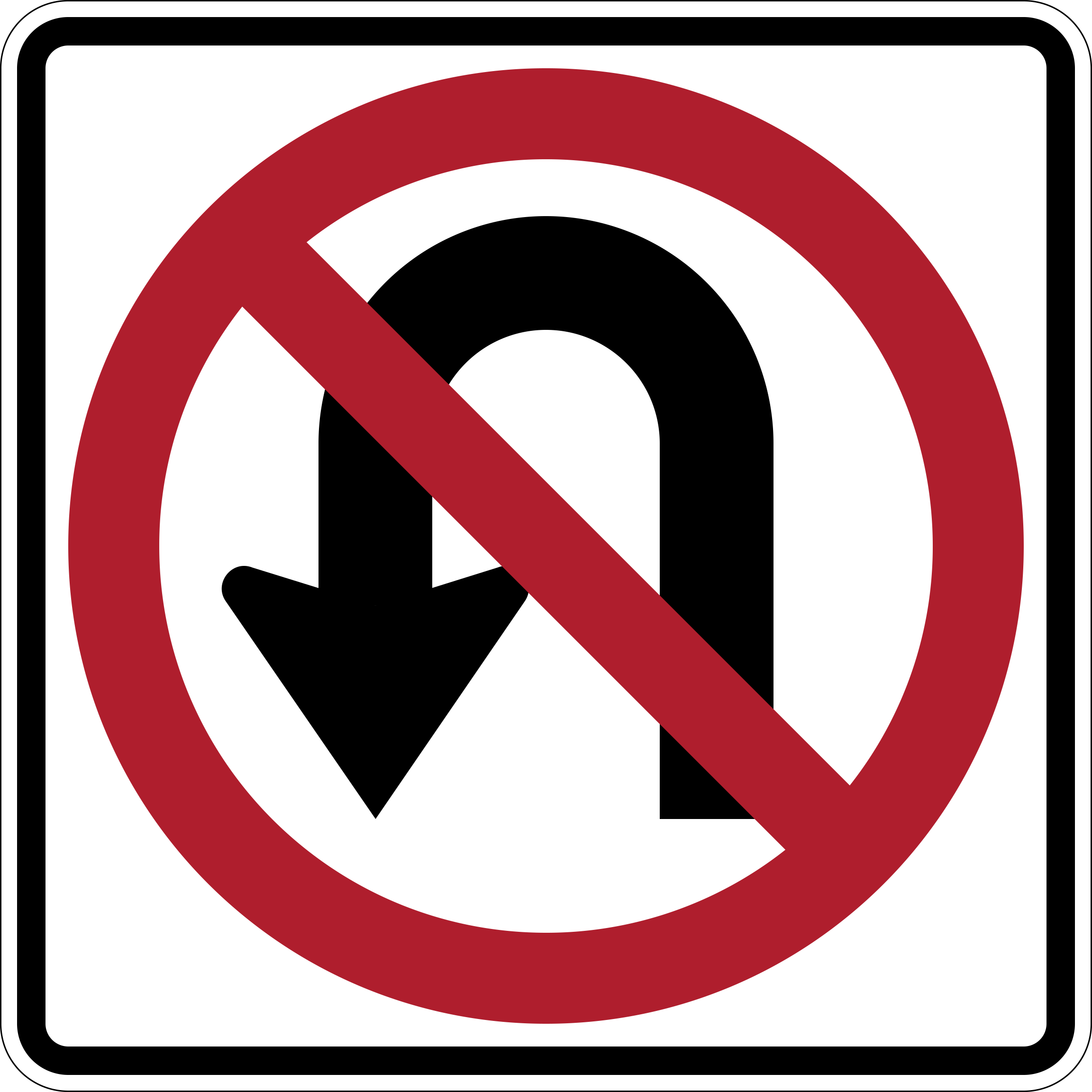
  14. 14. What does the Maryland manual say about U-turns?

    U-shaped arrow crossed by red slash
    1. They can be extremely dangerous and are not legal everywhere
    2. They are always required at a dead end
    3. They are legal at every intersection
    4. They may be made without checking traffic
    Show answer

    They can be extremely dangerous and are not legal everywhere. Maryland warns that U-turns can be extremely dangerous and are not legal everywhere. Full explanation in Test 4

  15. 15. Which parking maneuvers are required on the Maryland driving test, and in what size space?

    1. Pull in parking, back in parking and a three point turn, in a 10 by 20 foot space with the turn in a 16 by 20 foot space
    2. Only a three point turn
    3. Parallel parking in a 25 foot space
    4. Only parallel parking
    Show answer

    Pull in parking, back in parking and a three point turn, in a 10 by 20 foot space with the turn in a 16 by 20 foot space. Parallel parking is no longer required on the Maryland driving test, though it is taught in the driver education course. Full explanation in Test 5

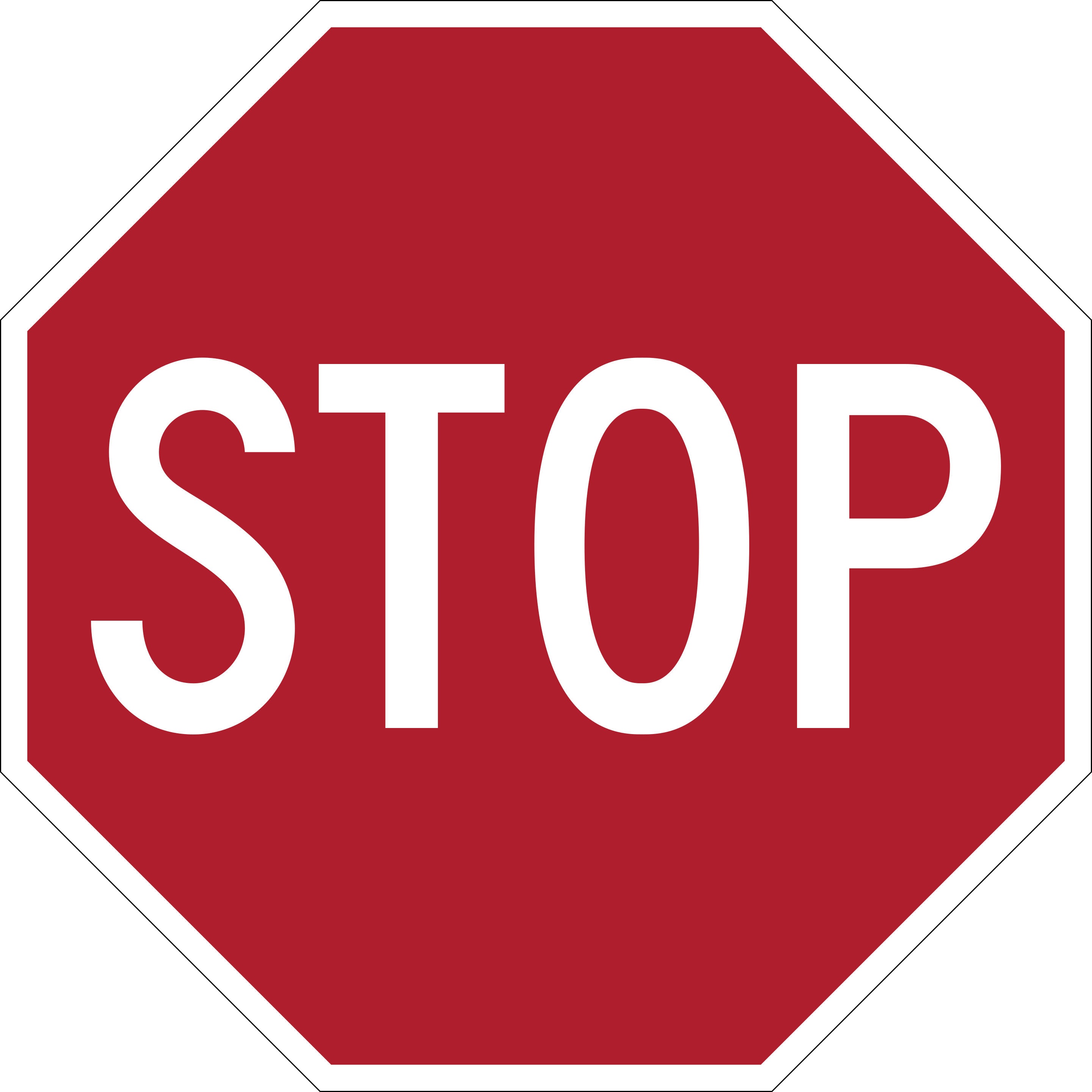
  16. 16. What does an octagonal traffic sign mean?

    Red octagonal STOP sign
    1. No passing
    2. Yield
    3. Stop
    4. Railroad crossing ahead
    Show answer

    Stop. Maryland states that the octagonal, or eight-sided, shape always means stop. Full explanation in Test 6

  17. 17. At a Maryland yield sign, what must you do before proceeding?

    1. Stop every time, even when the road is empty
    2. Slow down and yield to pedestrians, bicycles, and vehicles
    3. Accelerate so other traffic must wait
    4. Proceed without looking if your lane is open
    Show answer

    Slow down and yield to pedestrians, bicycles, and vehicles. A yield sign calls for a slower approach and a careful look to both sides. Full explanation in Test 7

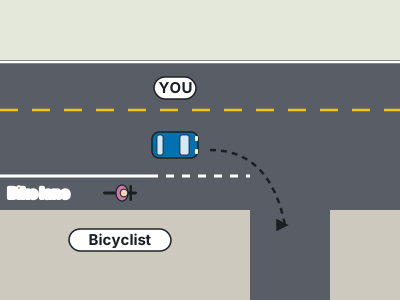
  18. 18. You are turning while a bicyclist continues straight. What is your duty?

    A street heading east with a bike lane along the right side. Near the intersection the solid bike lane line changes to a broken line. A side street goes off to the right. Your car, blue, is in the traffic lane and plans to turn right onto the side street, shown by a dashed arrow. A bicyclist is riding in the bike lane behind your car.
    1. Yield to the bicyclist
    2. Turn first because motor vehicles have priority
    3. Sound the horn and make the bicyclist stop
    4. Pass the bicyclist inside the intersection
    Show answer

    Yield to the bicyclist. A bicyclist going straight has priority when a motor vehicle is turning across the bicycle’s path. Full explanation in Test 8

  19. 19. When passing a bicyclist in Maryland, how much space must you leave between your vehicle and the bicycle?

    1. At least 1 foot
    2. At least 20 feet
    3. At least 3 feet
    4. At least 6 inches, if you slow down
    Show answer

    At least 3 feet. Maryland's rule is to give bikes at least 3 feet when passing. Full explanation in Test 9

  20. 20. At what speed does a Class 3 electric bicycle stop providing assistance in Maryland?

    1. 20 miles per hour
    2. 15 miles per hour
    3. 28 miles per hour
    4. 35 miles per hour
    Show answer

    28 miles per hour. A Class 3 electric bicycle has a motor that provides assistance only when the rider is pedaling and stops assisting when the bicycle reaches Full explanation in Test 10

  21. 21. When may a Maryland minor register as an organ donor?

    1. At any age without consent
    2. At least 16 years old with a parent or guardian's written consent
    3. Never until 21
    4. Only at 18
    Show answer

    At least 16 years old with a parent or guardian's written consent. Anyone 18 years old or older may be an organ donor, and minors at least 16 years old may be organ donors if a parent or guardian consents in Full explanation in Test 1

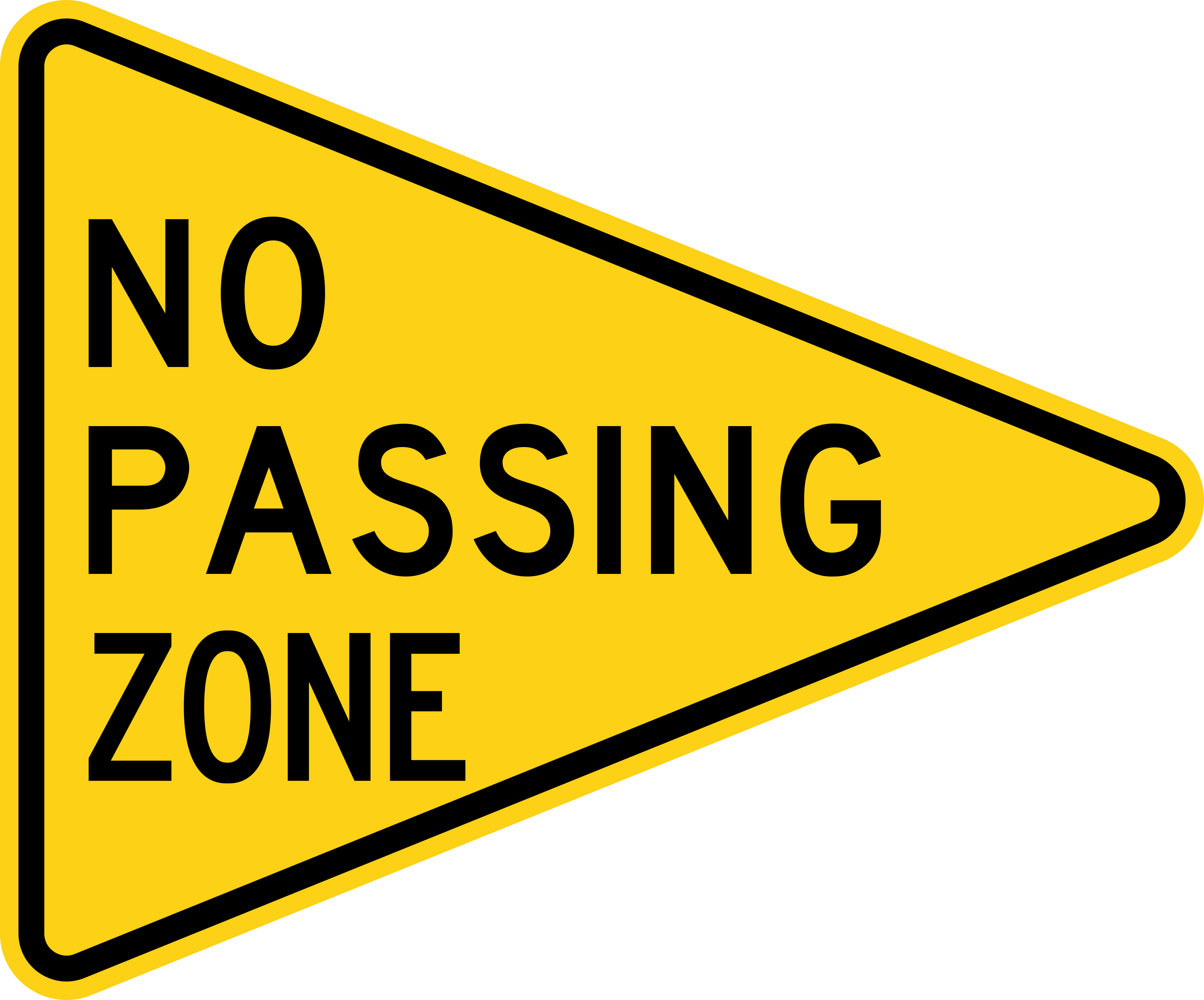
  22. 22. What does the pennant-shaped sign on the left side of the road mark?

    Yellow pennant NO PASSING ZONE sign
    1. The end of a school crossing
    2. The beginning of a no-passing zone
    3. A recreational parking area
    4. A lane reserved for bicycles
    Show answer

    The beginning of a no-passing zone. The pennant shape is reserved for the start of a no-passing zone. Full explanation in Test 2

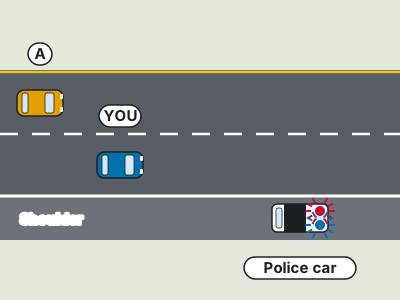
  23. 23. What must a driver do when approaching a stopped emergency vehicle with flashing lights on a Maryland roadway?

    A highway with two lanes going the same direction and a paved shoulder on the right. A police car is stopped on the right shoulder with its lights flashing. Your car, blue, is in the right lane approaching it. Car A, orange, is in the left lane behind you.
    1. Stop in the adjacent lane regardless of traffic
    2. Maintain speed because the emergency vehicle is off the roadway
    3. Move over one lane if safe, or slow down if moving over is not safe
    4. Pass on the shoulder without reducing speed
    Show answer

    Move over one lane if safe, or slow down if moving over is not safe. Maryland's Move Over rule protects people working beside traffic. Full explanation in Test 3

  24. 24. What does the triangular yield sign require a driver to do?

    1. Come to a stop even when the road is empty
    2. Change lanes before reaching the intersection
    3. Continue without checking because the triangle grants priority
    4. Slow down and give way to other vehicles and pedestrians when necessary
    Show answer

    Slow down and give way to other vehicles and pedestrians when necessary. The triangle communicates yield, which means the driver must reduce speed and be ready to stop for traffic or pedestrians. Full explanation in Test 4

  25. 25. Where does the Maryland manual say children under 13 should ride?

    1. In the front seat with the air bag on
    2. Anywhere, as long as they are belted
    3. Buckled up in a rear seat, in a child safety seat or with a seat belt
    4. In the front seat if over 4 feet 9 inches
    Show answer

    Buckled up in a rear seat, in a child safety seat or with a seat belt. Children under age 13 should ride buckled up in a rear seat, in a child safety seat or with a seat belt. Full explanation in Test 5

How this test works

Study the rules, then check the explanation

This page uses the prepared Maryland question bank exactly as provided. Start the test, choose an answer, and read the explanation before moving on. Retakes serve the same 209 questions so you can work through the state set without losing your place.

Want a one-page summary to study or print? See the Maryland DMV cheat sheet, with the most-missed rules from this same question bank.

Looking for another state? Go back to the DMV practice test hub. California remains on the established California DMV practice test page.

Are you a library or school? See the free DMV practice test partner resource for a copy ready listing and referral link.

How we write and check these questions

QualitySpace is expanding to Maryland

We are a California-based independent insurance brokerage working on licensing in more states. We cannot help with Maryland insurance yet. Leave your email and we will let you know when we can.