Every question below comes from the Washington question bank on this page. Open a question to see the correct answer and the explanation. Nothing here is hidden behind a signup.
1. Which locations are examples of services shown by Washington service signs?
- Hiking trails, picnic spaces, and ski areas
- Hospitals, electric vehicle charging stations, and rest areas
- Cities, airports, and state lines
- Curves, hills, and slippery pavement
Show answer
Hospitals, electric vehicle charging stations, and rest areas. Service signs point to facilities that help motorists during a trip. Full explanation in Test 1
2. When may a Washington intermediate license holder wait to receive an updated physical license?
- Only until the driver turns 18
- Until the first traffic violation
- Only for the first six months
- Until the license is renewed
Show answer
Until the license is renewed. Intermediate license restrictions end automatically at age 18, but Washington does not require an immediate replacement card at that moment. Full explanation in Test 2
3. Until what age must a Washington child ride in a rear-facing car seat?
- Up to age 2
- Up to age 1
- Up to age 4
- Up to age 8
Show answer
Up to age 2. Children up to age 2 must ride rear facing. Full explanation in Test 3
4. Which two conditions does Washington list for a teen's first driver license at ages 16 to 17?
- A permit held at least 6 months, plus age 16 and Washington residency
- Age 17 and five years of driving experience
- Age 15 and an out-of-state address
- Age 16 with no permit or residency requirement
Show answer
A permit held at least 6 months, plus age 16 and Washington residency. For a first license at ages 16 to 17, Washington requires the instruction permit to have been held for at least six months, and the applican Full explanation in Test 4
5. What should you do if you are involved in a crash in which someone is injured or killed?
- Wait to report it unless the damage exceeds a stated dollar amount
- Leave immediately after exchanging a phone number
- Move the vehicle far away before reporting anything
- Do not drive away, call 911, and notify law enforcement
Show answer
Do not drive away, call 911, and notify law enforcement. After a collision involving injury or death, Washington guidance says not to drive away. Call 911 and notify law enforcement. Full explanation in Test 5
6. Which is one circumstance under Washington rules when a driver must yield at an uncontrolled intersection?
- A vehicle has already entered the intersection
- You are traveling on the wider roadway
- You are approaching from the paved road
- Your vehicle is moving faster than the other vehicle
Show answer
A vehicle has already entered the intersection. At an uncontrolled intersection, Washington still applies normal right-of-way rules. Full explanation in Test 6
7. In Washington, DUI rules can apply when a person is in what situation even if the vehicle is parked?
- Standing beside a locked vehicle
- Having a vehicle registered nearby
- Reading a map in a passenger seat
- Physical control of the vehicle
Show answer
Physical control of the vehicle. Washington's guide says DUI can apply to being in control of a vehicle even when that vehicle is parked. Full explanation in Test 7
8. What should you do if water builds up between your tires and the road surface?
- Shift into reverse while the vehicle is moving
- Brake hard and turn sharply toward the shoulder
- Accelerate until the tires cut through the water
- Ease off the accelerator and keep the steering wheel steady
Show answer
Ease off the accelerator and keep the steering wheel steady. Hydroplaning occurs when water separates the tires from the road, reducing traction and steering response. Full explanation in Test 8
9. What information can Washington traffic signs provide besides roadway directions?
- Only license renewal dates
- Traffic rules, hazards, and roadway services
- Only vehicle weight ratings
- Only private parking prices
Show answer
Traffic rules, hazards, and roadway services. The guide groups traffic signs by the information they give road users. Full explanation in Test 9
10. How long must a Washington teen go without traffic violations or convictions before applying for a first license?
- 30 days
- 6 months
- 3 months
- 12 months
Show answer
6 months. A teen applying at 16 or 17 must be free of traffic violations or convictions for 6 months before applying and must have no alcohol or drug Full explanation in Test 10
11. What does a dashed white line between lanes mean?
- The lanes carry traffic in opposite directions
- You may cross it to change lanes if safe
- You must remain in the lane until it ends
- It marks a railroad crossing
Show answer
You may cross it to change lanes if safe. A dashed white line separates lanes moving in the same direction and may be crossed for a lane change when the movement is safe. Full explanation in Test 1
12. When driving at night, how should you adjust your following distance?
- Reduce it because headlights improve visibility
- Keep exactly one vehicle length in every condition
- Increase it
- Follow more closely so you can use the vehicle ahead as a guide
Show answer
Increase it. Night driving limits what you can see and how quickly you can identify a hazard, so the guide advises increasing following distance. Full explanation in Test 2
13. What does Washington's implied consent law mean when an officer suspects a driver is under the influence?
- The driver may choose testing only after a conviction
- The driver agrees to a roadside search of every passenger
- The driver must surrender the vehicle before testing
- The driver agrees to be tested for alcohol or drugs
Show answer
The driver agrees to be tested for alcohol or drugs. Washington treats driving as agreement to an alcohol or drug test when an officer suspects impairment. Full explanation in Test 3
14. For a Washington driver age 21 or older, what active THC concentration is described as a DUI threshold?
- Any amount measured in a vehicle's fuel system
- More than 1 nanogram per milliliter of blood
- Exactly 0 nanograms per milliliter of blood
- More than 5 nanograms per milliliter of blood
Show answer
More than 5 nanograms per milliliter of blood. For drivers 21 and older, the guide identifies more than 5 nanograms of active THC per milliliter of blood as a DUI threshold. Full explanation in Test 4
15. At a four-way stop, what should you do if two vehicles arrive at approximately the same time?
- Yield to the vehicle on your right
- The larger vehicle goes first
- Both vehicles should proceed together
- Yield to the vehicle on your left
Show answer
Yield to the vehicle on your right. When two vehicles reach a four-way stop at approximately the same time, the driver must yield to the vehicle on the right. Full explanation in Test 5
16. Which statement matches the Washington guide's warning about driving after consuming cannabis?
- Cannabis is lawful for driving once the driver is 21
- Driving after consuming any cannabis is illegal for all ages
- Driving is legal if the driver waits ten minutes
- Only cannabis edibles make driving illegal
Show answer
Driving after consuming any cannabis is illegal for all ages. The guide separates legal recreational possession from driving behavior. Full explanation in Test 6
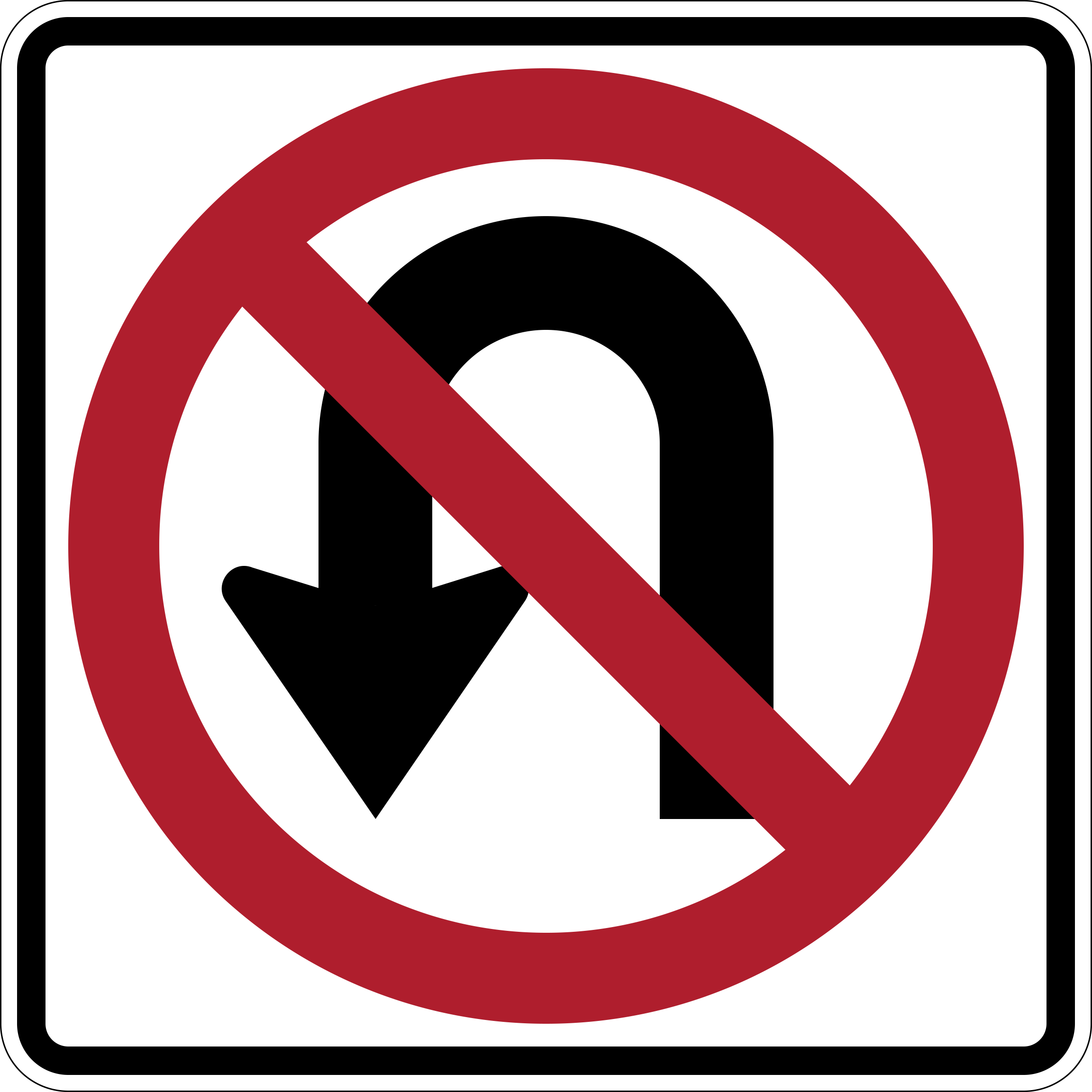
17. A red circle and slash over a U-turn symbol indicates what?
- U-turns are required
- Left turns are the only prohibited movement
- U-turns are not allowed
- The lane is reserved for passing
Show answer
U-turns are not allowed. Washington uses a red circle with a red slash over a symbol to prohibit the pictured action. Full explanation in Test 7
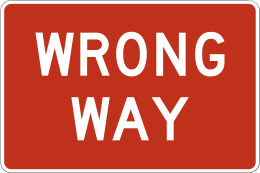
18. What should you do immediately after seeing a Wrong Way sign facing you?
- Continue until the next exit
- Move to the left lane and speed up
- Stop and turn around immediately
- Stop only if another car appears
Show answer
Stop and turn around immediately. A Wrong Way sign warns that the vehicle is traveling against the intended direction and that a head on collision is possible. Full explanation in Test 8
19. How far from a pedestrian safety zone must you park in Washington?
- At least 5 feet
- At least 20 feet
- At least 50 feet
- At least 75 feet
Show answer
At least 20 feet. Parking within 20 feet of a pedestrian safety zone is prohibited in Washington. Full explanation in Test 9
20. How early may a Washington driver renew a license before it expires?
- Up to 30 days before
- Up to 90 days before
- Only after it expires
- Up to one year before
Show answer
Up to one year before. Washington drivers can renew up to one year before the license expires, online through License Express or at a licensing office. Full explanation in Test 10
21. A traffic signal in Washington is flashing red. What must you do?
- Slow down and continue without stopping
- Stop only if a pedestrian is visible
- Treat it as a stop sign, stop fully, then proceed when it is your turn
- Turn left immediately if the intersection looks empty
Show answer
Treat it as a stop sign, stop fully, then proceed when it is your turn. A flashing red light has the same meaning as a stop sign. Full explanation in Test 1
22. What does a red X over a reversible lane mean?
- You cannot use the lane
- The lane is changing direction, so speed up into it
- The lane is open in your direction
- The lane is reserved for bicycles only
Show answer
You cannot use the lane. A red X means a reversible lane is closed to the driver. Full explanation in Test 2
23. How soon must a Washington driver update a changed address?
- Within 10 days, through License Express
- Within 30 days
- Within 90 days
- Only at renewal
Show answer
Within 10 days, through License Express. If your address changes, update your information in License Express within 10 days of the change. Full explanation in Test 3
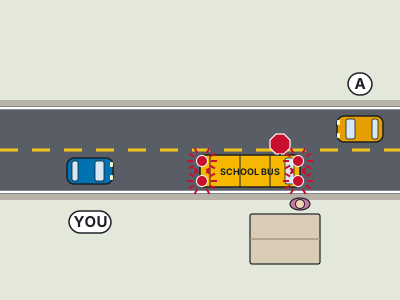
24. When must vehicles stop for a school bus on a two-lane road?
- Only vehicles behind the bus stop
- Opposing vehicles stop only if the bus is moving
- Only vehicles traveling faster than 25 mph stop
- All vehicles must stop when the red lights flash and the stop sign extends
Show answer
All vehicles must stop when the red lights flash and the stop sign extends. On a two-lane road, all vehicles must stop when the school bus red lights flash and its stop sign extends. Full explanation in Test 4
25. What must you do before entering an intersection when a cross street is blocked from view?
- Edge forward slowly until you can see crossing traffic
- Accelerate through before another vehicle appears
- Turn around and use the shoulder
- Rely on the vehicle ahead without checking
Show answer
Edge forward slowly until you can see crossing traffic. If the stop line leaves the cross street hidden, Washington guidance says to edge forward slowly until you can see. Full explanation in Test 5
26. What marks a Washington agricultural vehicle designed to go 25 mph or less?
- A flashing blue light
- A red flag on the left side
- A white square
- A triangle sign or emblem on the back
Show answer
A triangle sign or emblem on the back. Agricultural and farm vehicles designed to go 25 mph or less carry a triangle sign or emblem on the back. Full explanation in Test 6
27. If a driver refuses an alcohol or drug test after an officer suspects impairment, what may happen to the driving privilege?
- It may be lost for 90 to 730 days or until age 21, whichever is longer
- It is suspended for exactly 24 hours
- It is permanently canceled after the first refusal
- Nothing happens unless the driver was speeding
Show answer
It may be lost for 90 to 730 days or until age 21, whichever is longer. The guide says refusing a suspected impairment test can cost the driver the privilege for 90 to 730 days, or until age 21, whichever period Full explanation in Test 7
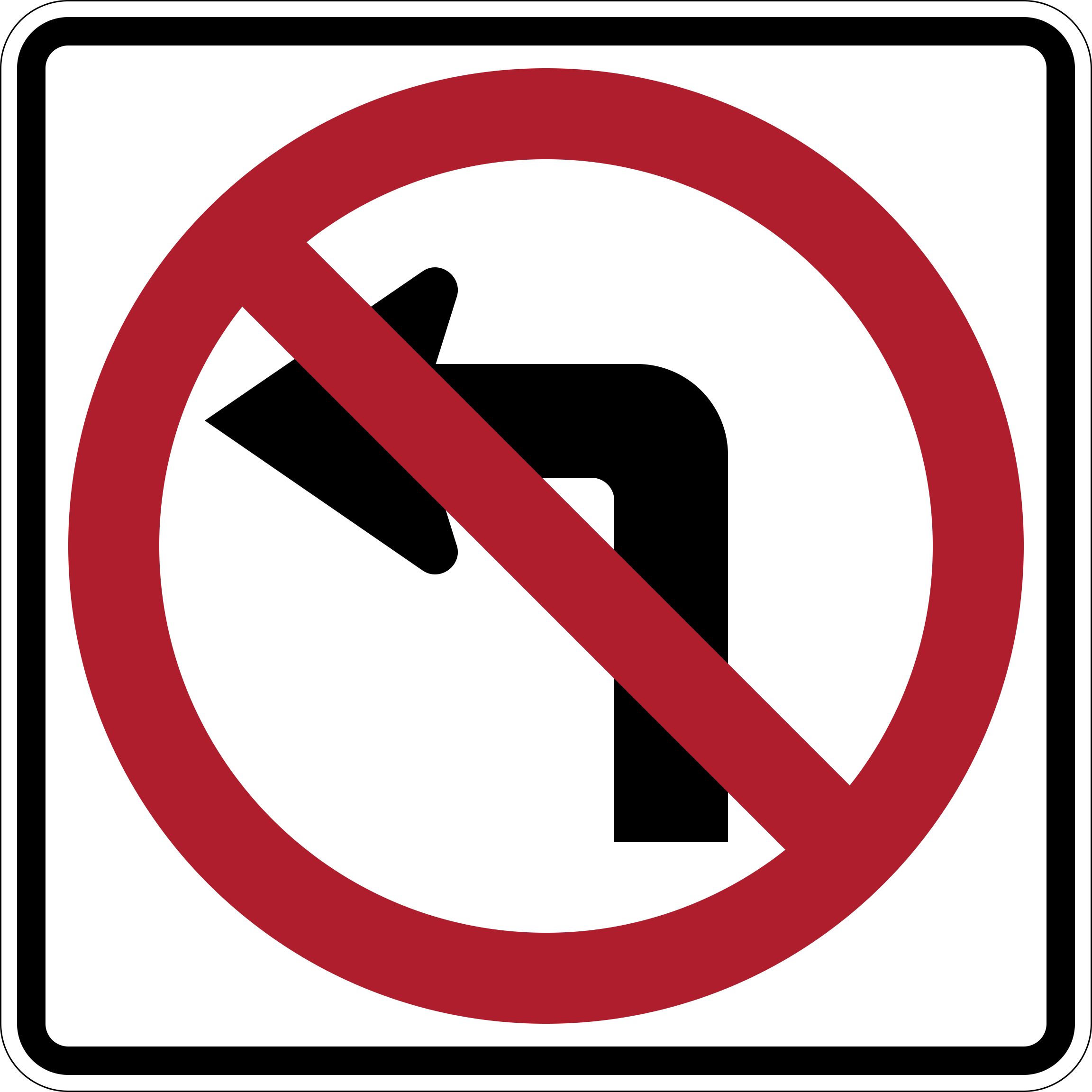
28. What do some Washington regulatory signs use to show that a symbolized action is not allowed?
- A blue rectangle around the symbol
- A green diamond below the symbol
- A yellow triangle beside the symbol
- A red circle with a red slash over the symbol
Show answer
A red circle with a red slash over the symbol. Some Washington regulatory signs place a red circle and slash over a symbol to show that the pictured action is prohibited. Full explanation in Test 8
29. What do the shape, color, symbols, and words on a traffic sign help a driver identify?

- The type of information the sign provides
- The driver’s insurance premium
- The vehicle’s engine size
- The age of the roadway
Show answer
The type of information the sign provides. Washington uses several visible features to help drivers interpret signs. Full explanation in Test 9
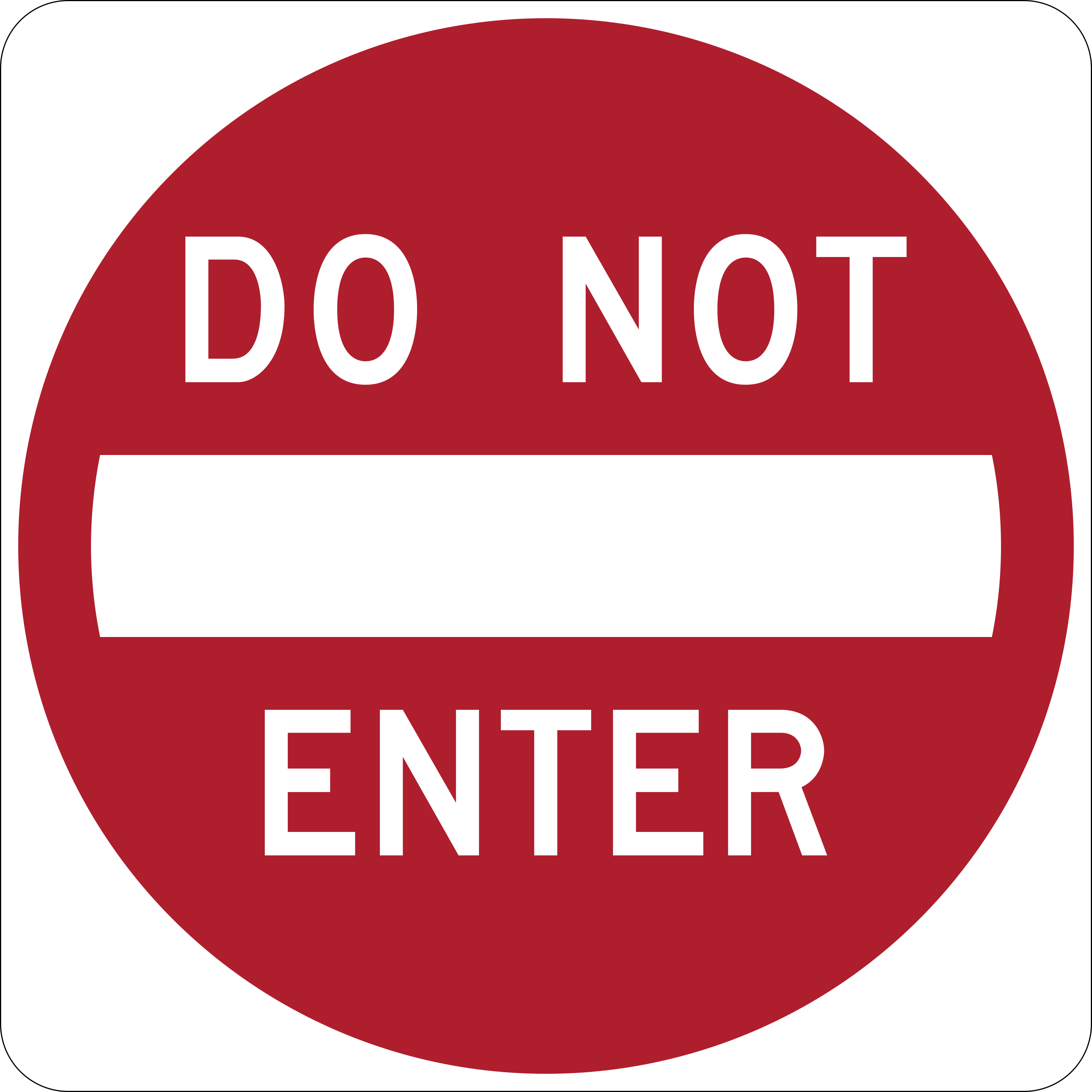
30. A square sign with a white horizontal line inside a circle means what?
- The street is reserved for buses
- You cannot enter the street from that direction
- The lane ends ahead
- Traffic must turn left
Show answer
You cannot enter the street from that direction. Washington describes this square symbol as a directional entry restriction. Full explanation in Test 10
31. What should you do when a traffic signal is not working?
- Wait for a police officer before moving under any circumstance
- Continue through because the signal gives no instruction
- Treat the intersection like a four way stop and yield to traffic on your right
- Use the intersection as though you have a green light
Show answer
Treat the intersection like a four way stop and yield to traffic on your right. A dark or malfunctioning signal does not give any driver priority. Full explanation in Test 1
32. Power lines fall on your vehicle in Washington. What does the guide say to do?
- Get out immediately and run
- Stay in the vehicle and call 911
- Touch the lines to check if they are live
- Drive away slowly
Show answer
Stay in the vehicle and call 911. If power lines fall on your vehicle, or if you hit a transformer box, stay in your vehicle and call 911. Full explanation in Test 2
33. What does the guide say drivers are responsible for knowing about Washington signs?

- Only signs pictured in the guide
- Only signs on interstate highways
- All signs, including city and county signs
- Only signs with a speed number
Show answer
All signs, including city and county signs. The guide lists some Washington State signs but makes clear that the list is not complete. Full explanation in Test 3
34. A Washington teen took a traffic safety course in another state. What minimum must that course meet?
- 10 hours of classroom and 2 hours behind the wheel
- 30 hours of classroom and 6 hours of behind-the-wheel instruction
- 24 hours of classroom and 6 hours behind the wheel
- 40 hours of classroom and 10 hours behind the wheel
Show answer
30 hours of classroom and 6 hours of behind-the-wheel instruction. Washington accepts an out-of-state traffic safety course only if it meets the state minimum of 30 hours of classroom and 6 hours of behind-t Full explanation in Test 4
35. What does a square sign with a white horizontal line inside a circle tell a driver?
- The road is open only to buses
- A railroad crossing is ahead
- The lane is reserved for bicycles
- Do not enter from that direction
Show answer
Do not enter from that direction. The square sign with a white horizontal line inside a circle means a driver cannot enter the street from that direction. Full explanation in Test 5
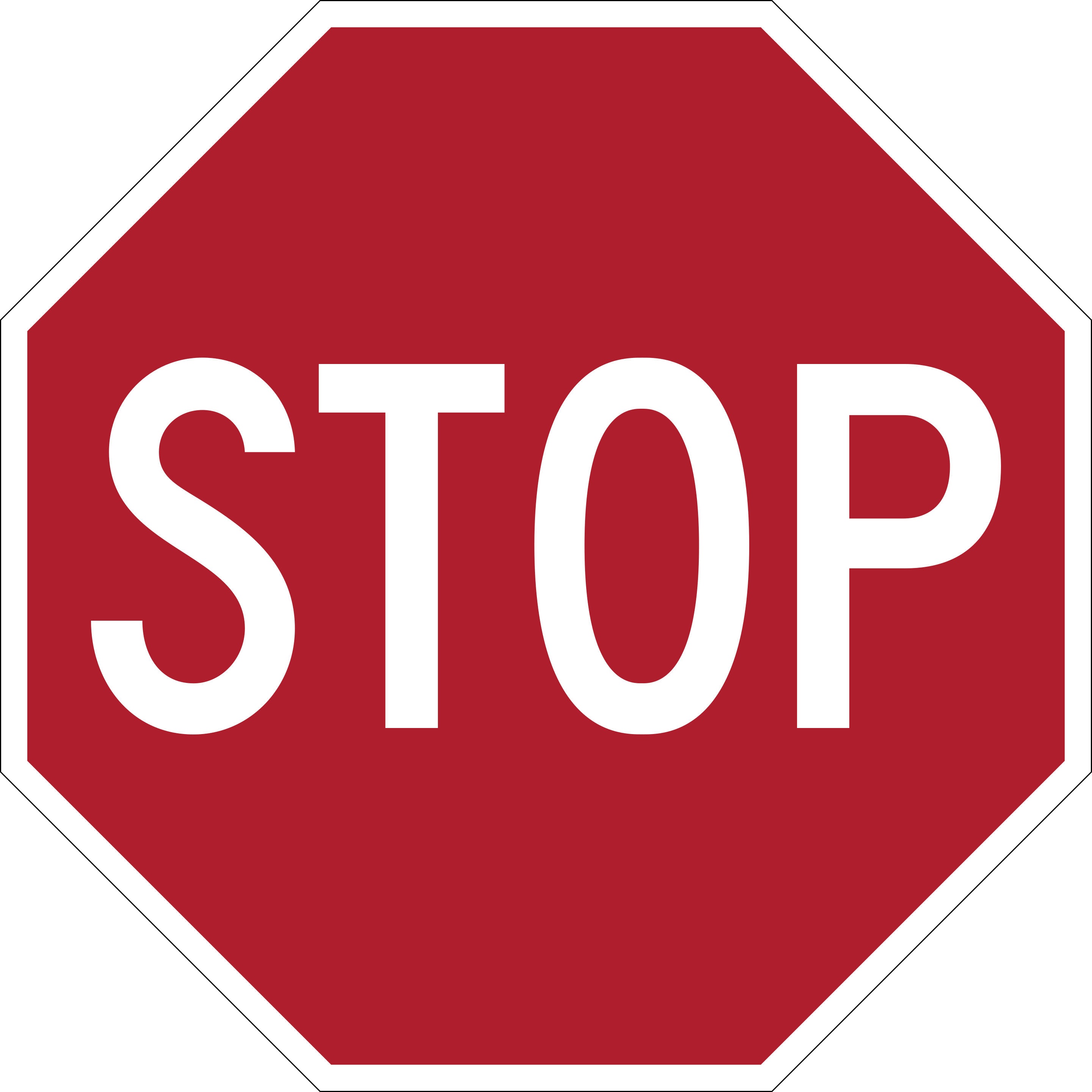
36. At a Washington stop sign, where must you stop before yielding?
- Only after entering the intersection
- At least 50 feet before the sign
- At the line, crosswalk, or corner
- Only when a pedestrian is visible
Show answer
At the line, crosswalk, or corner. Washington's stop sign rule identifies three possible stopping points: the stop line, the crosswalk, or the corner. Full explanation in Test 6
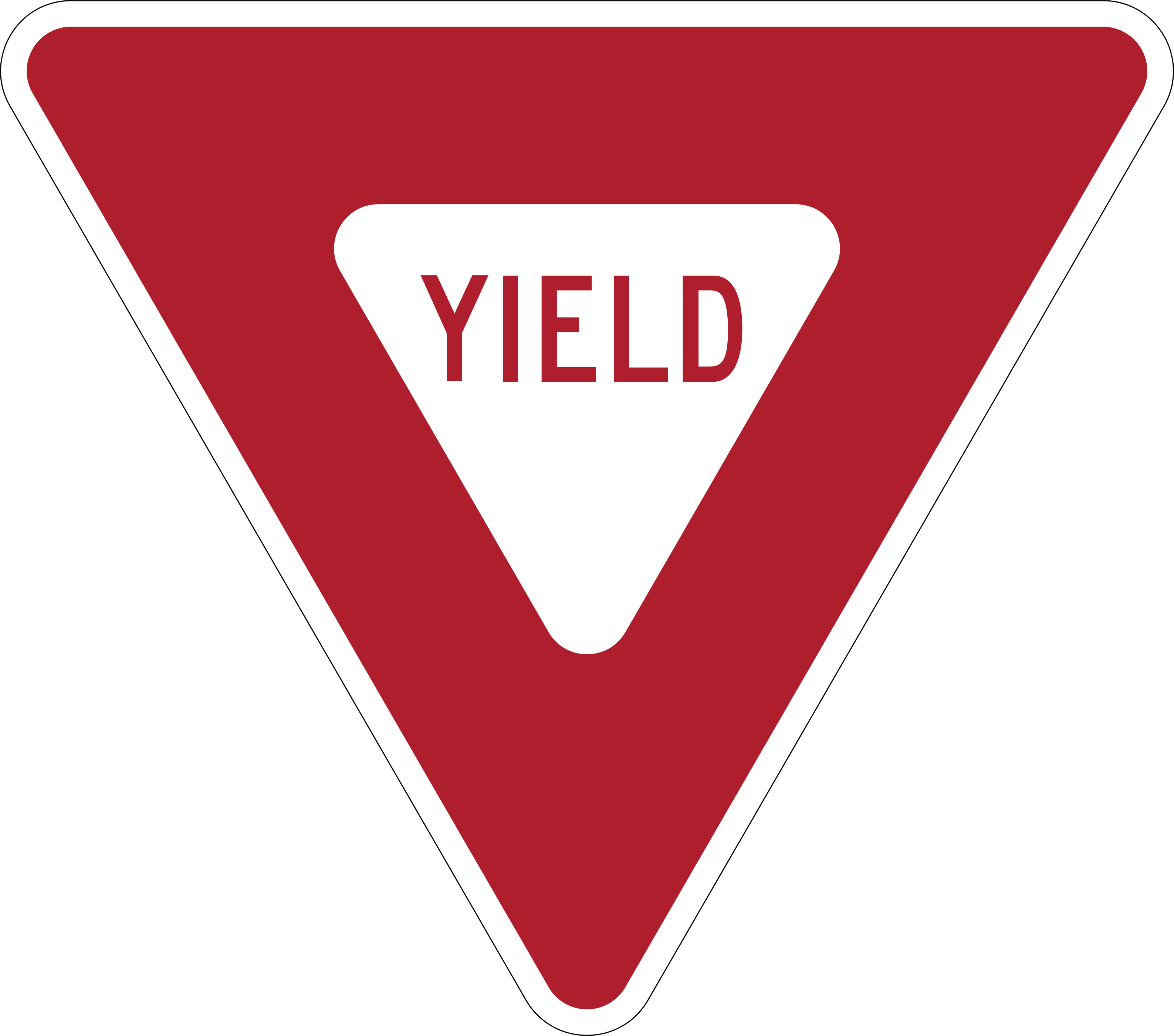
37. At a yield sign, what action is required before entering the roadway?
- Stop for exactly three seconds every time
- Slow down and allow right of way traffic to cross first
- Proceed first if you are in the larger vehicle
- Accelerate to enter before cross traffic
Show answer
Slow down and allow right of way traffic to cross first. A yield sign calls for a meaningful reduction in speed and deference to traffic that already has the right of way. Full explanation in Test 7
38. How far from a traffic signal, stop sign, or yield sign may you not park?
- Within 5 feet
- Within 15 feet
- Within 30 feet
- Within 75 feet
Show answer
Within 30 feet. Washington prohibits parking within 30 feet of a traffic signal, stop sign, or yield sign. Full explanation in Test 8
39. How far may you travel in a Washington shared center turn lane?
- No farther than 50 feet
- No farther than 150 feet
- Up to a quarter mile
- No farther than 300 feet
Show answer
No farther than 300 feet. Washington says you should not travel farther than 300 feet in a shared center lane, and the lane must never be used for passing. Full explanation in Test 9
40. What do Washington roundabout signs mark?

- The entrance to a roundabout
- The end of a divided highway
- A mandatory passing zone
- A railroad emergency phone
Show answer
The entrance to a roundabout. Roundabout signs mark the entrance to a circular intersection. Full explanation in Test 10
