Every question below comes from the Utah question bank on this page. Open a question to see the correct answer and the explanation. Nothing here is hidden behind a signup.
1. What shape and colors do Utah warning signs usually use?
- Round and red with white letters
- Rectangular and blue with white symbols
- Pentagon shaped and green
- Diamond shaped and yellow with black lettering or symbols
Show answer
Diamond shaped and yellow with black lettering or symbols. Warning signs alert you to a hazard or a change in the road ahead, and the handbook says they are usually diamond shaped and yellow with bla Full explanation in Test 1
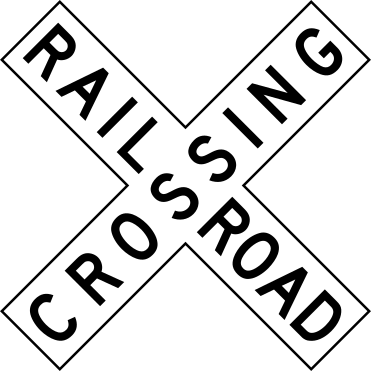
2. Beyond this railroad crossbuck, traffic is backed up across the tracks. Where should you wait?
- On the first rail until the line moves
- Between the rails if the crossing lights are off
- Immediately behind the last car even if it leaves you on the tracks
- At the stop line before the tracks
Show answer
At the stop line before the tracks. Wait before the tracks when traffic or a signal prevents you from continuing across. Full explanation in Test 2
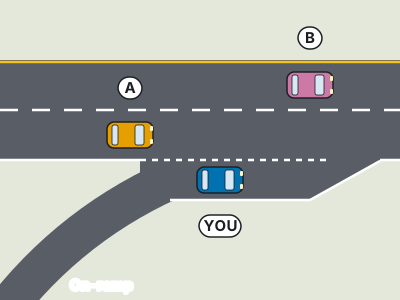
3. While merging in Utah, a vehicle in the continuing lane is close enough to pose an immediate threat. What must you do?
- Yield to that vehicle before joining its lane
- Claim priority by switching on your turn signal
- Enter first and require that driver to brake
- Enter first if your acceleration lane is about to end
Show answer
Yield to that vehicle before joining its lane. A driver merging into a traffic lane must yield to vehicles already in the continuing lane when they are close enough to be an immediate thr Full explanation in Test 3
4. A Utah student has completed 40 practice driving hours, including six after sunset. What additional practice meets the nighttime requirement?
- Four more hours before sunset
- Four more hours after sunset
- Six more hours at any time
- No additional hours because the total is already 40
Show answer
Four more hours after sunset. The student requirement combines 40 total driving hours with 10 hours after sunset. Full explanation in Test 4
5. You move within Utah. How long do you have to give the Driver License Division your new address?
- 30 days
- 60 days
- 10 days
- At your next renewal
Show answer
10 days. State law requires a Class D holder to notify the division of a new address within 10 days of moving, and it can be done online. Full explanation in Test 5
6. Under Utah's Not-a-Drop Act, what happens to a driver under 21 caught driving with any measurable amount of alcohol for a first offense?
- A written warning is issued
- A $100 fine with no license action
- The license is revoked for 18 months
- All driving privileges are denied for six months
Show answer
All driving privileges are denied for six months. The Not-a-Drop Act provides that a person under 21 driving with any measurable amount of alcohol in their body will have all driving privile Full explanation in Test 6
7. Which description matches the warning-sign design shown with this winding-road symbol?

- A blue rectangle with white service lettering
- A white rectangle carrying a parking restriction
- A green rectangle displaying a route destination
- A yellow diamond with a black symbol
Show answer
A yellow diamond with a black symbol. Warning signs are usually yellow diamonds with black lettering or symbols. Full explanation in Test 7
8. In Utah, how close may you park to a stop sign, yield sign, flashing beacon or traffic signal?
- No closer than 30 feet
- No closer than 10 feet
- No closer than 15 feet
- No closer than 100 feet
Show answer
No closer than 30 feet. Utah prohibits parking within 30 feet of any flashing beacon, stop sign, yield sign, or traffic control signal. Full explanation in Test 8
9. For a Utah driver under 21, how many points within three years lead to a hearing?
- 70 points or more
- 200 points or more
- 12 points or more
- 150 points or more
Show answer
70 points or more. Utah sets a much lower threshold for younger drivers: under 21, acquiring 70 points or more within three years brings a hearing. Full explanation in Test 9
10. What does the Utah handbook say about turning while backing?
- Look only backward
- Make quick checks to the front and sides
- Steer with one finger
- Accelerate to finish the turn faster
Show answer
Make quick checks to the front and sides. When you back and turn at the same time, the front of the vehicle swings out in the opposite direction, so the handbook says to make quick c Full explanation in Test 10
11. Beyond this divided-highway sign, a school bus flashes red lights on the opposite side of a median on a four-lane road. Must you stop?

- Yes; every lane on both sides of the median must stop
- No; the stopping requirement applies to the lanes behind the bus
- Yes; a median changes the rule only on six-lane roads
- No; even vehicles following the bus may continue
Show answer
No; the stopping requirement applies to the lanes behind the bus. On a divided highway with at least four lanes and a median, vehicles traveling behind the school bus must stop for its flashing red signals; Full explanation in Test 11
12. When driving at night in Utah, what does the handbook tell you to ensure about your vehicle's lights?
- That only the parking lights are on
- That the high beams stay on at all times
- That the headlights and taillights are illuminated
- That the interior lights are on
Show answer
That the headlights and taillights are illuminated. At night the distance you can see is limited, so the handbook's first instruction is to ensure the headlights and taillights of the vehicle Full explanation in Test 1
13. This STOP AHEAD sign gives you advance notice of a required stop. How should you prepare?

- Coast through if the intersecting street appears empty
- Wait until your front bumper reaches the stop sign to brake
- Begin braking well before the stopping point
- Brake abruptly at the crosswalk to minimize slowing time
Show answer
Begin braking well before the stopping point. Advance warning lets you begin a controlled approach before the actual stop. Full explanation in Test 2
14. Which pair of BAC figures does Utah’s handbook give for the general limit and the CDL limit, respectively?
- 0.10 BAC and 0.05 BAC
- 0.08 BAC and 0.04 BAC
- 0.05 BAC and 0.08 BAC
- 0.05 BAC and 0.04 BAC
Show answer
0.05 BAC and 0.04 BAC. The handbook identifies 0.05 BAC for the general rule and 0.04 for CDL. Using 0. Full explanation in Test 3
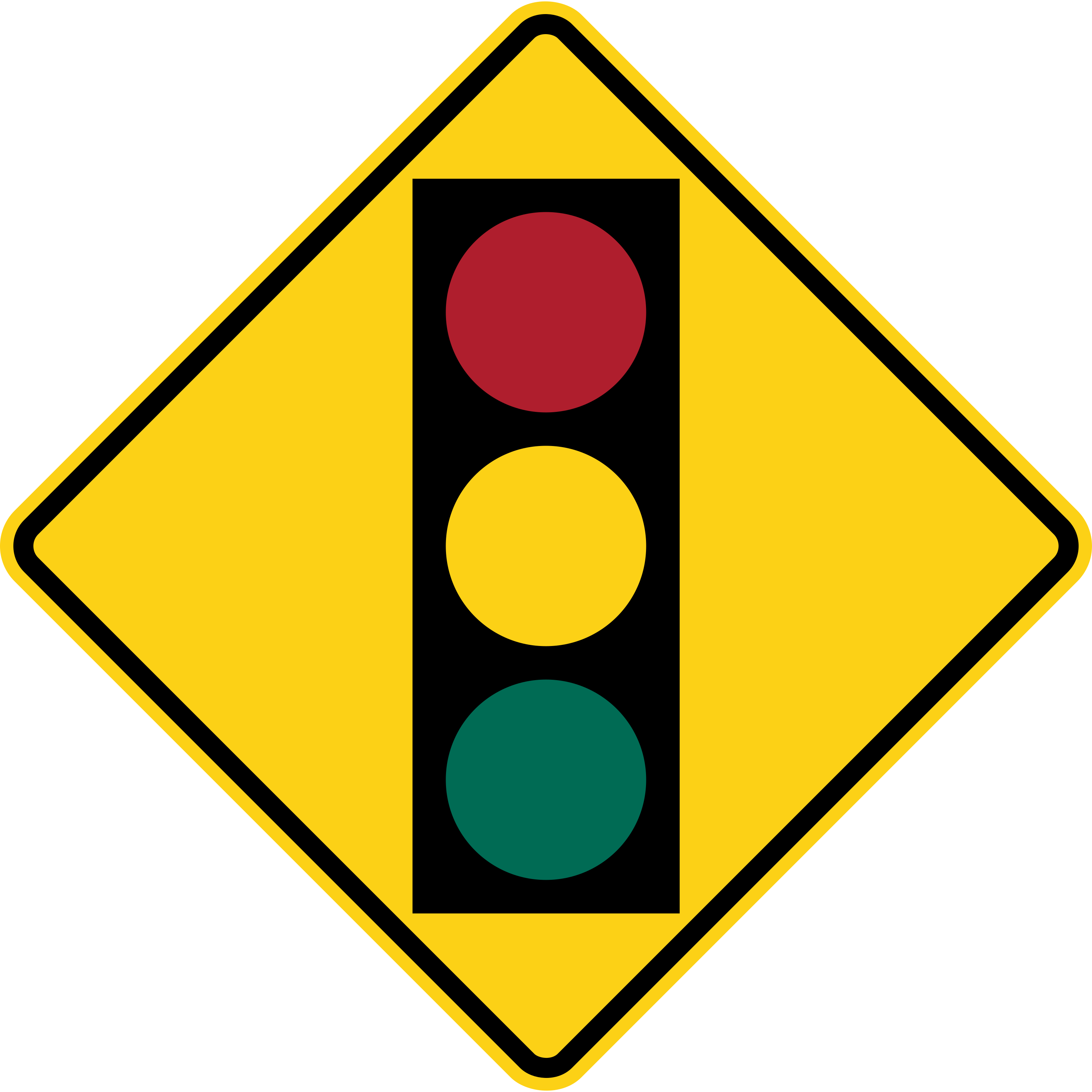
15. After this traffic-signal warning sign, an officer directs you to stop while the light is green. Which instruction controls?
- The green light because it is an automatic control
- The warning sign, which allows continued travel
- The movement of the vehicle ahead of you
- The officer’s instruction to stop
Show answer
The officer’s instruction to stop. An officer directing traffic at an intersection takes precedence over the light’s indication. Full explanation in Test 4
16. The signal displays a red arrow for your right turn. What must you do?
- Remain stopped until an indication allowing movement appears
- Turn slowly because red arrows apply only to left turns
- Turn after a brief stop if no pedestrian is present
- Move into the crosswalk and wait for a gap
Show answer
Remain stopped until an indication allowing movement appears. A red right-turn arrow prohibits that turn until a signal indication permits you to proceed. Full explanation in Test 5
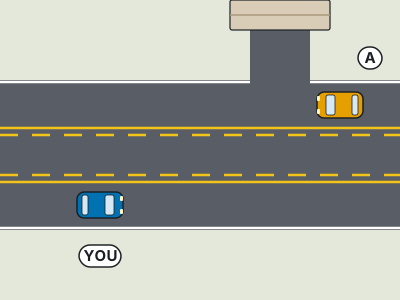
17. With no queue extending beyond the usual limit, what is the maximum distance before a left turn at which you may enter Utah's shared center turn lane?
- 100 feet
- 300 feet
- 500 feet
- 1,000 feet
Show answer
500 feet. The ordinary entry limit is 500 feet before the left turn. Full explanation in Test 6
18. A Utah driver refuses the chemical test an officer selects after a DUI arrest. What happens to the license for a first refusal?
- Revoked for 18 months
- Suspended for 30 days
- Revoked for 36 months
- Nothing until conviction
Show answer
Revoked for 18 months. Refusing the chemical tests selected or designated by the officer carries its own penalty under Utah's implied consent rule. Full explanation in Test 7
19. A Utah driver whose license was suspended for DUI is caught driving. What maximum fine and jail term does the handbook list?
- $100 and 10 days
- $10,000 and five years
- $250 and 30 days
- $1,000 and up to six months
Show answer
$1,000 and up to six months. When the original suspension or revocation is alcohol related, the fine for driving anyway may be up to $1,000 with up to six months in jail Full explanation in Test 8
20. How long do alcohol and drug related violations, suspensions and revocations stay on a Utah driving record?
- Three years
- 10 years
- Five years
- They are removed at reinstatement
Show answer
10 years. Utah's driving record shows moving violation convictions and suspensions within the past three years, but all alcohol and drug related viola Full explanation in Test 9
21. Can taking just one alcoholic drink affect a person’s ability to drive, according to Utah’s handbook?
- No, impairment starts only after two drinks
- No, if the drink is consumed with a meal
- Only if the drink is combined with a prescription drug
- Yes, impairment starts with the first drink
Show answer
Yes, impairment starts with the first drink. Alcohol can affect driving ability beginning with the first drink. Full explanation in Test 10
22. A car is coming toward you at night in Utah with your high beams on. When must you dim them?
- Before you get within 500 feet of the oncoming car
- Within 100 feet of the oncoming car
- Only if the other driver flashes first
- Only on divided highways
Show answer
Before you get within 500 feet of the oncoming car. High beams blind the driver coming toward you, so the handbook requires you to dim your lights before you are within 500 feet of an oncoming Full explanation in Test 11
23. A fire vehicle is responding to an alarm on a Utah road. How closely may you follow it if you are not on official business?
- No closer than 500 feet
- No closer than 100 feet
- As closely as traffic allows
- Within one car length
Show answer
No closer than 500 feet. Fire vehicles responding to an alarm stop suddenly, back into scenes, and are joined by other responders, so Utah law says that unless you a Full explanation in Test 1
24. At the pictured sign, a painted stop line lies before the crosswalk. Where must your vehicle stop?
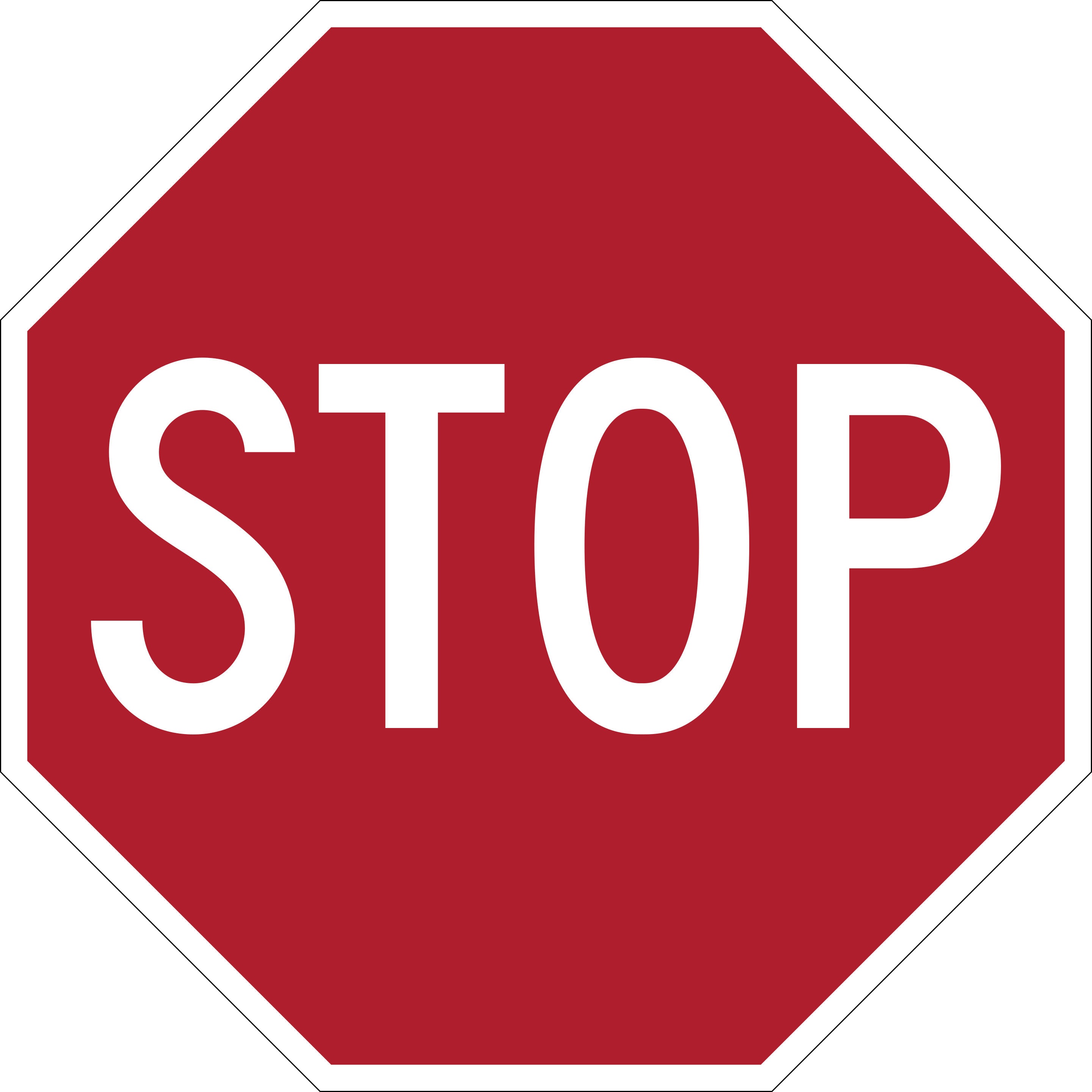
- With the front wheels touching the crosswalk
- Behind the painted stop line
- Beyond the line where cross traffic is easier to see
- Inside the intersection before turning
Show answer
Behind the painted stop line. Position the vehicle behind the stop line so the crosswalk and intersection remain available to other road users. Full explanation in Test 2
25. With no different speed posted and no additional hazard, how fast may you pass Utah school grounds during recess?
- No more than 25 mph
- No more than 20 mph
- No more than 30 mph
- No more than 35 mph
Show answer
No more than 20 mph. The school-ground rule allows 20 mph while passing during recess under the stated conditions. Full explanation in Test 3
26. How does the red slash change the meaning of the left-turn arrow on this sign?
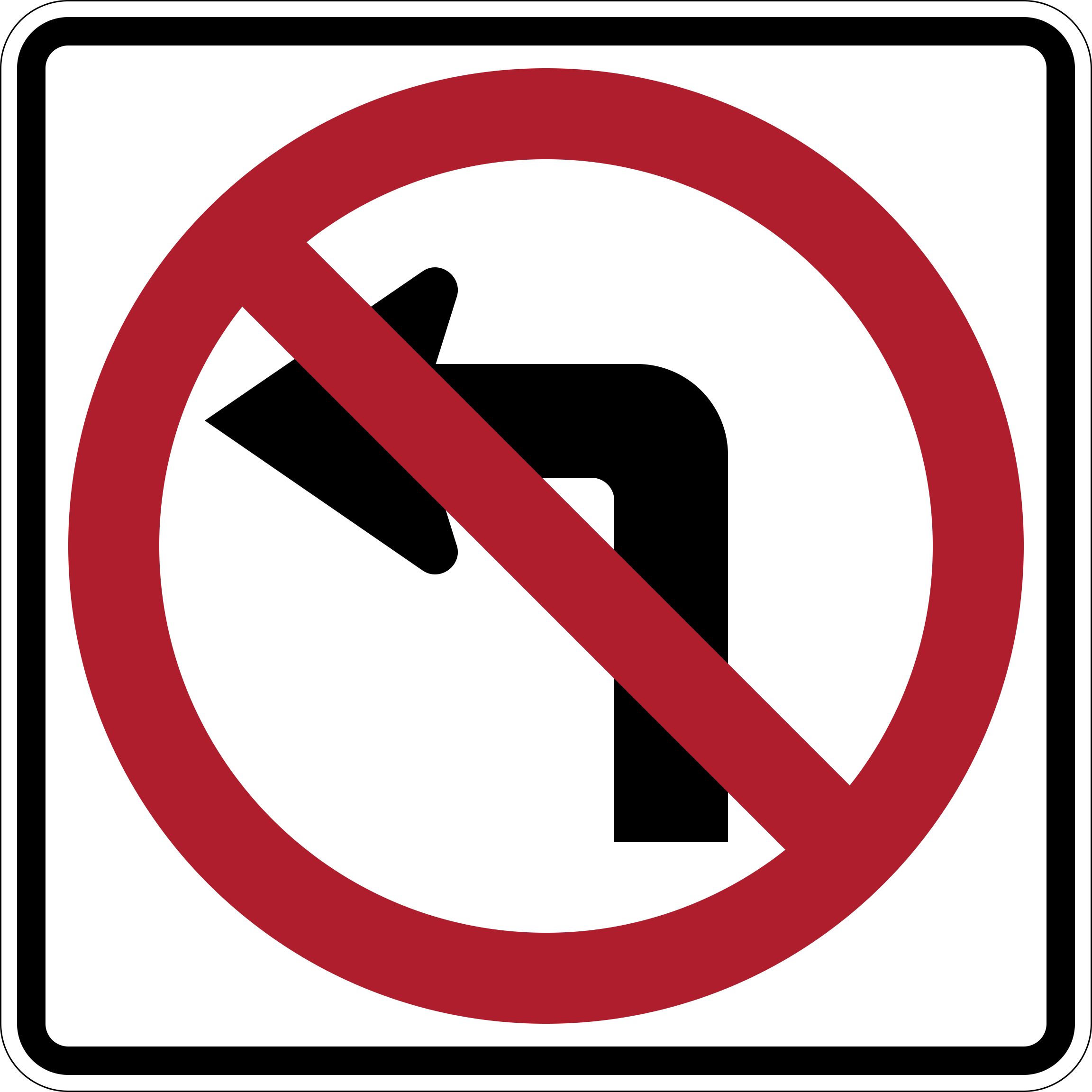
- It reserves left turns for the next green light
- It makes left turns optional
- It warns that left turns require a lower speed
- It prohibits the illustrated left turn
Show answer
It prohibits the illustrated left turn. A red circle and slash across a movement symbol mean that movement is prohibited. Full explanation in Test 4
27. What is required before a Utah driver may make a lane change, according to the signal rule?
- Signal at the moment you move over
- Signal for at least two seconds before beginning the lane change
- No signal is needed if the lane is empty
- Flash the headlights
Show answer
Signal for at least two seconds before beginning the lane change. Utah measures the signal in time, not distance: the handbook says signals are required for two seconds before beginning any lane change and Full explanation in Test 5
28. How does the Utah handbook describe skipping the safety belt because you are only going to the store?
- A poor excuse, and dangerous
- Legal as long as you stay under 25 mph
- Fine if you sit in the back seat
- Acceptable for trips under one mile
Show answer
A poor excuse, and dangerous. Most crashes happen close to home at ordinary speeds, so the handbook calls not using a safety belt because you are just going to the store Full explanation in Test 6
29. Outside of an emergency, may a Utah driver stop, stand, or park on a runaway vehicle ramp?
- Yes, briefly to look at the view from the grade
- Yes, if no trucks are visible
- Yes, for up to five minutes
- No, it is prohibited on the ramp and in its pathway
Show answer
No, it is prohibited on the ramp and in its pathway. Runaway vehicle ramps exist so a vehicle with failed brakes can leave the highway and stop in deep gravel. Full explanation in Test 7
30. A 17 year old Utah driver wants to use a phone while driving. Which use is allowed?
- Talking with friends on speaker
- Using GPS by typing an address
- Communicating with a parent or legal guardian
- Texting at a red light
Show answer
Communicating with a parent or legal guardian. Drivers under 18 may use a handheld wireless device while driving only for a medical emergency, reporting a safety hazard, reporting crimina Full explanation in Test 8
31. What does a flashing yellow traffic light mean in Utah?
- Stop and wait for green
- Stop, then proceed as at a stop sign
- Slow down and proceed with caution
- The signal is broken; ignore it
Show answer
Slow down and proceed with caution. A flashing yellow light is a caution signal, usually shown to the main road while the cross street sees flashing red. Full explanation in Test 9
32. What purpose does this yellow arrow warning sign serve?

- It orders every vehicle to turn at the next driveway
- It designates a lane that must be used for turning
- It identifies a route to a public service
- It warns of a possible danger farther along the road
Show answer
It warns of a possible danger farther along the road. The arrow is a warning about the road ahead, so use it as an early cue to assess your approach speed and the upcoming change in direction. Full explanation in Test 10
33. Where must a Utah driver stop at a stop sign or signal?
- Beside the sign post
- Just past the crosswalk for a better view
- In the middle of the intersection
- Behind the stop line or crosswalk
Show answer
Behind the stop line or crosswalk. The stop line and crosswalk are painted where a stopped vehicle leaves the crossing usable and can still be seen from the side street. Full explanation in Test 11
34. What does Utah law allow a driver over 18 to do with a handheld wireless communication device while driving?
- Send a text at a red light
- Talk on it, as long as voice commands are used and it is not manipulated
- View a video while stopped in traffic
- Enter a phone number by hand while moving
Show answer
Talk on it, as long as voice commands are used and it is not manipulated. Utah's distracted driving law bars using a handheld wireless communication device while driving to write, send or read a text, instant messa Full explanation in Test 1
35. Your view is blocked at a Utah crosswalk. What does the handbook tell you to do?
- Sound the horn and proceed
- Move forward carefully and look both ways before entering the intersection
- Reverse to get a wider view
- Proceed at normal speed since pedestrians will wait
Show answer
Move forward carefully and look both ways before entering the intersection. A parked truck or a hedge can hide a pedestrian who is already stepping into the crosswalk. Full explanation in Test 2
36. After an earlier Not-a-Drop denial, an 18-year-old commits another offense within 10 years. Which period applies under Utah’s repeat-offense rule?
- Six months from the new offense
- Two years or until age 21, whichever is shorter
- Two years or until age 21, whichever is longer
- One year regardless of age
Show answer
Two years or until age 21, whichever is longer. Utah compares a two-year loss of privileges with the time remaining until the person reaches 21 and uses whichever is longer. Full explanation in Test 3
37. A 16 year old in Utah has a driver license (not a permit). During which hours is the teen restricted from driving without a qualifying exception?
- 12 a.m. to 5 a.m.
- 10 p.m. to 6 a.m.
- 9 p.m. to 5 a.m.
- 11 p.m. to 6 a.m.
Show answer
12 a.m. to 5 a.m.. Utah's youthful driver table lists a nighttime restriction from 12 a.m. to 5 a.m. for a 16 year old license holder. Full explanation in Test 4
38. Your brakes fail while driving and you use the parking brake. How should you apply it?
- As sharply as possible to lock the rear wheels
- Fully in one motion, then release it only after stopping
- Slowly, to avoid locking the rear wheels
- Repeatedly and fully without releasing it during a skid
Show answer
Slowly, to avoid locking the rear wheels. Apply the parking brake slowly when using it after the service brakes fail. Full explanation in Test 5
39. Which special hazards does the Utah handbook list as times when the law requires you to slow down?
- Only construction zones
- Only when a police officer is present
- People walking beside the road, heavy traffic, or dangerous road conditions
- Only at railroad crossings
Show answer
People walking beside the road, heavy traffic, or dangerous road conditions. Beyond the posted limits, the handbook says there are times when the law requires you to slow down, and among them are special hazards such Full explanation in Test 6
40. When must a Utah driver come to a complete stop at an intersection with a stop sign or signal?
- Behind any stop signs, signals, sidewalks, or stop lines
- After entering the crosswalk for a better view
- Only at night
- Only if another vehicle is present
Show answer
Behind any stop signs, signals, sidewalks, or stop lines. The handbook gives one rule for stopping at an intersection: come to a complete stop behind any stop signs, signals, sidewalks, or stop line Full explanation in Test 7
41. In Utah, smoking in a vehicle while transporting children of what age is an infraction?
- Children 15 years of age or younger
- Children under 5 only
- Children under 12 only
- It is not an offense in Utah
Show answer
Children 15 years of age or younger. The handbook says it is an infraction to be stopped for smoking in a vehicle while transporting children 15 years of age or younger. Full explanation in Test 8
42. A vehicle ahead on a Utah road shows a fluorescent orange and red triangle on its rear. What does that emblem tell you?

- The vehicle is carrying hazardous materials
- The vehicle is moving less than 25 mph
- The vehicle is oversized and needs an escort
- The vehicle is an emergency vehicle
Show answer
The vehicle is moving less than 25 mph. The orange and red triangle is the slow moving vehicle emblem. Full explanation in Test 9
43. As you approach the intersection indicated by this sign, where should you search for hazards?

- To both the left and right where traffic intersects
- Only along the lane directly ahead
- Only toward traffic approaching from your right
- Only in the rearview mirror until reaching the crossing
Show answer
To both the left and right where traffic intersects. An upcoming crossing calls for a search to the left and right because vehicles can approach from either side. Full explanation in Test 10
44. Under Utah's car seat guidance, how long must children ride rear facing in the back seat?
- Until their first birthday
- Until at least two years of age and 30 pounds, or longer if the seat allows
- Until they can sit up on their own
- Until age eight
Show answer
Until at least two years of age and 30 pounds, or longer if the seat allows. Rear facing seats spread crash forces across a small child's back and head, which is why the handbook says children must be rear facing in t Full explanation in Test 11
45. When must you dim your headlights for bicyclists at night in Utah?
- Never; bicyclists are not covered by the dimming rule
- Only when they flash a light at you
- Within 500 feet when approaching or overtaking them
- Within 50 feet
Show answer
Within 500 feet when approaching or overtaking them. A bicyclist is blinded by high beams just as a driver is, and has less protection if they swerve. Full explanation in Test 1
46. When a Utah driver exits a parallel parking space, what is the first step?
- Open the door to look back
- Turn the wheel fully and accelerate
- Sound the horn
- Check traffic and apply the brake
Show answer
Check traffic and apply the brake. Leaving a parallel space means entering a moving lane from a standstill, so the handbook's first step is to check traffic and apply the brak Full explanation in Test 2
47. A NO RIGHT TURN sign is posted beside a red traffic light. Does stopping first authorize a right turn?
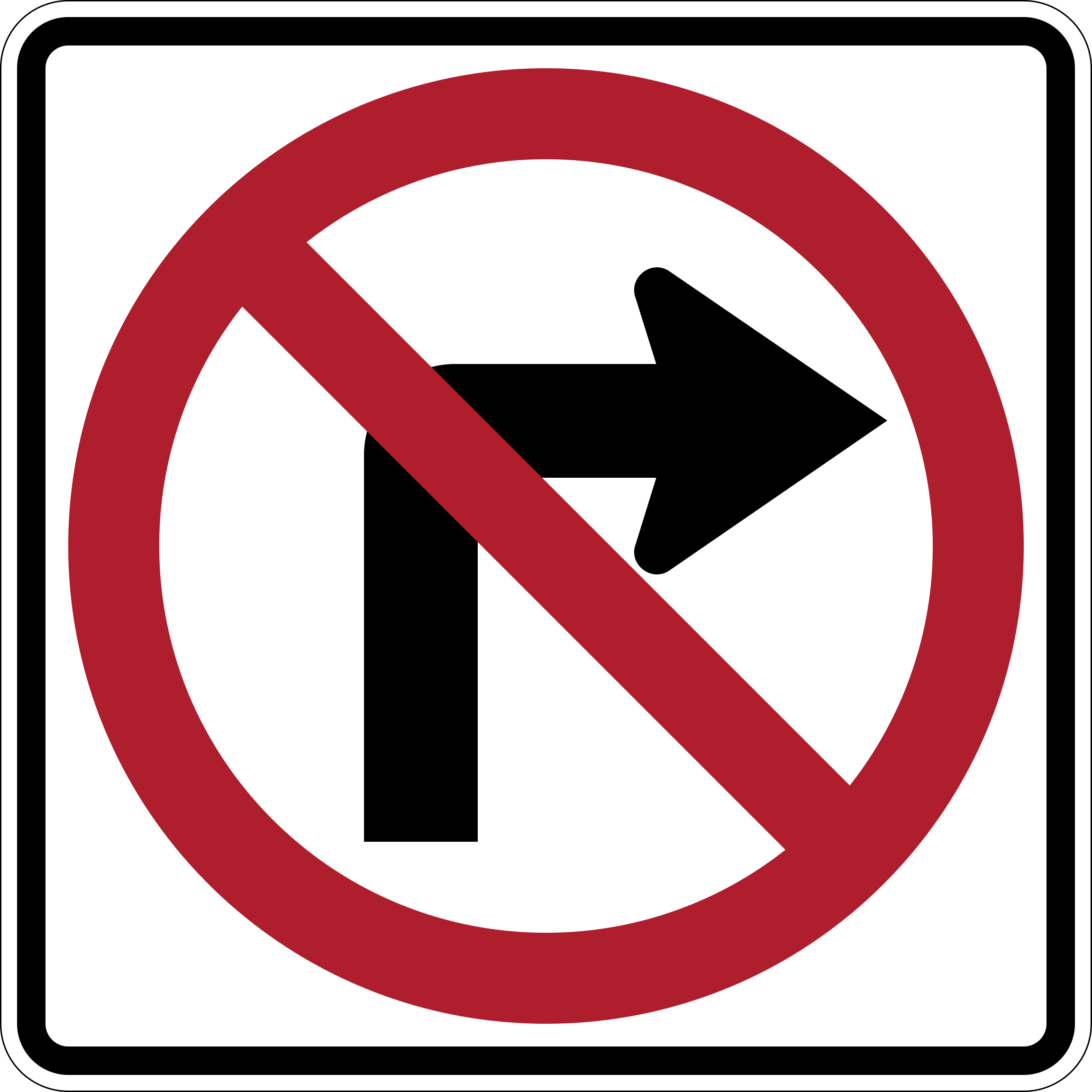
- Yes, if no pedestrian is in the crosswalk
- Yes, once the wheels have completely stopped
- No, a posted restriction prevents that turn
- Yes, because the turn restriction applies only when the light is green
Show answer
No, a posted restriction prevents that turn. A right turn on red is allowed after a complete stop only when signs do not prohibit it. Full explanation in Test 3
48. After a DUI arrest in Utah, when may the division begin the license suspension?
- Immediately at the roadside
- Only after a jury trial
- One year after the arrest
- On the 45th to 60th day after the arrest
Show answer
On the 45th to 60th day after the arrest. Utah law allows the Driver License Division to begin the suspension on the 45th to 60th day after the date of arrest. Full explanation in Test 4
49. A front tire suddenly blows out. What should you expect from the vehicle?
- Only vibration, with no change in the direction of travel
- A hard pull toward the side with the blown tire
- A hard pull away from the damaged tire
- Normal steering until the brake pedal is pressed
Show answer
A hard pull toward the side with the blown tire. A front-tire blowout can pull the vehicle strongly toward the failed tire. Full explanation in Test 5
50. What does the Utah handbook say about how safety features perform in bad weather and on hills and curves?
- They work best in bad weather
- They may not work correctly in rain, snow, ice, fog, hills, and curves
- They replace the need to slow down
- They only work on freeways
Show answer
They may not work correctly in rain, snow, ice, fog, hills, and curves. Lane keeping, adaptive cruise, and similar systems rely on cameras and sensors that rain, snow, ice and fog can blind, and hills and curves Full explanation in Test 6
