Every question below comes from the Oregon question bank on this page. Open a question to see the correct answer and the explanation. Nothing here is hidden behind a signup.
1. Where does Oregon prohibit U-turns in a city?
- Only on one-way streets
- Between intersections, and at signal-controlled intersections unless a sign permits the turn
- Nowhere, U-turns are always legal in cities
- Only near schools
Show answer
Between intersections, and at signal-controlled intersections unless a sign permits the turn. Oregon prohibits U-turns at intersections controlled by a traffic signal unless a sign permits the turn, between intersections in a city, at Full explanation in Test 1
2. When driving slower than the normal flow of traffic in Oregon, where should you drive?
- In the right lane or as close as possible to the right curb or edge
- In the left lane to make faster traffic pass on the shoulder
- On the center line so both lanes remain visible
- In whichever lane has the highest posted limit
Show answer
In the right lane or as close as possible to the right curb or edge. A driver traveling slower than normal traffic must use the right lane or drive as close as possible to the right curb or edge, unless prepar Full explanation in Test 2
3. Your car stalls on railroad tracks and you see a train approaching. After getting out, which way should you move?
- Along the tracks, running away from the train
- Straight across to the far side of the tracks and wait there
- Back into the car with your seat belt fastened
- Away from the tracks at a 45 degree angle, toward the approaching train
Show answer
Away from the tracks at a 45 degree angle, toward the approaching train. Oregon's steps are to get out of the vehicle, get away from the tracks even if no train is visible, and, if safe, use the Emergency Notifica Full explanation in Test 3
4. What is the legal status of an Oregon variable advisory speed sign?
- It recommends a speed based on current conditions
- It permanently replaces every posted speed limit
- It permits travel above the statutory maximum
- It applies only when a police officer is present
Show answer
It recommends a speed based on current conditions. A variable advisory speed sign recommends a speed for conditions such as heavy traffic, poor weather, or a slippery road. Full explanation in Test 4
5. When may a driver proceed past an automated flagger device in an Oregon work zone?
- When the yellow light is flashing and the stop arm is up
- When the red light is on and the arm is down
- Whenever the lane appears clear, regardless of the device
- After sounding the horn twice
Show answer
When the yellow light is flashing and the stop arm is up. An automated flagger device controls movement with its lights and stop arm. Full explanation in Test 5
6. What restriction does the Do Not Pass sign communicate?
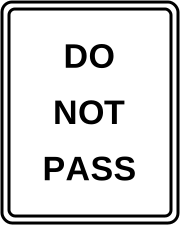
- Passing is prohibited in the indicated area
- Passing is required before the next curve
- Only trucks may pass other vehicles there
- The lane is reserved for vehicles turning left
Show answer
Passing is prohibited in the indicated area. Do Not Pass identifies an area where a driver may not pass another vehicle. Full explanation in Test 6
7. What condition does the Slippery When Wet warning sign identify?

- A required tire-chain inspection area
- A road closed during heavy rain
- Pavement that is unusually slick when wet
- A bridge that floods whenever it rains
Show answer
Pavement that is unusually slick when wet. This warning identifies pavement that becomes unusually slick when wet, so a driver should reduce speed and leave extra room for braking. Full explanation in Test 7
8. What roadway condition is shown by the Sharp Turn warning sign?

- A railroad crossing is immediately ahead
- A four-way intersection is ahead
- The road is narrowing to one lane
- A sharp turn in the road is ahead
Show answer
A sharp turn in the road is ahead. The Sharp Turn symbol warns that the road will change direction abruptly ahead. Full explanation in Test 8
9. What does Oregon's implied consent rule require when a police officer requests a breath, blood, or urine test?
- A driver may refuse with no possible license consequence
- Only commercial drivers have agreed to testing
- Driving means you have agreed to take the requested test
- Testing is required only after a collision with an injury
Show answer
Driving means you have agreed to take the requested test. Oregon's implied consent rule connects the act of driving with agreement to take a breath, blood, or urine test when a police officer asks. Full explanation in Test 9
10. An Oregon school speed zone begins at which sign and ends at which sign or later speed sign?
- The flashing beacon, ending exactly one block after the school
- The school crossing sign, ending when the last student leaves the area
- The SCHOOL SPEED LIMIT 20 sign, ending at END SCHOOL ZONE or another posted speed sign
- The 25 mph sign, ending at the next intersection
Show answer
The SCHOOL SPEED LIMIT 20 sign, ending at END SCHOOL ZONE or another posted speed sign. Oregon defines the school speed zone by its posted boundaries. Full explanation in Test 10
11. When preparing to turn across a bicycle lane, what should a driver do?
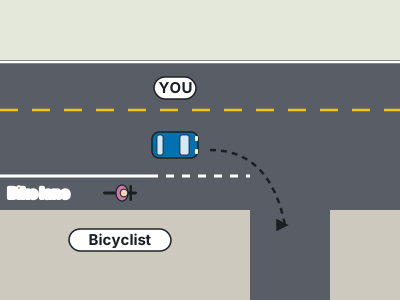
- Yield to people riding bicycles before crossing the lane
- Move into the bicycle lane early and wait there
- Sound the horn so bicyclists must stop
- Turn without checking because bicycles must yield
Show answer
Yield to people riding bicycles before crossing the lane. A driver may cross a bicycle lane to make a turn, but must first check the blind spot and yield to a person riding there or on the sidewalk. Full explanation in Test 11
12. How many hours of supervised driving must an Oregon applicant under 18 have before applying for a driver license?
- 20 hours
- 100 hours, or 50 hours plus an ODOT-approved traffic safety education course
- There is no hour requirement
- 30 hours, all at night
Show answer
100 hours, or 50 hours plus an ODOT-approved traffic safety education course. An Oregon applicant under 18 must have 100 hours of supervised driving experience, or 50 hours plus an ODOT-approved traffic safety educatio Full explanation in Test 1
13. What should a driver anticipate after seeing the pedestrian crossing warning?

- A vehicle checkpoint ahead
- A roadway where pedestrians are forbidden
- A sidewalk repair zone with no crossing activity
- People crossing the driver's path
Show answer
People crossing the driver's path. The walking figure warns that people may cross the vehicle's path. Full explanation in Test 2
14. A bus from a place of worship stops ahead of you and turns on flashing red lights. How should you respond?
- Ignore them, because only school buses require a stop
- Treat the lights the same as you would a school bus
- Slow to 20 mph and pass carefully
- Stop only if you can see children getting off
Show answer
Treat the lights the same as you would a school bus. Oregon permits places of worship and worker transport buses to use flashing amber and red lights. Full explanation in Test 3
15. A low speed Oregon crash leaves only $400 of vehicle damage, but the other driver is injured. Is a DMV collision report required?
- No, because damage is under the $2,500 threshold
- No, the injured driver is the one who must report
- Yes, any injury or death makes the collision reportable
- Only if the injured driver goes to a hospital that day
Show answer
Yes, any injury or death makes the collision reportable. Oregon's reporting list includes any collision that results in injury or death, regardless of the dollar amount of damage. Full explanation in Test 4
16. On a two-lane road in Oregon, where may a pass begin?
- Anywhere the driver can accelerate
- Inside an intersection if traffic is light
- Only after the start of a passing zone
- Inside a no-passing zone if the vehicle is slow
Show answer
Only after the start of a passing zone. On a two-lane road, a pass must begin after the start of a passing zone and finish before entering a no-passing zone. Full explanation in Test 5
17. A 16 year old wants to ride in the open bed of a friend's pickup truck on an Oregon road. What does state law say?
- It is allowed if the truck stays under 25 mph
- It is allowed on rural roads but not in cities
- It is allowed if an adult also rides in the bed
- Anyone under 18 is prohibited from riding in a pickup bed
Show answer
Anyone under 18 is prohibited from riding in a pickup bed. Oregon law bars anyone under 18 from riding on the hood, fender, running board, or any other external part of a vehicle, and the pickup bed Full explanation in Test 6
18. A new Oregon resident is surrendering a license from another state. When may DMV waive the drive test for this driver?
- When that license is valid or expired less than one year
- Only when the license came from a neighboring state
- When the license expired less than five years ago
- Never, because every new resident must take a drive test
Show answer
When that license is valid or expired less than one year. DMV may skip the drive test for a new resident who surrenders an out of state license that is still valid or that expired less than one year Full explanation in Test 7
19. The pictured KEEP RIGHT sign appears before a traffic island. Where should you drive?
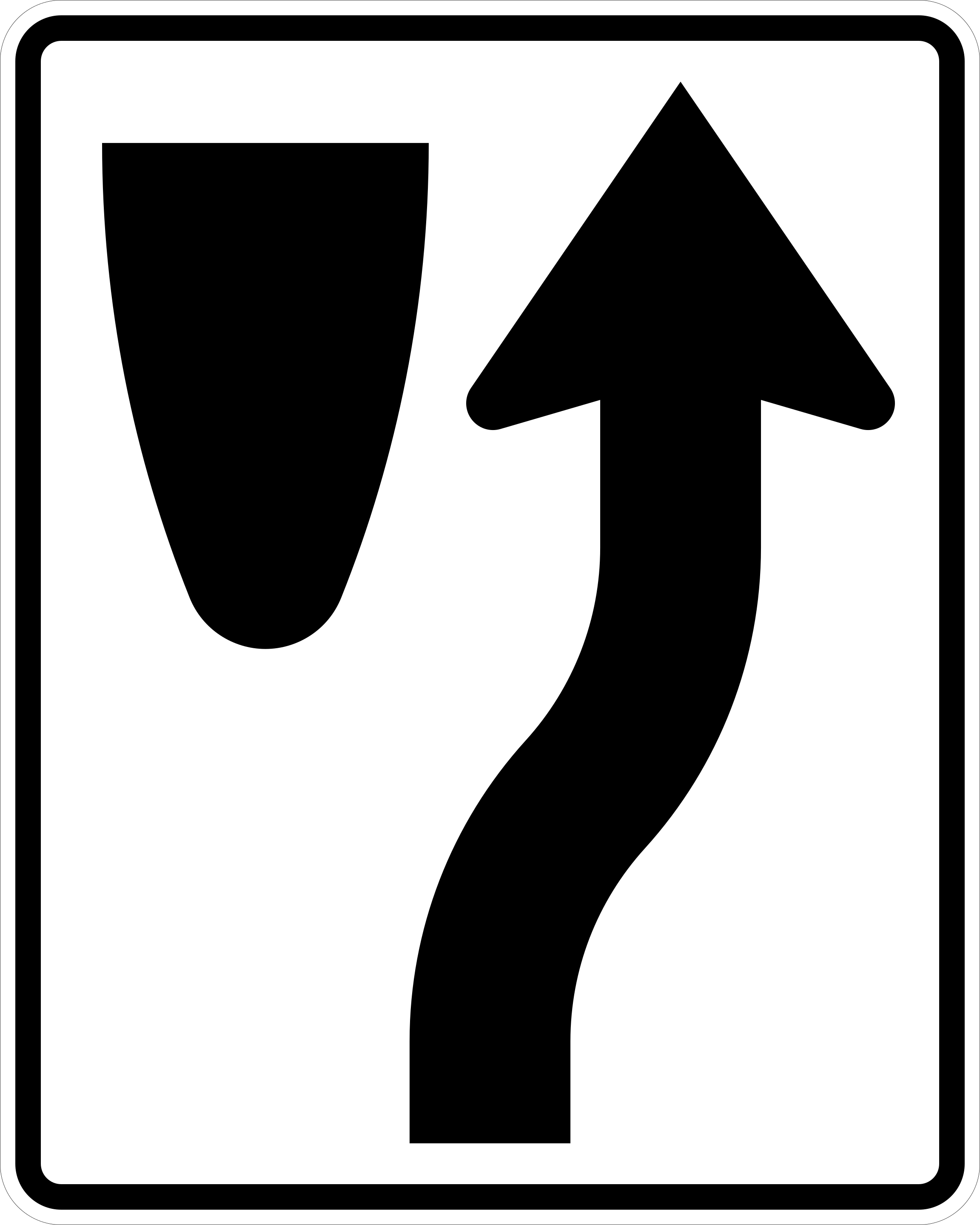
- Across the island if no vehicle is approaching
- To the left of the obstruction because traffic keeps left there
- To the right of the island, median, or obstruction
- Into the opposing lane until the obstruction ends
Show answer
To the right of the island, median, or obstruction. This sign marks an obstruction that divides or interrupts the roadway and directs traffic to pass on its right side. Full explanation in Test 8
20. For an Oregon Class C knowledge test, how many questions must a person answer correctly to pass?
- 28 of 35
- 25 of 35
- 30 of 40
- 20 of 25
Show answer
28 of 35. The Class C knowledge test has 35 multiple-choice questions, and Oregon requires 28 correct answers for a passing score. Full explanation in Test 9
21. Which maneuver is prohibited by the crossed left arrow shown here?
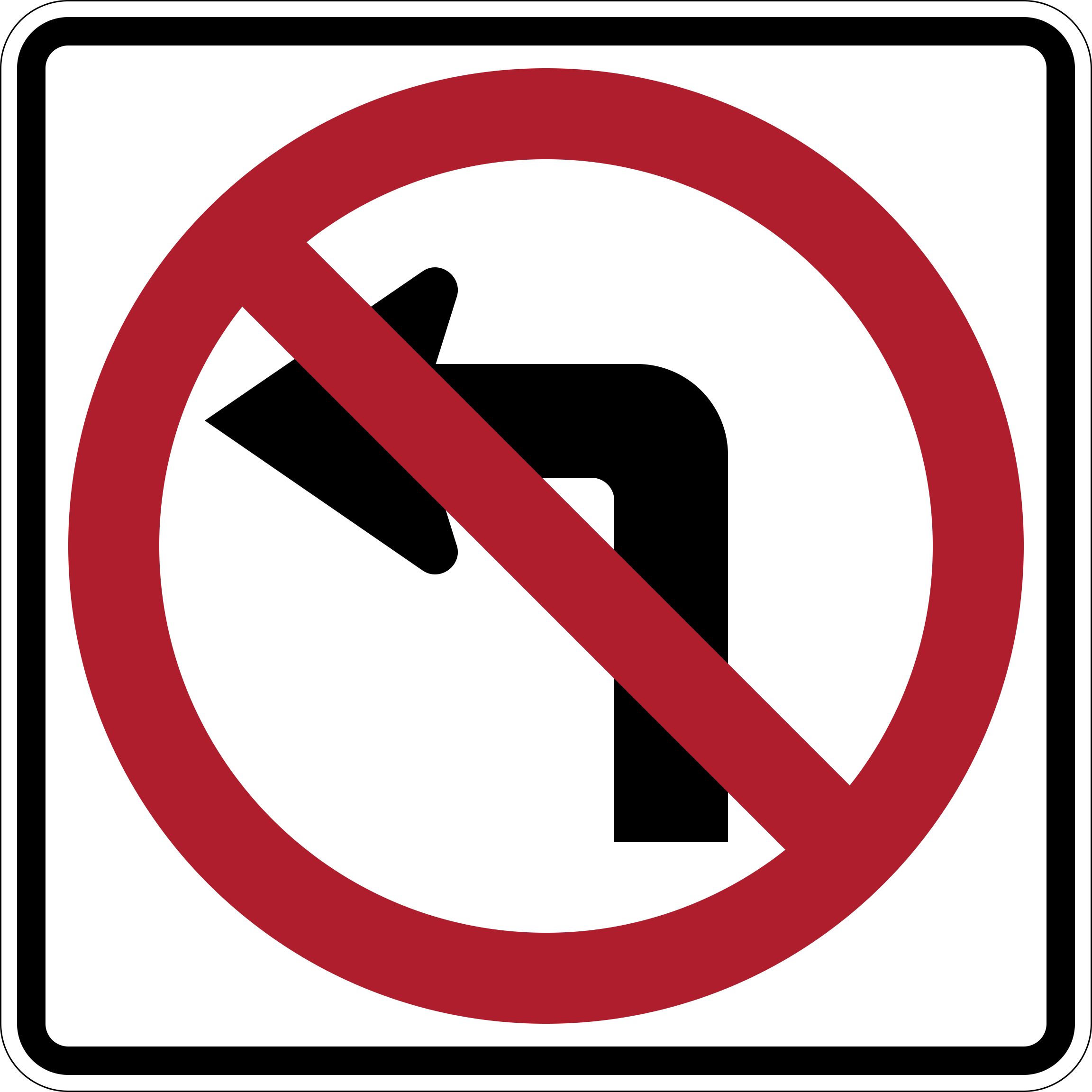
- Turning left from the approach controlled by the sign
- Making a legal right turn at the same intersection
- Proceeding straight through the intersection
- Stopping for a pedestrian in the marked crosswalk
Show answer
Turning left from the approach controlled by the sign. The symbol shows a leftward turn with a red slash, so that particular left movement is forbidden where the sign is posted. Full explanation in Test 10
22. Who may be in the vehicle during an Oregon drive test?
- Only the applicant and the examiner
- The applicant, the examiner, and a translator
- The applicant, the examiner, and one parent
- Anyone, as long as pets stay in a carrier
Show answer
Only the applicant and the examiner. Only you and the examiner are allowed in the vehicle during an Oregon drive test; translators, family, friends and pets are not allowed. Full explanation in Test 11
23. Under Oregon's zero-tolerance rule, at what BAC will a driver under 21 fail the alcohol test?
- Any amount of alcohol
- 0.04 percent or more
- 0.08 percent or more
- Only a result above 0.10 percent
Show answer
Any amount of alcohol. A driver under 21 fails Oregon's alcohol test with any amount of alcohol in the blood. Full explanation in Test 1
24. What road situation is associated with the five-sided school sign?

- An adult-only crosswalk outside a school area
- A recreation area where pedestrians are prohibited
- A school zone or school crossing requiring extra attention
- A park entrance where vehicles have priority
Show answer
A school zone or school crossing requiring extra attention. The distinctive five-sided shape is used for school-related warnings, including a school zone or school crossing. Full explanation in Test 2
25. How far may a load on an Oregon passenger vehicle extend beyond the right fenders?
- No more than 12 inches
- No more than 6 inches
- No more than 4 feet
- Not at all, the same as on the left side
Show answer
No more than 6 inches. Passenger vehicles may carry a load that sticks out no more than 6 inches beyond the right fenders. Full explanation in Test 3
26. What should you do when a traffic signal is dark because of a power failure?
- Treat it as stop signs in all directions
- Wait for a police officer before moving
- Treat it as a yield sign
- Proceed if no vehicle is approaching
Show answer
Treat it as stop signs in all directions. A dark signal is not permission to continue through the intersection. Full explanation in Test 4
27. You back into a parked, empty car in Oregon and cannot find its owner. What are you required to do?
- Leave a note with your name, address, and a brief description of what happened
- Drive away, because no one was in the car
- Leave only your license plate number on the windshield
- Wait beside the car until the owner returns, however long it takes
Show answer
Leave a note with your name, address, and a brief description of what happened. When you hit an unoccupied vehicle, first try to find the owner. Full explanation in Test 5
28. You fail your Oregon drive test on a Tuesday. When is the earliest you may retake it?
- Later that same day if an examiner is free
- One week later
- The next business day
- After a 90 day waiting period
Show answer
The next business day. Oregon makes a failed drive test wait until the next business day before a retest, so a same day second attempt is not available even if an Full explanation in Test 6
29. What fines does Oregon list for parking in a disabled person space without a Disabled Person Parking Permit?
- From $50 up to $250
- From $250 up to $2,500
- A flat $100 fine
- From $165 up to $1,000
Show answer
From $165 up to $1,000. Oregon warns that parking in a space reserved for persons with disabilities without a valid permit is expensive: fines start at $165 and can Full explanation in Test 7
30. What should a driver expect from an Oregon pedestrian crossing warning sign?
- A pedestrian signal will remain red for the entire crossing
- People may be crossing the vehicle's path
- The crosswalk is limited to people walking from the right
- The road narrows because bicycles must use the lane
Show answer
People may be crossing the vehicle's path. A pedestrian crossing warning sign tells drivers to be alert for people crossing their path. Full explanation in Test 8
31. What is Oregon's statutory maximum speed in an alley, unless a different limit is posted?
- 25 mph
- 20 mph
- 15 mph
- 35 mph
Show answer
15 mph. Oregon sets a 15 mph maximum for driving in alleys. Full explanation in Test 9
32. What should a driver expect after seeing a Winding Road warning sign?

- A series of turns or curves
- A straight road with a wide shoulder
- A divided highway beginning ahead
- A mandatory detour around construction
Show answer
A series of turns or curves. The Winding Road warning signals repeated changes in direction, not one isolated bend. Full explanation in Test 10
33. In an Oregon work zone, when do temporary posted speed limits apply?
- Only while workers are visible
- Only during daylight hours
- Only when traffic is stopped
- At all times
Show answer
At all times. A temporary speed posted in a work zone applies at all times, even when workers are not visible. Full explanation in Test 11
34. What does the Crossroad warning sign indicate?

- The road ends at a railroad crossing
- A four-way intersection is ahead, and cross-traffic may enter
- Traffic must merge into the left lane
- A roundabout is already in the roadway
Show answer
A four-way intersection is ahead, and cross-traffic may enter. Crossroad warns that a four-way intersection is ahead and vehicles may enter from the crossing road. Full explanation in Test 1
35. Which vehicles does Oregon allow a passenger vehicle to tow at one time?
- Two trailers if the total weight is low
- None, towing requires a commercial license
- Any number with a permit
- A maximum of one boat, trailer, or other vehicle
Show answer
A maximum of one boat, trailer, or other vehicle. Oregon law allows you to tow a maximum of one boat, general utility trailer, or other vehicle behind a passenger or recreational vehicle, an Full explanation in Test 2
