Every question below comes from the New Jersey question bank on this page. Open a question to see the correct answer and the explanation. Nothing here is hidden behind a signup.
1. A New Jersey crash causes more than $500 in property damage, and the police do not file a report. What must the driver do?
- Nothing, since the insurer handles it
- Report to the MVC within 30 days
- Phone the MVC within 24 hours
- Send a written report to the MVC within 10 days
Show answer
Send a written report to the MVC within 10 days. When a New Jersey crash causes personal injury or property damage over $500, the motorist must send a written report to the MVC within 10 da Full explanation in Test 1
2. When must a pass be completed under New Jersey’s road-marking guidance?
- After the yellow dashed lines become solid
- Before the yellow dashed lines become solid
- Only after crossing a double solid yellow line
- Whenever the vehicle behind begins flashing headlights
Show answer
Before the yellow dashed lines become solid. New Jersey says a pass must be completed before the yellow dashed lines become solid. Full explanation in Test 2
3. After a first DUI with BAC from 0.08% to below 0.10%, how long is an ignition interlock required after restoration?
- Three months
- Nine to 15 months
- Two to four years
- Seven months to one year
Show answer
Three months. For a first DUI offense with BAC at least 0.08% but below 0. Full explanation in Test 3
4. Where must a New Jersey GDL driver under 21 display the two red reflective decals?
- On the rear windshield and the driver's side window
- On the rear bumper only
- Inside the windshield next to the inspection sticker
- On the top left corner of the front and rear license plates
Show answer
On the top left corner of the front and rear license plates. The New Jersey decals go on the license plates themselves: one at the top left corner of the rear plate and one at the top left corner of th Full explanation in Test 4
5. Rumble strips are placed to do what for a New Jersey driver?
- Alert the driver to a decision point or danger ahead
- Mark a legal passing lane
- Show the distance to the next exit
- Replace every nearby warning sign
Show answer
Alert the driver to a decision point or danger ahead. Rumble strips create vibration and noise that can wake a drowsy driver and call attention to a decision point or hazard ahead. Full explanation in Test 5
6. A single solid white line crosses a New Jersey road at an intersection. Where should the motorist stop?
- Past the line inside the intersection
- Behind the line for the traffic signal or sign
- Beside the line only if a pedestrian is present
- On the shoulder before reaching the intersection
Show answer
Behind the line for the traffic signal or sign. At an intersection, one solid white line marks the stopping point for a traffic signal or sign. Full explanation in Test 6
7. What qualifications must an adult supervising a New Jersey permit holder meet?
- At least 21, with a valid New Jersey license and three years of driving experience
- At least 18, with any valid license
- At least 21, with one year of driving experience
- At least 25, with five years of driving experience
Show answer
At least 21, with a valid New Jersey license and three years of driving experience. The supervising adult must be at least 21 years old, hold a valid New Jersey driver license, and have a minimum of three years of driving ex Full explanation in Test 7
8. A New Jersey resident plans to learn with a parent instead of a driving school. What is the minimum age for this examination permit?
- 17
- 16
- 18
- 21
Show answer
17. New Jersey's examination permit does not need a student enrollment or an instructor, and it is available once a resident is at least 17 and Full explanation in Test 8
9. How can a New Jersey motorist tell that a child restraint system meets federal safety standards?
- It has a metal frame
- It was sold in a store
- It carries a label with the manufacture date stating it conforms to federal motor vehicle safety standards
- It fits tightly in the seat
Show answer
It carries a label with the manufacture date stating it conforms to federal motor vehicle safety standards. All child restraint systems built since January 1, 1981 must be designed to pass tough safety tests, and these seats carry a label that give Full explanation in Test 9
10. On what basis are New Jersey highways designated as safe corridors?
- Crash rates 50 percent over the state rate and 1,000 or more crashes reported over three years
- Proximity to schools
- Requests from local police
- Heavy truck traffic alone
Show answer
Crash rates 50 percent over the state rate and 1,000 or more crashes reported over three years. Highways are designated as safe corridors based on statistics showing crash rates 50 percent over the state rate and 1,000 or more crashes r Full explanation in Test 10
11. What parking distance from a crosswalk at an intersection is prohibited in New Jersey, unless an alley exception applies?
- Within 10 feet
- Within 25 feet
- Within 40 feet
- Within 50 feet
Show answer
Within 25 feet. New Jersey bars parking within 25 feet of a crosswalk at an intersection or the sideline of a street or intersection highway, with the manua Full explanation in Test 11
12. What legal status do road markings have in New Jersey?
- They have the same force of law as signs or traffic signals
- They apply only to commercial vehicles
- They are suggestions that may be ignored when traffic is light
- They are advisory unless a police officer is present
Show answer
They have the same force of law as signs or traffic signals. New Jersey gives road markings the same force of law as signs or traffic signals. Full explanation in Test 12
13. A New Jersey driver leaves the scene of a crash in which someone was injured. How many points are assessed?
- Two
- Eight
- Four
- Five
Show answer
Eight. Leaving the scene is split into two lines on New Jersey's point chart. When no one is hurt, it is 2 points. Full explanation in Test 1
14. What are New Jersey warning signs for?

- License renewal fees and document requirements
- Parking payment instructions at municipal meters
- Road conditions that need caution and specific hazards
- Information about motorist services only
Show answer
Road conditions that need caution and specific hazards. New Jersey warning signs identify road conditions that need caution and specific hazards encountered during road operations. Full explanation in Test 2
15. What kinds of hazards can New Jersey warning signs identify?

- Only toll booths and route numbers
- Only vehicle inspection stations and rest areas
- Only lane-use rules printed on white signs
- Road conditions, deer crossings, railroad crossings, school crossings, or curved roadways
Show answer
Road conditions, deer crossings, railroad crossings, school crossings, or curved roadways. The manual says warning signs can alert motorists to road conditions, deer crossings, railroad crossings, school crossings, or curved roadwa Full explanation in Test 3
16. What information is normally provided by a blue New Jersey motorist-service sign?
- A route number and destination distance
- A public recreation site or scenic viewpoint
- A temporary lane closure ahead
- Services and information for motorists
Show answer
Services and information for motorists. Blue motorist-service signs communicate services and information. Full explanation in Test 4
17. A parent or guardian is convicted of DUI while a minor is a passenger. What additional consequence is listed?
- Only a written warning
- Permanent loss of parental rights
- A disorderly persons offense, suspension up to six months, and up to five days of community service
- A mandatory ten-year license suspension
Show answer
A disorderly persons offense, suspension up to six months, and up to five days of community service. The minor-passenger circumstance adds a disorderly persons offense when the driver is a parent or guardian convicted of DUI. Full explanation in Test 5
18. At what approximate speed should a New Jersey motorist drive in reverse?
- 15 to 20 mph to maintain momentum
- Walking speed, about 2 to 4 mph
- The posted speed limit for the street
- At least 30 mph on a straight path
Show answer
Walking speed, about 2 to 4 mph. When reversing, New Jersey advises driving slowly at approximately walking speed, about 2 to 4 mph. Full explanation in Test 6
19. Under New Jersey GDL Option A, what minimum supervised practice is required before advancing from the learner stage?
- 50 hours, including 10 hours in darkness
- 60 hours, including 20 hours after sunset
- Three months with no hour requirement
- 30 hours, all during daylight
Show answer
50 hours, including 10 hours in darkness. The early-bird pathway requires at least 50 practice-driving hours, and 10 of those hours must occur during darkness. Full explanation in Test 7
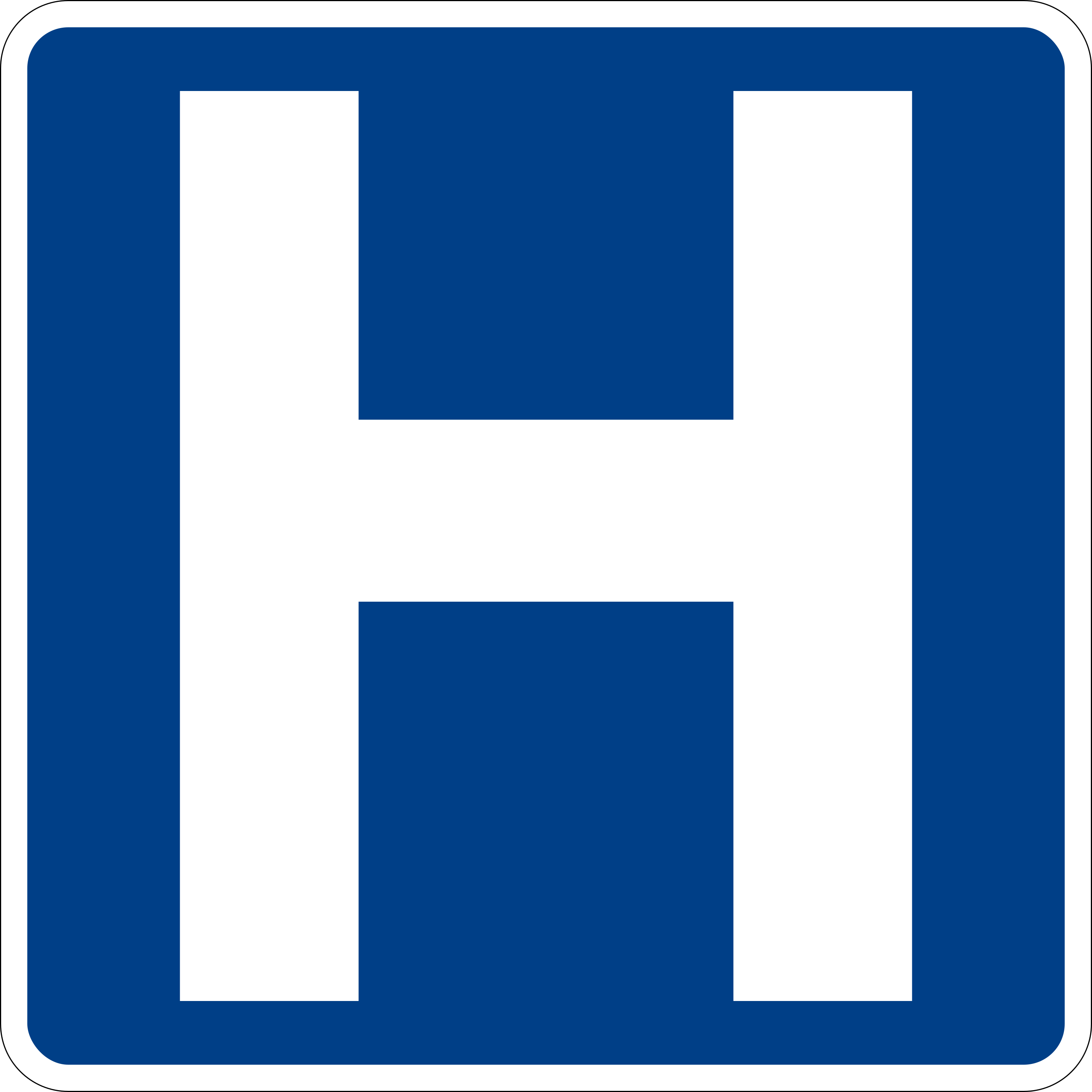
20. What do motorist service signs provide?
- Advance notice of a lane reduction
- The legal speed for every roadway
- A command to make a U-turn
- Information about motorist services
Show answer
Information about motorist services. Motorist service signs provide information about services available to drivers. Full explanation in Test 8
21. A pedestrian has not entered the roadway and faces an orange steady raised palm. What should happen?
- Start crossing quickly
- Remain on the sidewalk and do not enter
- Walk diagonally against traffic
- Enter after a driver waves
Show answer
Remain on the sidewalk and do not enter. The steady raised palm tells a person still on the sidewalk or curb not to enter the roadway. Full explanation in Test 9
22. What is the ordinary maximum idling time for a vehicle in New Jersey?
- Five minutes at all locations
- Three minutes
- Ten minutes when parked
- There is no statewide limit
Show answer
Three minutes. New Jersey law requires motorists to restrict vehicle idling to three minutes or less. Full explanation in Test 10
23. a steady (not flashing) DON'T WALK hand symbol at an intersection means?
- Only when a police officer directs traffic
- Do NOT start crossing the street
- The condition is limited to school zones
- Cross only if there are no cars coming
Show answer
Do NOT start crossing the street. A steady DON'T WALK hand means pedestrians who have not left the sidewalk or curb should not enter the roadway. Full explanation in Test 11
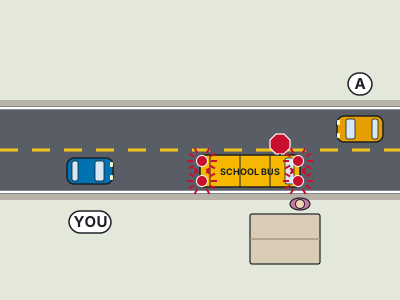
24. On a two-lane road, a school bus ahead has flashing red lights. How far away must approaching motorists stop?
- At least 10 feet
- At least 50 feet
- At least 25 feet
- Only after the bus begins moving again
Show answer
At least 25 feet. On a two-lane road, a motorist must stop at least 25 feet from a school bus with flashing red lights. Full explanation in Test 12
25. How many points does New Jersey charge for improperly passing a school bus?
- 5
- 2
- 4
- 8
Show answer
5. Passing a school bus illegally is a 5 point violation in New Jersey, among the highest values on the chart. Full explanation in Test 1
26. What legal force do New Jersey road markings have?
- Only advisory force when traffic is light
- Force only for commercial drivers
- No force unless a police officer is present
- The same force of law as signs or traffic signals
Show answer
The same force of law as signs or traffic signals. New Jersey treats road markings as legally binding controls, giving them the same force of law as signs or traffic signals. Full explanation in Test 2
27. What general feature identifies New Jersey regulatory signs?
- They are always yellow diamonds with black symbols
- They are blue circles with white arrows
- They are orange triangles used only in work zones
- They are generally rectangular with black wording and border on white
Show answer
They are generally rectangular with black wording and border on white. New Jersey describes regulatory signs as generally rectangular, with black wording and a black border on a white background. Full explanation in Test 3
28. What do yellow edge lines separate from the travel lane?
- Opposing traffic lanes
- The shoulder
- A railroad crossing gate
- A pedestrian waiting area
Show answer
The shoulder. Yellow edge lines separate the shoulder from the travel lane and show the edge of the highway. Full explanation in Test 4
29. Which locations does the manual list as examples of road hazards that warning signs may identify?
- Only parking lots and driveways
- Gas stations, rest areas, and hospitals
- Hills, dips, narrow bridges, bumps, and railroad tracks
- Traffic lights, stop signs, and toll booths
Show answer
Hills, dips, narrow bridges, bumps, and railroad tracks. The manual lists hills, dips, narrow bridges, bumps, and railroad tracks as examples of road hazards. Full explanation in Test 5
30. After moving permanently to New Jersey with a valid out-of-state license, when must a motorist apply for a New Jersey license?
- Within 60 days or before the current license expires, whichever is sooner
- Only after the out-of-state license has expired
- Within 10 days, regardless of the license expiration date
- Within two years of establishing residency
Show answer
Within 60 days or before the current license expires, whichever is sooner. A motorist with a valid out-of-state license must apply for a New Jersey license within 60 days of moving, or before the current license exp Full explanation in Test 6
31. What does a white steady pedestrian silhouette or countdown indication allow?
- Pedestrians must wait until every vehicle stops
- Only turning vehicles may use the crosswalk
- Pedestrians may cross anywhere without watching traffic
- Pedestrians may cross in the indicated direction
Show answer
Pedestrians may cross in the indicated direction. The white pedestrian indication permits people facing it to cross in the shown direction. Full explanation in Test 7
32. as a pedestrian, when you see a FLASHING raised hand or a countdown timer at the crosswalk, you should?
- Wait until the hand signal turns off completely
- NOT start crossing; if you are already in the road, finish crossing
- Only when a police officer directs traffic
- The driver may cross the median when clear
Show answer
NOT start crossing; if you are already in the road, finish crossing. A flashing raised hand or countdown warns pedestrians not to begin crossing, while a person already in the roadway should quickly reach a sa Full explanation in Test 8
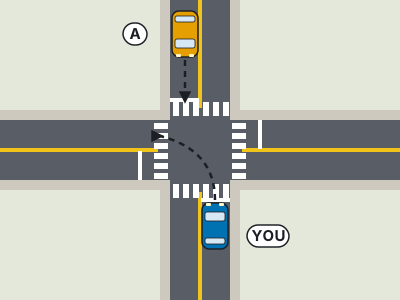
33. Before making a left turn on a green light, what must a New Jersey driver yield to?
- Only vehicles behind the turning car
- No one because green always gives priority
- Approaching vehicles and pedestrians in the conflict area
- Only pedestrians on the far sidewalk
Show answer
Approaching vehicles and pedestrians in the conflict area. A green light permits movement, but a turning driver still yields to pedestrians and approaching vehicles. Full explanation in Test 9
34. Which label identifies the yellow plus-shaped intersection warning?
- Side Road
- Merge
- Cross Road
- Divided Highway
Show answer
Cross Road. Cross Road identifies the yellow plus-shaped warning for an intersection where another road crosses the driver's route. Full explanation in Test 10
35. How many visible red reflective decals must a New Jersey GDL driver under 21 display?
- Four, one at each corner
- One, on the rear plate only
- Two, both on the front plate
- Two, one on the front plate and one on the rear plate
Show answer
Two, one on the front plate and one on the rear plate. A permit or probationary license holder who is under 21 must display two visible red reflective GDL decals. Full explanation in Test 11
36. A New Jersey driver experiences a tire blowout. What should the driver do first?
- Brake hard before moving toward the shoulder
- Turn sharply toward the nearest open lane
- Release the steering wheel so the vehicle can coast freely
- Hold the steering wheel firmly and keep the vehicle straight
Show answer
Hold the steering wheel firmly and keep the vehicle straight. During a blowout, the first priority is keeping the vehicle pointed straight. Full explanation in Test 12
37. A yellow curved-arrow sign appears before a New Jersey roadway bend. What should the driver do?

- Turn only at the next intersection
- Slow down before entering the curve
- Accelerate until the curve is complete
- Follow a detour around construction
Show answer
Slow down before entering the curve. A curved-arrow warning identifies a bend in the road and gives the driver time to prepare. Full explanation in Test 1
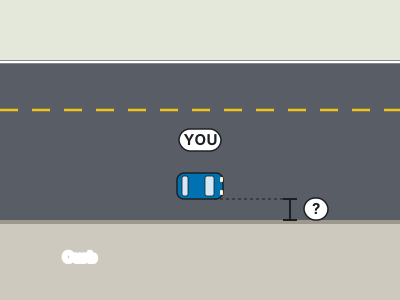
38. When parallel parking in New Jersey, how far from the curb should the tires be at the end?
- About two feet
- No more than six inches
- At least four feet
- Touching the curb with both tires
Show answer
No more than six inches. After completing a parallel-park maneuver, New Jersey says the vehicle's tires should be no more than six inches from the curb. Full explanation in Test 2
39. If a solid yellow line is on your side of the road, what passing action is allowed?
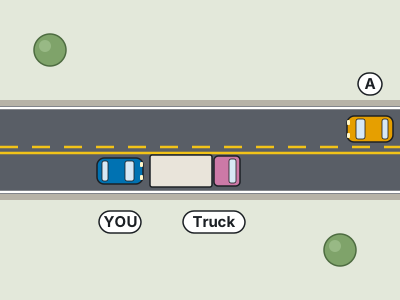
- Pass whenever the road ahead appears clear
- Do not pass
- Pass only at night
- Cross the line to avoid a slow vehicle
Show answer
Do not pass. When the solid yellow line is on the motorist’s side, passing is prohibited. Full explanation in Test 3
40. How many proofs of New Jersey residential address are required for a REAL ID license application?
- Two
- Three notarized proofs
- No address proof
- One
Show answer
Two. For a REAL ID New Jersey driver license, the applicant must provide two proofs of a New Jersey residential address. Full explanation in Test 4
41. A red-bordered inverted triangle in New Jersey identifies which instruction?
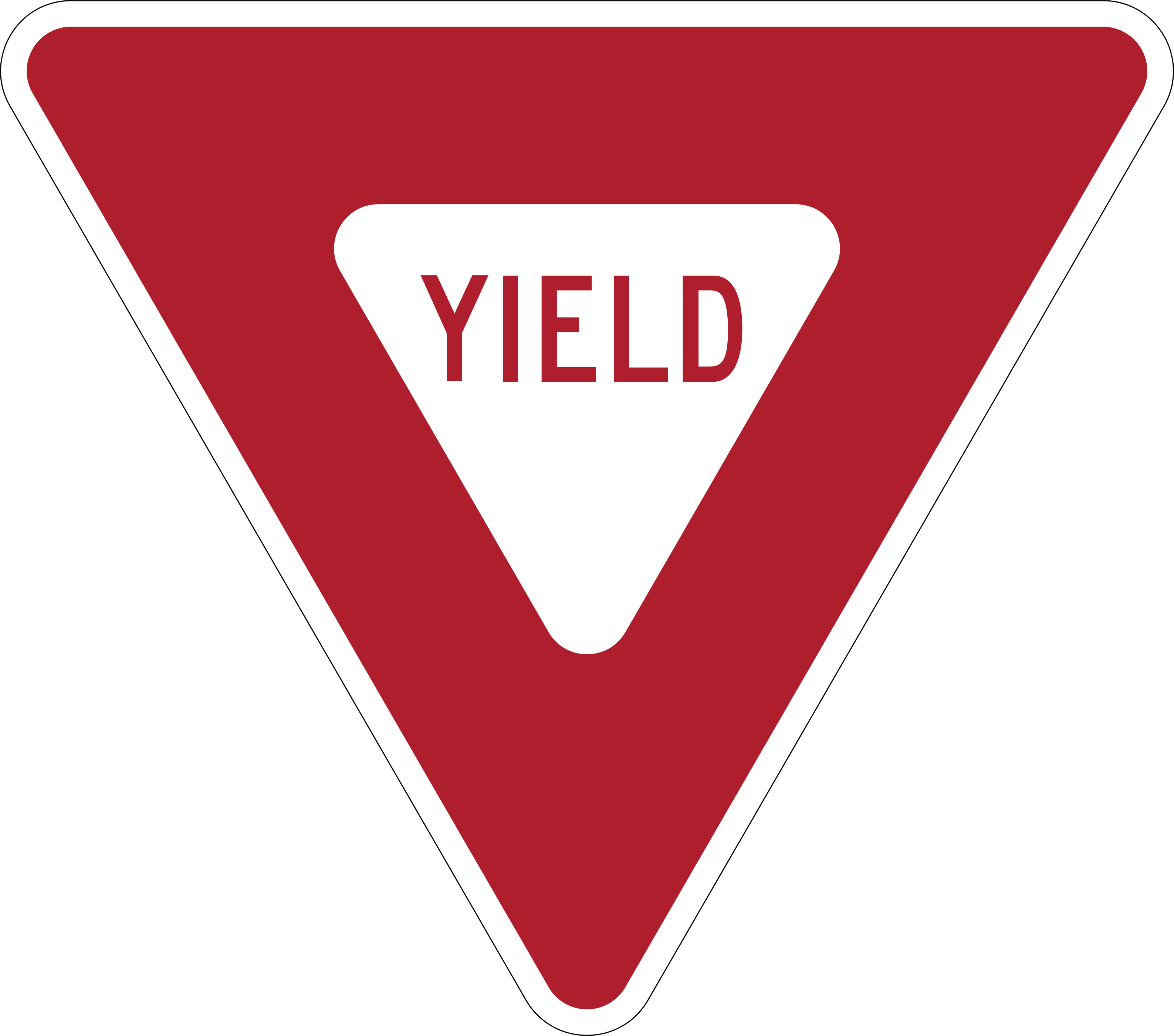
- YIELD
- STOP
- No passing
- Railroad crossing ahead
Show answer
YIELD. The inverted triangle is the distinctive shape assigned to a YIELD sign. Full explanation in Test 5
42. when a car is TAILGATING you (following too closely), the safe response is to?
- Speed up quickly to get away from them
- The emergency response can be delayed
- Only at night
- INCREASE your following distance from the car ahead so you have more room to stop
Show answer
INCREASE your following distance from the car ahead so you have more room to stop. When another vehicle follows too closely, New Jersey guidance is to open up additional following distance ahead. Full explanation in Test 6
43. How close to a fire hydrant may a New Jersey motorist park?
- No closer than 15 feet
- No closer than 10 feet
- No closer than 5 feet
- No closer than 25 feet
Show answer
No closer than 10 feet. New Jersey bars parking within 10 feet of a fire hydrant, within 25 feet of a crosswalk at an intersection, within 50 feet of a railroad cro Full explanation in Test 7
44. If a New Jersey vehicle’s headlights suddenly go out, what should the driver do first?
- Accelerate until the lights return
- Turn the steering wheel sharply toward oncoming traffic
- Continue normally because the parking lights replace headlights
- Bring the vehicle safely to a stop off the roadway
Show answer
Bring the vehicle safely to a stop off the roadway. When headlights fail, the first priority is to bring the vehicle to a safe stop off the roadway. Full explanation in Test 8
45. An aggressive driver is following too closely. Which response best protects the driver ahead?
- Stay calm and avoid escalating the encounter
- Brake sharply to punish the follower
- Move unpredictably between lanes
- Speed above the limit to create distance
Show answer
Stay calm and avoid escalating the encounter. The manual treats close following as aggressive driving and advises motorists to remain calm and obey roadway rules. Full explanation in Test 9
46. when you are about to turn and see no other cars around, should you still use your turn signal?
- Yes, signal continuously through the turn, then cancel it when done
- Just flash it once, then turn it off right away
- Only when a police officer directs traffic
- A complete stop is required regardless of conditions
Show answer
Yes, signal continuously through the turn, then cancel it when done. A turn signal should begin at least 100 feet before the turn and remain in use through the maneuver, then be canceled after the turn. Full explanation in Test 10
47. What does a yellow diamond-shaped warning sign generally communicate?
- A destination and route number
- A parking restriction that applies immediately
- A roadway hazard or condition ahead
- A railroad crossing only
Show answer
A roadway hazard or condition ahead. Yellow diamond-shaped signs warn motorists about roadway conditions or hazards that may be encountered ahead. Full explanation in Test 11
48. What does New Jersey’s red octagonal sign require?
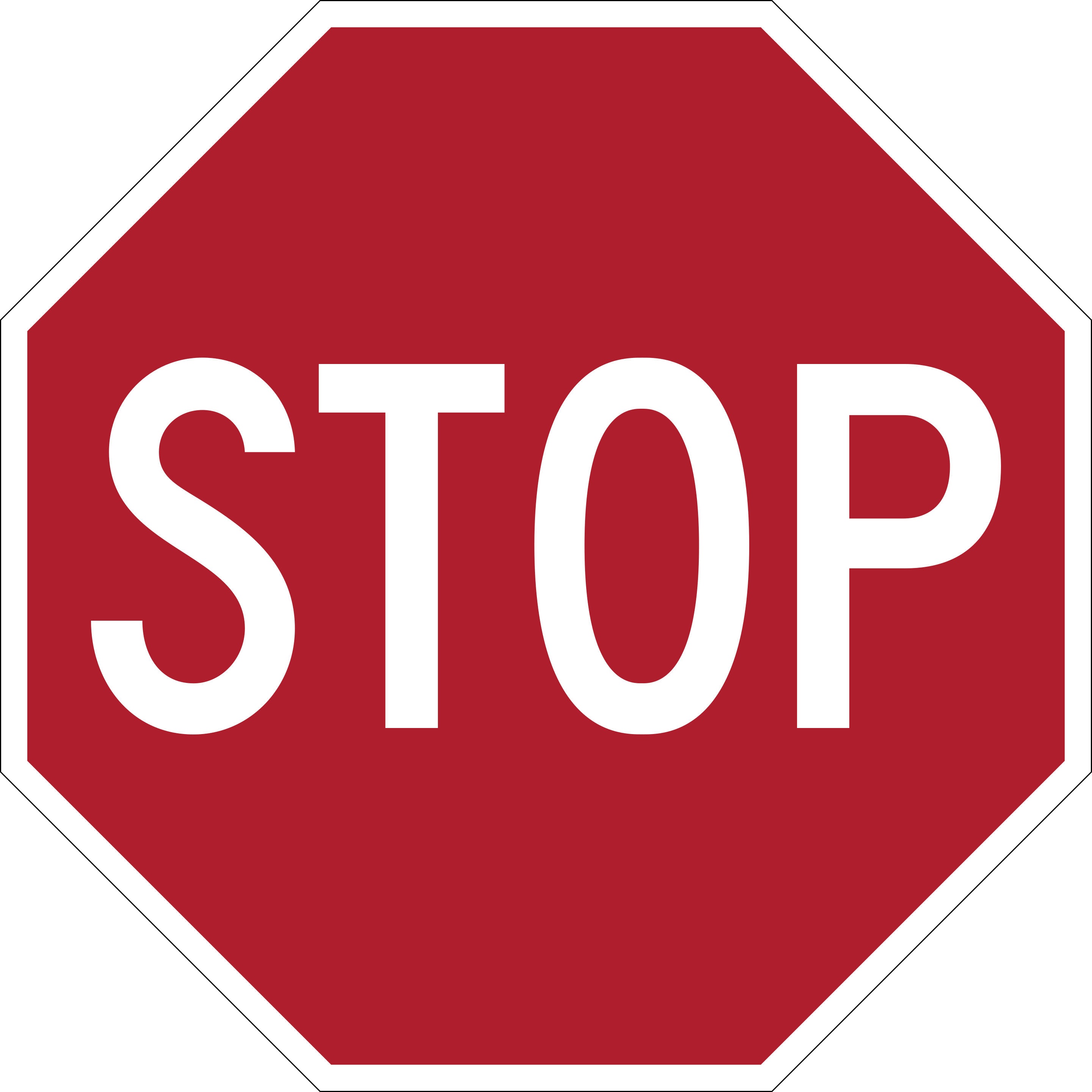
- YIELD
- Do not enter
- Keep right around an obstruction
- STOP
Show answer
STOP. The red octagon is reserved for a STOP sign. Its shape and color identify a required stop, unlike the inverted triangle used for YIELD. Full explanation in Test 12
49. A yellow diamond with a black plus sign warns of what?
- A crossroad
- A hospital entrance
- A no-passing zone
- A lane ending at the shoulder
Show answer
A crossroad. The plus-shaped warning represents a crossroad, where vehicles may enter from either side ahead. Full explanation in Test 1
50. How long are New Jersey driver licenses valid?
- Two years
- Four years
- Ten years
- Six years
Show answer
Four years. The New Jersey manual states that driver licenses are valid for four years. Full explanation in Test 2
