
QualitySpaceQualitySpace
Display
Auto follows your device setting.
Menu

25 question exam format · Real sign images & audio · Free

KS Permit Practice Test

Practice the Kansas knowledge test the way it is actually given: 25 questions, 80 percent to pass. Every question has a plain English explanation and narrated audio. 217 questions in the bank, free, no account required.

Question bank
217
State
Kansas
Format
Fixed question set
Cost
Free

The real Kansas knowledge test is the DMV exam used for a learner permit. This page contains the full free 217 question study bank, with an explanation after each answer. Use the numbered 20 question tests below when you want a fixed study session.

The real Kansas knowledge test: 25 multiple choice questions on traffic signs, pavement markings and Kansas laws; passing score You must score an 80% to pass the knowledge test (official source). This practice bank has 217 questions.

Alcohol and DUIEmergenciesLaws and paperworkParkingRight of wayRoad signsSafe drivingSignals and markingsSpeed limits

217-question bank · Sign images & explanations · Free

Kansas practice test has 217 questions. Every question comes with a plain-English explanation the moment you answer.

Get a day by day study plan

Optional. Three quick answers; the tests below work without it.

Age on test day

No date yet? You get a 7 day plan.

Real exam format: 25 questions, 20 correct to pass.

Start here

Run 20 questions to warm up.

Find your gaps

Diagnose weak topics and retry what you've missed.

Simulate the real thing

Practice under graded exam conditions or run the whole bank.

Practice one topic

Drill a single topic, up to 20 questions with explanations.

Random draw and answer order every attempt. Scored against the real test's pass mark: 20 of 25 correct.

Free means actually free: no subscription, no auto-renew, no card required, no locked features. This site is funded by our insurance work, not by test-prep charges.

See facts and key topics for Kansas DMV (minimum age, fees, wait times, question counts by topic) before you start, or print it to bring with you on test day.

Study the handbook, chapter by chapter: 26 short free lessons with the key rules, the exact numbers, and 3 check questions each, all quoted from the Kansas manual.

How to use this KS practice test

  1. Take the 25 question exam-length practice test above once, untimed, to find your weak topics.
  2. Work through the numbered 20 question sets below. Each one is fixed, so a second attempt is a fair comparison.
  3. Read the explanation on every miss. The wording comes from the Kansas Driving Handbook, which is what the examiners use.
  4. When you pass three sets in a row at 80 percent or better, book the real test.

KS practice tests, 20 questions each

Fixed sets in a fixed order so you can retake one and compare your score.

  1. Test 1
  2. Test 2
  3. Test 3
  4. Test 4
  5. Test 5
  6. Test 6
  7. Test 7
  8. Test 8
  9. Test 9
  10. Test 10

Printable KS practice test with answer key

Frequently asked questions

How many questions are in the Kansas practice bank?

This free page contains the full 217 question bank. The numbered tests each contain 20 fixed questions.

How does this practice test relate to the real Kansas test?

The real test facts are shown above from the official source. This page is an educational practice bank and is separate from the DMV test.

Can I use the Kansas practice test for free?

Yes. The practice questions, explanations, and numbered tests are free to use with no account required.

Last verified 2026-09-05 against the Kansas Driving Handbook, which sets the real exam at 25 questions and 20 correct to pass.

All 25 questions, KS exam length

Every question below comes from the Kansas question bank on this page. Open a question to see the correct answer and the explanation. Nothing here is hidden behind a signup.

  1. 1. A 16-year-old applies for a Kansas restricted license. How much supervised driving must the applicant have completed?

    1. 25 hours, including 5 at night
    2. 40 hours, including 10 at night
    3. 65 hours, including 15 at night
    4. 50 hours, including 10 at night
    Show answer

    50 hours, including 10 at night. A 16-year-old applicant needs 50 hours of supervised driving with 10 of those hours at night, and a parent or guardian signs an affidavit at Full explanation in Test 1

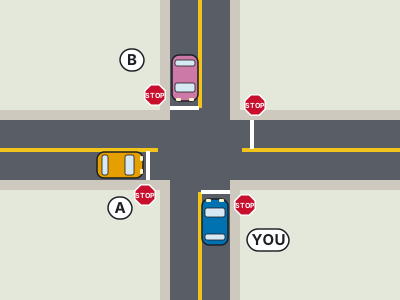
  2. 2. At a Kansas four-way stop, which vehicle normally receives priority from the other drivers?

    A four-way stop intersection with a stop sign on every corner. Your car, blue, is stopped at the stop line heading north. Car A, orange, is stopped on your left heading east, and car B, pink, is stopped across from you heading south.
    1. The vehicle with the loudest horn
    2. The largest vehicle
    3. The vehicle that reached the intersection first
    4. The vehicle signaling a turn
    Show answer

    The vehicle that reached the intersection first. The handbook's intersection rule gives priority to a vehicle that has already entered the intersection from a different highway. Full explanation in Test 2

  3. 3. A Kansas teen finished an online driver education course from an internet provider. Will Kansas accept it for licensing?

    1. Yes, if the certificate is printed and signed
    2. Yes, but only for the restricted license
    3. Yes, once a parent signs an affidavit
    4. No; internet courses do not meet Kansas license requirements
    Show answer

    No; internet courses do not meet Kansas license requirements. Kansas does not accept internet driver education courses, and a certificate of completion from one will not be accepted for licensure. Full explanation in Test 3

  4. 4. When driving above 40 mph, how far ahead should you signal before a turn or lane change?

    1. 50 feet or 1 second before
    2. 100 feet or 1 to 2 seconds before
    3. 500 feet or 10 seconds before
    4. 200 feet or 3 to 5 seconds before
    Show answer

    200 feet or 3 to 5 seconds before. At speeds above 40 mph, the handbook says to signal 200 feet or 3 to 5 seconds before turning or changing lanes. Full explanation in Test 4

  5. 5. When is the reduced speed on a School Speed Limit When Flashing sign required?

    1. Only while the sign is flashing
    2. At all times near the school
    3. Only after a crossing guard enters the road
    4. Only during evening hours
    Show answer

    Only while the sign is flashing. The school-zone reduction applies only when the School Speed Limit When Flashing sign is actually flashing. Full explanation in Test 5

  6. 6. A Kansas driver's license expired 14 months ago. What testing does renewal require?

    1. Only a vision screening
    2. Full testing: the vision, written, and driving examinations
    3. Only the written examination
    4. No testing, just a late penalty
    Show answer

    Full testing: the vision, written, and driving examinations. Once a Kansas license has been expired for more than one year, full testing is required, and full testing means the vision, written, and dri Full explanation in Test 6

  7. 7. What should a driver do when a green light is showing but traffic blocks the far side of the intersection?

    1. Enter because green always gives permission
    2. Wait until there is room to clear the intersection
    3. Stop in the middle and wait
    4. Use the shoulder to get around the queue
    Show answer

    Wait until there is room to clear the intersection. Kansas prohibits entering an intersection, crosswalk, or railroad crossing unless there is enough space on the other side for the vehicle to Full explanation in Test 7

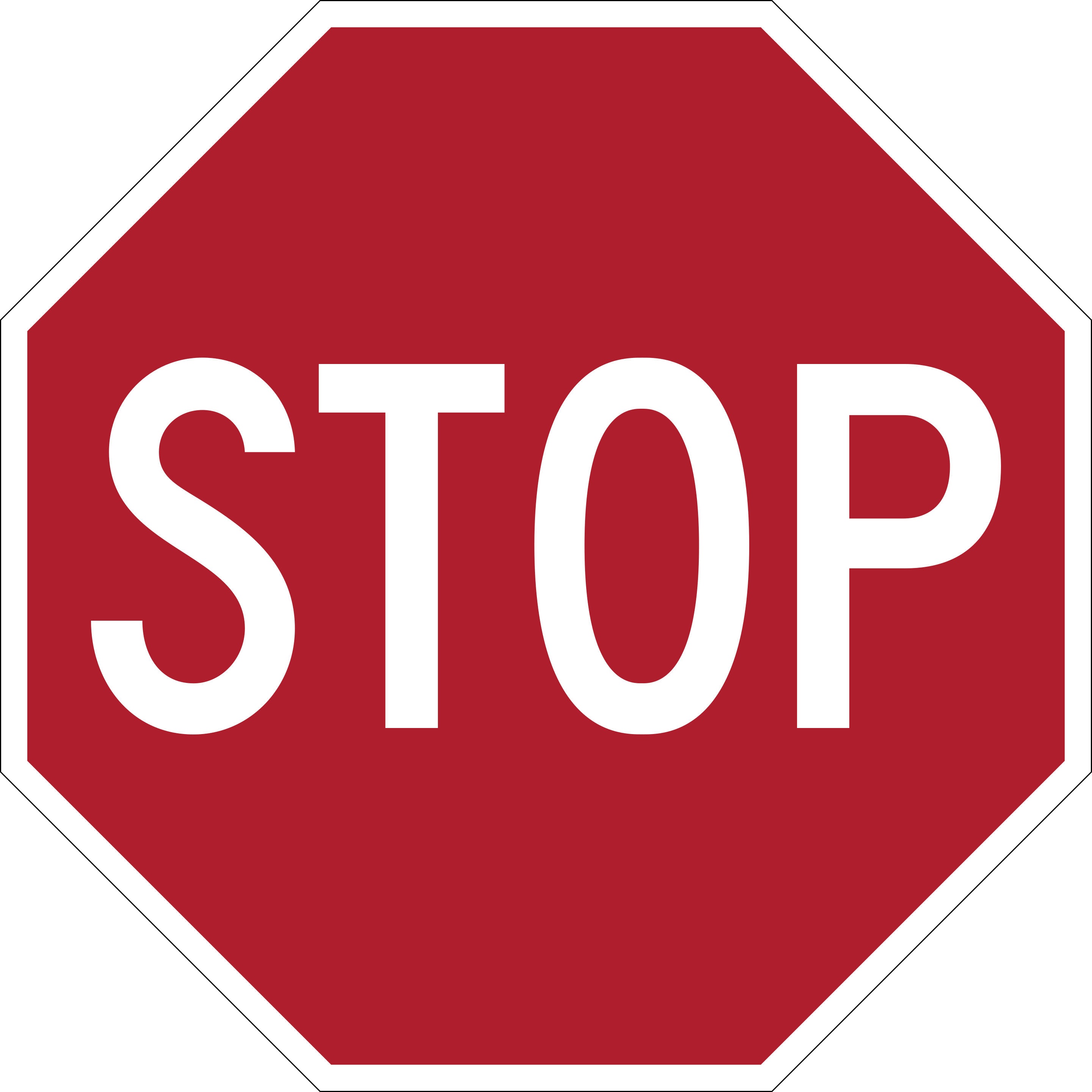
  8. 8. At this octagonal sign, where must you stop before proceeding?

    Red octagon STOP sign
    1. At the next traffic signal instead of this sign
    2. Past the crosswalk so the front tires reach the intersection
    3. Only at the curb if cross traffic is visible
    4. Behind the stop line or crosswalk, then yield before entering
    Show answer

    Behind the stop line or crosswalk, then yield before entering. The red eight-sided sign requires a complete stop before the stop line or crosswalk when one is present. Full explanation in Test 8

  9. 9. A Kansas driver misses a court date on a traffic ticket. What license action does the handbook list?

    1. A 30 day suspension
    2. A warning letter only
    3. No action unless the ticket was for speeding
    4. A mandatory indefinite suspension
    Show answer

    A mandatory indefinite suspension. Failing to appear for a court date is listed as a mandatory indefinite suspension, and failing to respond to a traffic citation from Kansas Full explanation in Test 9

  10. 10. For a driver age 21 or older operating a noncommercial vehicle in Kansas, what is the lowest BAC covered by the general alcohol per se threshold?

    1. .02 or higher
    2. .08 or higher
    3. .05 or higher
    4. .10 or higher
    Show answer

    .08 or higher. The Kansas handbook states that a BAC of .08 or higher is a violation of the law. The . Full explanation in Test 10

  11. 11. When conditions are adverse, how should the normal following interval change?

    1. Increase it to the four-second rule
    2. Reduce it because lower visibility makes the gap unnecessary
    3. Keep two seconds because the rule never changes
    4. Replace it with a fixed one-car-length distance
    Show answer

    Increase it to the four-second rule. The handbook distinguishes normal conditions from adverse ones. Full explanation in Test 1

  12. 12. What is the main safety benefit of looking well down the roadway?

    1. It replaces the need to check the sides and rear
    2. It guarantees that no vehicle can enter the travel path
    3. It allows the driver to ignore nearby pedestrians
    4. It gives more time to see problems and adjust speed or lane position
    Show answer

    It gives more time to see problems and adjust speed or lane position. Looking far ahead helps a driver notice vehicles, people, signs, and changing traffic before they become immediate hazards. Full explanation in Test 2

  13. 13. Fog lets you see only 100 feet ahead. What is the fastest speed the Kansas handbook says you can safely drive?

    1. 30 mph
    2. 20 mph
    3. 40 mph
    4. 45 mph
    Show answer

    30 mph. When rain, snow, dust, smoke, or thick fog limits your view to 100 feet, you cannot safely drive faster than 30 mph. Full explanation in Test 3

  14. 14. What score must an applicant reach to pass the Kansas knowledge test?

    1. 70%
    2. 75%
    3. 80%
    4. 90%
    Show answer

    80%. The handbook requires a score of 80% on the knowledge test, which on the 25 question exam means at least 20 correct answers. Full explanation in Test 4

  15. 15. What is the handbook's best way to avoid losing traction from hydroplaning?

    1. Turn sharply toward the nearest shoulder
    2. Brake hard whenever the tires begin to ride on water
    3. Accelerate so the tires cut through the puddle
    4. Slow down on wet roads and around pooled water
    Show answer

    Slow down on wet roads and around pooled water. Hydroplaning occurs when water separates the tires from the pavement, reducing steering and braking control. Full explanation in Test 5

  16. 16. A 15-year-old holds a Kansas instruction permit. When is the teen eligible to take the Driver's License Test?

    1. After holding the permit 30 days
    2. After holding the permit one full year or reaching 17, whichever comes first
    3. After holding the permit six months
    4. Only after turning 18
    Show answer

    After holding the permit one full year or reaching 17, whichever comes first. An applicant under 17 must hold the instruction permit for one full year or until reaching 17, whichever comes first, before taking the Driv Full explanation in Test 6

  17. 17. Until when should a Kansas infant ride in a rear facing infant seat in the back seat?

    1. From birth to at least age one and at least 20 pounds
    2. Until 6 months, regardless of weight
    3. Until age 4 or 40 pounds
    4. Until age one or 10 pounds, whichever comes first
    Show answer

    From birth to at least age one and at least 20 pounds. The handbook says infants should ride rear facing in the back seat from birth to at least age one and until they weigh at least 20 pounds. Full explanation in Test 7

  18. 18. What is the general purpose of the pictured yellow diamond sign?

    Yellow sign with arrows splitting around a median
    1. It identifies a nearby fuel, food, or lodging service
    2. It establishes a minimum speed that must be maintained
    3. It gives advance warning of a possible danger or special roadway situation
    4. It authorizes a driver to ignore the next traffic signal
    Show answer

    It gives advance warning of a possible danger or special roadway situation. The manual classifies yellow diamond signs as warning signs. Full explanation in Test 8

  19. 19. What should the curved-arrow warning prompt before entering the bend?

    Yellow curved-arrow sign
    1. Move across the centerline to make the bend wider
    2. Brake sharply after entering the curve to hold the lane
    3. Reduce speed before the curve and maintain control through it
    4. Accelerate because the arrow guarantees a clear roadway
    Show answer

    Reduce speed before the curve and maintain control through it. A curve warning gives you time to slow before the bend, when the tires are still aligned and traction demands are lower. Full explanation in Test 9

  20. 20. What does a round yellow sign with an X and RR letters warn a driver about?

    Round yellow railroad advance warning sign with a black X and RR
    1. A highway-railroad grade crossing
    2. A hospital entrance
    3. A temporary detour
    4. A school-zone speed change
    Show answer

    A highway-railroad grade crossing. The round yellow sign with an X and RR letters is placed before a highway-railroad grade crossing. Full explanation in Test 10

  21. 21. At a flashing red traffic light, what must a driver do before entering?

    1. Yield only to vehicles approaching from the left
    2. Slow without stopping if the intersection is clear
    3. Continue because flashing signals have no control effect
    4. Stop completely before proceeding
    Show answer

    Stop completely before proceeding. A flashing red signal is listed among the situations requiring a complete stop. Full explanation in Test 1

  22. 22. Why should a driver increase the following interval behind emergency equipment?

    1. Police, ambulance, and fire crews need more space to operate
    2. Emergency equipment is allowed to ignore every traffic rule
    3. The following interval should be reduced so responders can be passed
    4. A driver must stop 500 feet behind every ordinary passenger car
    Show answer

    Police, ambulance, and fire crews need more space to operate. The handbook advises leaving more space behind police vehicles, ambulances, and fire trucks because those crews need room to operate. Full explanation in Test 2

  23. 23. At a stop sign, where should a driver stop when a clearly marked stop line is present?

    1. At the center of the intersection
    2. After entering the crosswalk
    3. Behind the stop line
    4. Beside the sign, even if the line is farther ahead
    Show answer

    Behind the stop line. A stop sign requires a complete stop, and a clearly marked stop line sets the stopping point. Full explanation in Test 3

  24. 24. When may a driver cross a dashed yellow line between opposing lanes?

    1. Only after another driver waves
    2. Whenever the vehicle is below 25 mph
    3. When a safe gap in traffic is available
    4. Only during daylight hours
    Show answer

    When a safe gap in traffic is available. Dashed yellow lines between opposing lanes mean passing may occur when a safe gap in traffic is available. Full explanation in Test 4

  25. 25. At an intersection with no traffic controls, who must receive your yield?

    1. The vehicle approaching from the wider roadway only
    2. The vehicle on your left, regardless of its speed
    3. The vehicle on your right
    4. No vehicle, because the first driver to accelerate has priority
    Show answer

    The vehicle on your right. At an uncontrolled intersection, Kansas directs you to yield to the vehicle on your right. Full explanation in Test 5

How this test works

Study the rules, then check the explanation

This page uses the prepared Kansas question bank exactly as provided. Start the test, choose an answer, and read the explanation before moving on. Retakes serve the same 217 questions so you can work through the state set without losing your place.

Want a one-page summary to study or print? See the Kansas DMV cheat sheet, with the most-missed rules from this same question bank.

Looking for another state? Go back to the DMV practice test hub. California remains on the established California DMV practice test page.

Are you a library or school? See the free DMV practice test partner resource for a copy ready listing and referral link.

How we write and check these questions

QualitySpace is expanding to Kansas

We are a California-based independent insurance brokerage working on licensing in more states. We cannot help with Kansas insurance yet. Leave your email and we will let you know when we can.