Every question below comes from the Hawaii question bank on this page. Open a question to see the correct answer and the explanation. Nothing here is hidden behind a signup.
1. Another vehicle is passing you on a Hawaii road. What does the law say about your speed?
- You must speed up so the pass finishes sooner
- You must match the passing vehicle's speed
- It is unlawful to increase your speed while being passed
- You must stop on the shoulder until it has passed
Show answer
It is unlawful to increase your speed while being passed. Hawaii makes it unlawful to increase your speed while you are being passed. Full explanation in Test 1
2. For a Hawaii instruction permit holder, where must the supervising licensed driver sit in a passenger vehicle?
- Outside the vehicle at the curb
- In the rear seat behind the learner
- In any seat, provided the supervisor can see the road
- In the right front seat
Show answer
In the right front seat. For vehicles except motorcycles, Hawaii places the qualified supervising driver in the right front seat. Full explanation in Test 2
3. Which single vehicles require a Hawaii class above Category 3 but below a CDL?
- Any vehicle over 10,000 pounds
- Any single vehicle with a GVWR of 18,001 to 26,000 pounds
- Vehicles over 26,001 pounds
- Buses only
Show answer
Any single vehicle with a GVWR of 18,001 to 26,000 pounds. Hawaii's license table places any single vehicle with a GVWR of 18,001 to 26,000 pounds in its own class above Category 3, while Class A cov Full explanation in Test 3
4. Between 11:00 p.m. and 5:00 a.m., whom must a Hawaii instruction permit holder have as the accompanying driver?
- A parent or guardian
- Any licensed passenger at least 21
- A coworker with a valid permit
- No accompanying driver when the trip is for school
Show answer
A parent or guardian. The nighttime condition is narrower than the ordinary permit rule. Between 11:00 p.m. and 5:00 a.m. Full explanation in Test 4
5. Why might downshifting fail to help at high speed in an automatic transmission vehicle, according to the Hawaii manual?
- At 60 mph and above most automatic transmissions will not downshift until speed is reduced
- Downshifting is illegal
- Automatics have no lower gears
- The engine will stall
Show answer
At 60 mph and above most automatic transmissions will not downshift until speed is reduced. Downshifting to slow the vehicle works at normal speeds by moving the selector to the next lower position, but at high speeds of 60 mph and Full explanation in Test 5
6. According to the Hawaii manual, what should you do with the front wheels when you leave a vehicle unattended on a grade?
- Turn the wheels toward the curb
- Leave the wheels pointed straight ahead
- Leave the engine running with the parking brake set
- Shift into neutral so the car can settle
Show answer
Turn the wheels toward the curb. When you leave a vehicle unattended, the manual says to stop the engine, lock the ignition and remove the key, set the parking brake, and, w Full explanation in Test 6
7. What kind of control does the SPEED LIMIT sign provide?
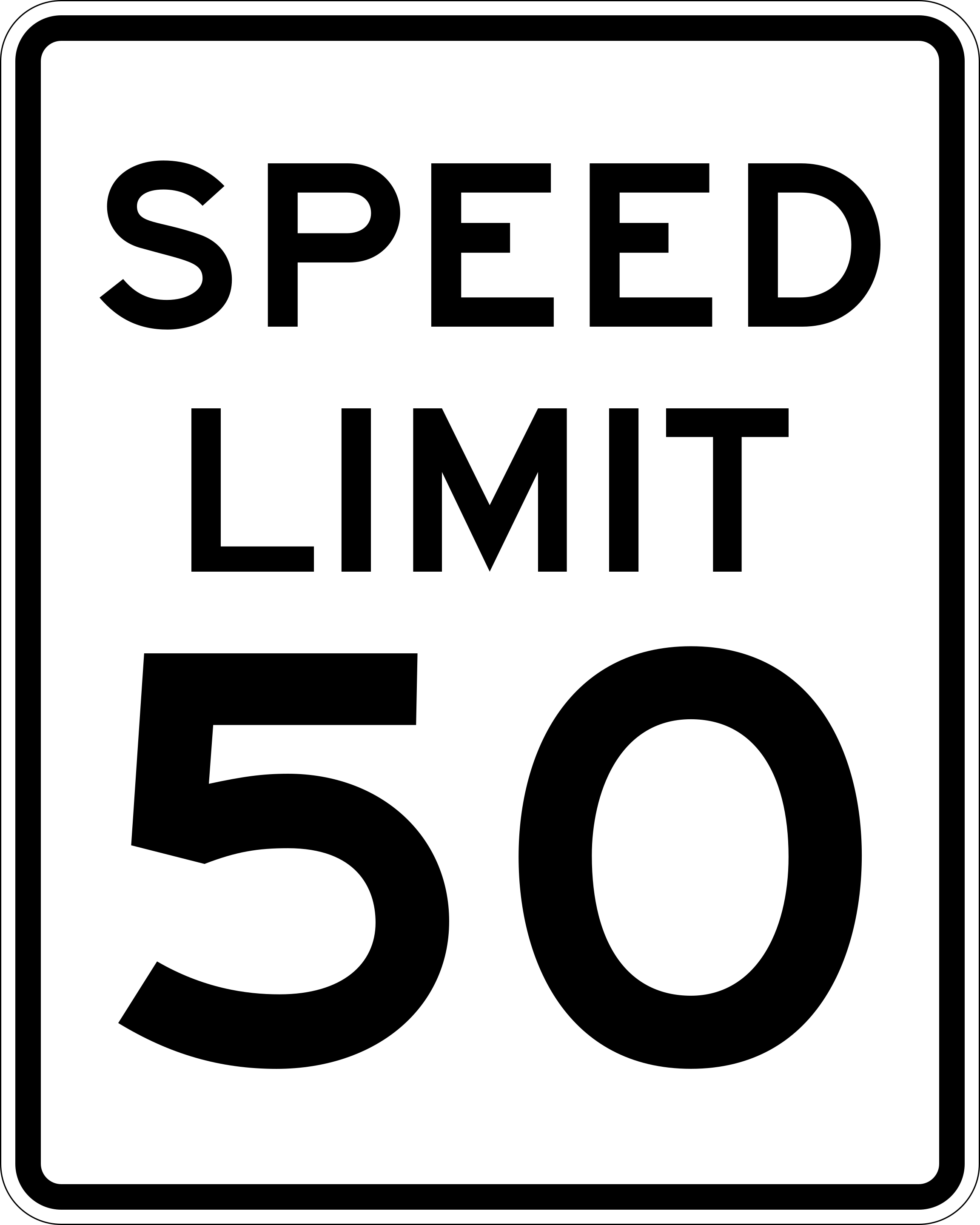
- An advisory speed that may always be exceeded
- A regulatory maximum and, where shown, minimum speed
- A truck-only restriction
- A warning that the road is about to close
Show answer
A regulatory maximum and, where shown, minimum speed. Speed limit signs are regulatory black-and-white signs that establish maximum and minimum speeds. Full explanation in Test 7
8. According to the Hawaii manual, what can failing to stop for a school bus with alternating red lamps flashing cost you?
- $100
- $1,000
- $250
- $5,000
Show answer
$1,000. The manual warns that failing to comply with the school bus stopping law can cost you $1,000. Full explanation in Test 8
9. How often must an ordinary passenger vehicle driven on Hawaii public highways pass a Periodic Motor Vehicle Inspection?
- Every six months
- At least once a year
- Every two years
- Only when the vehicle is sold
Show answer
At least once a year. Hawaii requires an official Periodic Motor Vehicle Inspection, also called a safety inspection, at least once a year for motor vehicles on p Full explanation in Test 9
10. What must a driver do when a pedestrian is caught in an intersection as the signal changes?
- Stop only if the pedestrian is in a marked lane
- Continue because the light changed
- Sound the horn and drive around the pedestrian
- Yield until the pedestrian has cleared the intersection
Show answer
Yield until the pedestrian has cleared the intersection. A changing signal does not erase the pedestrian's need to finish crossing. Full explanation in Test 10
11. What must a driver do when a yellow X lane-control signal is displayed?
- Enter the lane and maintain speed
- Move out because the lane will be used for opposite-direction traffic
- Use the lane for passing only
- Stop in the lane and wait for a red X
Show answer
Move out because the lane will be used for opposite-direction traffic. A yellow X warns that the lane is being changed for traffic moving in the opposite direction, so the driver must move out of that lane. Full explanation in Test 1
12. When this alignment sign appears beside an obstruction, where should the driver go?
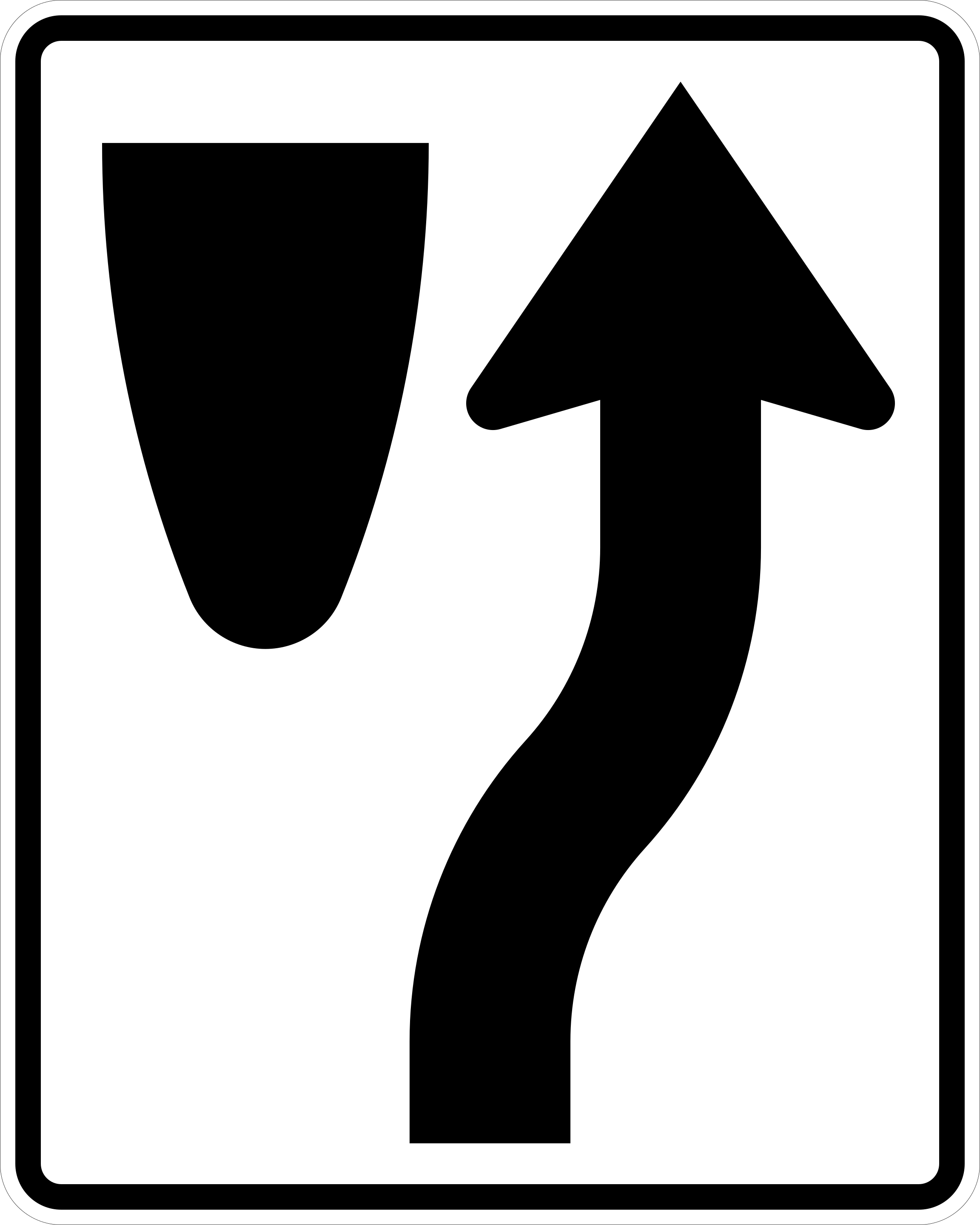
- Into the opposing lane to pass the obstruction quickly
- To the left regardless of the arrow
- To the right as indicated, keeping traffic moving safely
- Across the traffic island separating the lanes
Show answer
To the right as indicated, keeping traffic moving safely. An alignment sign shows where the driver must travel to permit traffic to move safely and smoothly. Full explanation in Test 2
13. In how many U.S. fatal crashes each year is alcohol a factor, according to the Hawaii manual?
- About 500
- Over 18,000, about 40 percent
- About 100,000
- About 1,000, or 2 percent
Show answer
Over 18,000, about 40 percent. The use of alcohol is a factor in over 18,000, about 40 percent, of the fatal motor vehicle crashes that occur every year in the United Stat Full explanation in Test 3
14. How many passengers under age 18 may a Hawaii provisional licensee transport when the passenger is not a household member?
- Only one
- Two
- Three
- As many as fit with seat belts
Show answer
Only one. A Hawaii provisional license allows transport of only one person under age 18 who is not a household member. Full explanation in Test 4
15. What do double solid yellow centerlines generally mean?
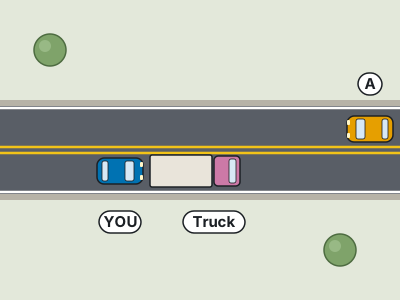
- Passing is required in both directions
- Passing is prohibited in both directions
- Only trucks may cross them
- They separate lanes traveling the same direction
Show answer
Passing is prohibited in both directions. Double solid yellow lines mark the center of a roadway where passing is prohibited in both directions. Full explanation in Test 5
16. What roadway change does the pictured divided-highway warning announce?

- Vehicles may drive across the center island
- All traffic must make a U-turn at the next opening
- The highway is changing to a single narrow lane
- Opposing traffic will be separated by a median or divider
Show answer
Opposing traffic will be separated by a median or divider. The divided-highway symbol alerts the driver that opposing flows will be separated, so lane placement and the median become important. Full explanation in Test 6
17. What driving examination must a Hawaii applicant pass before receiving a provisional license?
- A passenger-management interview
- Only the rules of the road test
- A vehicle-maintenance examination
- A road test
Show answer
A road test. The graduated licensing list specifically requires the applicant to pass a road test before the provisional license is issued. Full explanation in Test 7
18. At a marked crosswalk, what right of way does Hawaii give a pedestrian who is crossing?
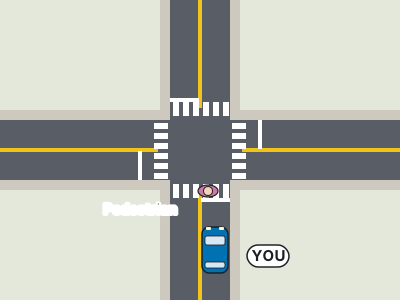
- Priority belongs to the faster traveler
- The pedestrian must yield to every vehicle
- The vehicle that arrives first has priority
- The pedestrian has the right of way
Show answer
The pedestrian has the right of way. Hawaii gives the pedestrian priority at a crosswalk. Full explanation in Test 8
19. Under current Hawaii law, how must a driver restrain a child who is 4 years old but not yet 10?
- In a harnessed child restraint or booster seat, unless the child is at least 7 and over 4 feet 9 inches in a lap and shoulder belt
- In a rear-facing seat only, until the child turns 10
- With an adult lap belt alone, at any height
- No special restraint once the child turns 4
Show answer
In a harnessed child restraint or booster seat, unless the child is at least 7 and over 4 feet 9 inches in a lap and shoulder belt. Hawaii Revised Statutes section 291-11.5 now covers children under ten. Full explanation in Test 9
20. When a driver enters a marked lane, what must happen before changing to another lane?
- Change lanes whenever the turn signal is on
- Check that the change can be made safely
- Move first, then check for vehicles
- Cross any lane line if the driver is in a hurry
Show answer
Check that the change can be made safely. On a roadway marked with traffic lanes, the driver must remain entirely within the marked lane and check that a lane change can be made safe Full explanation in Test 10
21. How far before a turn or lane change must a driver generally signal?
- Only after beginning the maneuver
- At least 10 feet
- At least 100 feet
- Only when another vehicle is nearby
Show answer
At least 100 feet. Hawaii requires a turn signal for at least 100 feet before every turn or lane change. Full explanation in Test 1
22. Before entering a public street from a private driveway, what must the driver do?
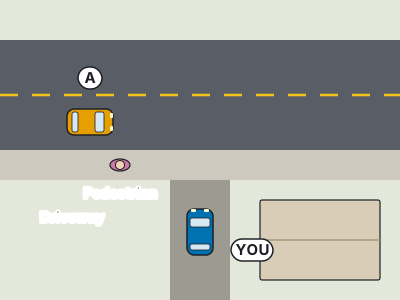
- Sound the horn, then merge without stopping
- Stop and yield to traffic on the public street
- Yield only to vehicles approaching from the left
- Stop only when a posted sign requires it
Show answer
Stop and yield to traffic on the public street. A driveway is not treated like a road with equal priority. Full explanation in Test 2
23. A crash causes injury or at least $3,000 in property damage. What reporting duty applies?
- Report it only to the vehicle manufacturer
- Report it only if another driver requests it
- Wait until the next business day
- Report it to police immediately by the quickest means of communication
Show answer
Report it to police immediately by the quickest means of communication. Hawaii requires immediate police reporting when a traffic crash causes any personal injury, death, or property damage of $3,000 or more. Full explanation in Test 3
24. What is the first response when you hear or see an emergency vehicle warning?
- Follow the emergency vehicle closely
- Continue at the same speed until it is visible
- Stop in the nearest intersection
- Reduce speed and determine its location and direction
Show answer
Reduce speed and determine its location and direction. An emergency warning requires calm, deliberate action. Full explanation in Test 4
25. After making a permitted right turn at a red light, to whom must the driver yield?
- Only when a police officer waves the driver through
- Whenever the driver slows without stopping
- Unless a sign prohibits the turn, after yielding to pedestrians and vehicles
- Before checking for pedestrians if the cross street is clear
Show answer
Unless a sign prohibits the turn, after yielding to pedestrians and vehicles. Hawaii permits a right turn after stopping at a red light unless a sign prohibits it, but the turning driver must yield to all pedestrians a Full explanation in Test 5
26. A Hawaii instruction permit holder is driving a passenger vehicle. Who must accompany the holder?
- A parent of any age, even without a driver license
- Any passenger who has held a license for at least six months
- A licensed driver at least 21 years old who is licensed for that type of vehicle
- No one, if the permit holder has passed the written test
Show answer
A licensed driver at least 21 years old who is licensed for that type of vehicle. An instruction permit allows driving only while supervised by a licensed driver who is at least 21 and qualified for that vehicle type. Full explanation in Test 6
27. What hazard does this yellow pedestrian symbol warn the driver to expect?

- A pedestrian crossing
- A zone where pedestrians are forbidden
- A sidewalk repair area only
- A lane reserved for bicycles
Show answer
A pedestrian crossing. The pedestrian symbol warns that a pedestrian crossing is ahead. Full explanation in Test 7
28. What will sober up a person after alcohol has entered the blood?
- Only time, as the liver burns up the alcohol
- Drinking black coffee
- Taking a cold shower
- Eating a large meal
Show answer
Only time, as the liver burns up the alcohol. Once alcohol enters your blood there is nothing you can do to lessen its effect. Full explanation in Test 8
29. What does the arrow on this ONE WAY sign tell the driver?
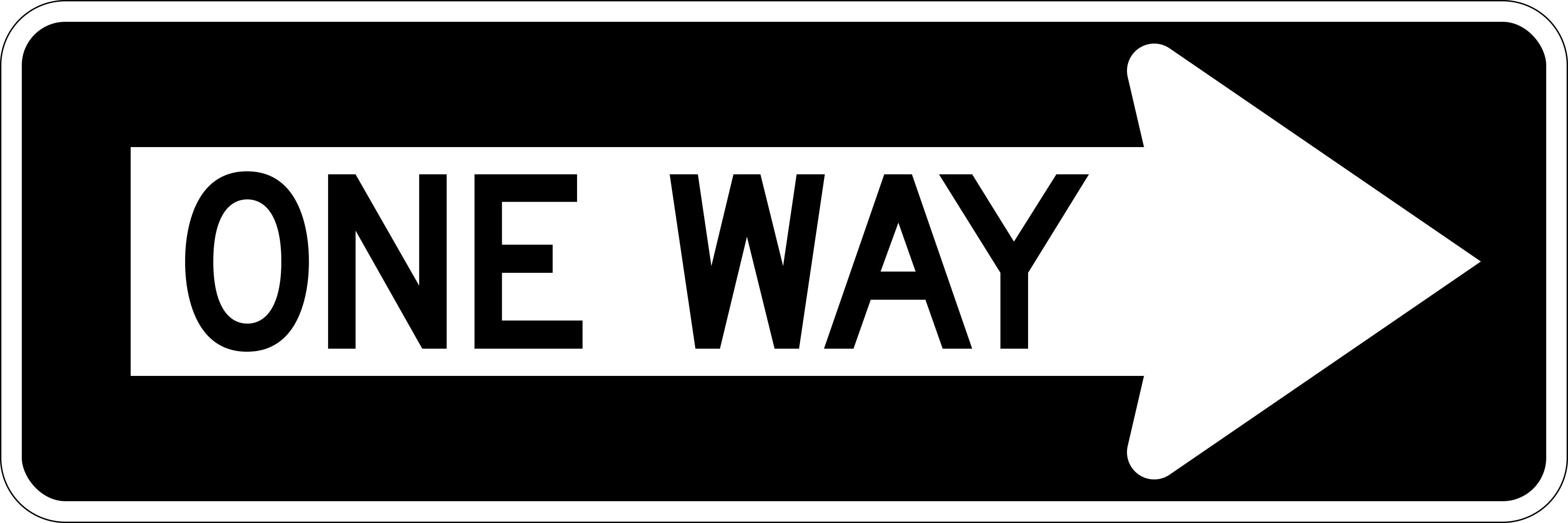
- Turn in that direction only after stopping at a red light
- Travel on the street only in the arrow’s direction
- Use the right lane only for passing
- Expect two-way traffic around the next corner
Show answer
Travel on the street only in the arrow’s direction. The arrow identifies the only direction of travel permitted on the one-way street. Full explanation in Test 9
30. Before Hawaii permits an applicant to take the driver license road test, which preliminary examinations are listed?
- A medical examination, a parking test and a county interview
- Only a written rules test and a vehicle registration check
- Vision, rules of the road and practical road performance tests
- A highway-speed test, a fuel-economy test and a vision waiver
Show answer
Vision, rules of the road and practical road performance tests. The preliminary sequence has three parts: a vision test, a knowledge test about road rules and traffic control devices, and a practical road Full explanation in Test 10
