Every question below comes from the Virginia question bank on this page. Open a question to see the correct answer and the explanation. Nothing here is hidden behind a signup.
1. Why should you create a space cushion around your vehicle?
- It gives you distance to react and avoid a crash
- It prevents every other driver from passing you
- It lets you drive faster than the posted limit safely
- It removes the need to check mirrors and blind spots
Show answer
It gives you distance to react and avoid a crash. Open space around the vehicle gives a driver room to respond when traffic changes suddenly. Full explanation in Test 1
2. What roadway condition is shown by a Winding Road warning sign?

- A series of turns or curves ahead
- A straight road with a single lane closure
- A railroad crossing with several tracks
- A hill where stopping is prohibited
Show answer
A series of turns or curves ahead. The winding-road symbol forecasts a series of turns or curves rather than one isolated bend. Full explanation in Test 2
3. What does a Virginia sign reading “Speed Photo Enforced” indicate?
- Automated photo enforcement may be used for speeding in a school zone
- Officers may not issue speeding citations there
- The speed limit is advisory only
- The road has no posted maximum speed
Show answer
Automated photo enforcement may be used for speeding in a school zone. Virginia says some school zones may use automated photo enforcement, and the sign wording identifies that possibility. Full explanation in Test 3
4. When may a Virginia driver hold a cell phone while the vehicle is in use?
- Whenever the call is under one minute
- While using it for navigation and typing an address
- In a driver emergency or when the vehicle is lawfully parked or stopped
- At any red light
Show answer
In a driver emergency or when the vehicle is lawfully parked or stopped. Virginia law prohibits holding a cell phone or other wireless device while driving, except in a driver emergency or when the vehicle is lawf Full explanation in Test 4
5. When is passing unlawful and unsafe under the Virginia manual’s listed examples?
- Whenever the road has two lanes moving in the same direction
- Only when a driver is traveling below the speed limit
- On hills, curves, intersections, or railroad crossings, subject to the stated exception
- Whenever the vehicle ahead is smaller than yours
Show answer
On hills, curves, intersections, or railroad crossings, subject to the stated exception. The manual lists hills, curves, intersections, and railroad crossings among places where passing is unlawful and unsafe, except on roads wit Full explanation in Test 5
6. A Virginia officer asks you to sign a traffic citation. What does the manual say about signing?
- Signing counts as pleading guilty
- You may refuse to sign with no consequence
- Only a lawyer may sign for you
- Signing is not an admission of guilt, and refusing may lead to arrest
Show answer
Signing is not an admission of guilt, and refusing may lead to arrest. The manual tells drivers to sign the citation because signing is not an admission of guilt. Full explanation in Test 6
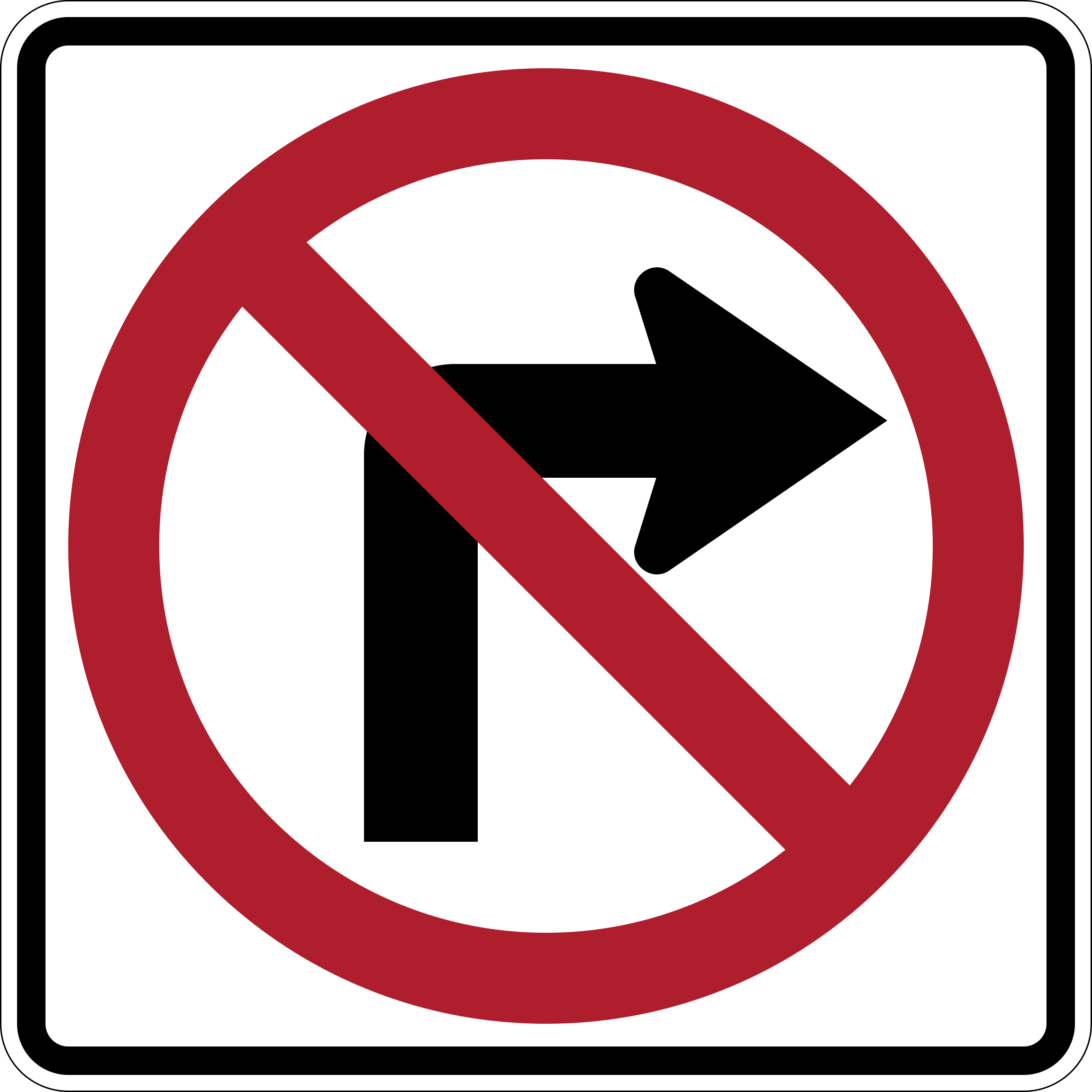
7. What must you do when you see a No Right Turn sign?
- Use the shoulder to complete the turn
- Make the right turn only after yielding
- Turn right if the light is green
- Do not make a right turn
Show answer
Do not make a right turn. The No Right Turn sign makes right turns illegal at that location. Full explanation in Test 7
8. After the first impoundment, how much longer can a Virginia court impound the car of a driver convicted of driving on an alcohol-related suspension?
- An additional 10 days
- An additional 30 days
- An additional two years
- An additional 90 days
Show answer
An additional 90 days. The first 30 days of impoundment are immediate, and the court can add another 90 days if the driver is convicted. Full explanation in Test 8
9. How does Virginia deliver a newly issued driver's license according to the manual?
- Only as a digital credential in a DMV app
- By mail, rather than issuing it at a customer service center
- Through the applicant's insurance company
- At the testing site immediately after the road test
Show answer
By mail, rather than issuing it at a customer service center. Virginia mails the new driver's license and does not issue licenses in customer service centers. Full explanation in Test 9
10. When can speed-related reckless driving be considered a felony in Virginia?
- Whenever the driver is more than 20 MPH over the limit
- Whenever the driver receives a second speeding conviction
- Only when the vehicle is traveling over 85 MPH
- When the violation results in death and the operator’s license was suspended or revoked
Show answer
When the violation results in death and the operator’s license was suspended or revoked. The manual says a speed-related reckless-driving violation may be considered a felony when it results in death and the operator’s license wa Full explanation in Test 10
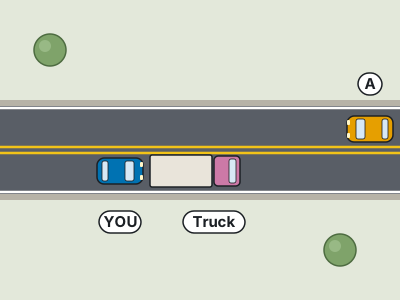
11. What does a double solid yellow center marking tell drivers on a two-way road?
- Only traffic on the left may pass
- Passing is permitted whenever the road is clear
- Passing is forbidden in both directions
- The roadway is one-way ahead
Show answer
Passing is forbidden in both directions. Double solid yellow lines divide traffic moving in opposite directions and prohibit passing from either direction. Full explanation in Test 1
12. When a Lane Reduction sign shows the right lane ending, who must merge left?

- Drivers in the right lane when space opens up
- Only drivers already in the left lane
- Every driver, including those behind the sign
- No one, because the lane continues normally
Show answer
Drivers in the right lane when space opens up. A Lane Reduction warning tells the driver that the right lane ends soon. Full explanation in Test 2
13. Where does Virginia's manual say to place your hands on the steering wheel?
- At 10 and 2
- One hand at 12 o'clock
- At 12 and 6
- At the 8 o'clock and 4 o'clock positions, holding with fingers and thumbs
Show answer
At the 8 o'clock and 4 o'clock positions, holding with fingers and thumbs. Sit straight but relaxed, and if the steering wheel were a clock your hands should be at the 8 o'clock and 4 o'clock positions. Full explanation in Test 3
14. What vision does Virginia require for an unrestricted driver's license?
- 20/40 or better in one or both eyes, with 110 degrees or better horizontal vision
- 20/20 in both eyes
- 20/70 with 70 degrees of horizontal vision
- Any vision with glasses
Show answer
20/40 or better in one or both eyes, with 110 degrees or better horizontal vision. Virginia's unrestricted license standard is 20/40 or better vision in one or both eyes and 110 degrees or better horizontal vision in one or Full explanation in Test 4
15. According to the Virginia manual, how far behind a truck, bus or RV can its blind spot stretch?
- About 20 feet
- About 200 feet
- About 50 feet
- About 500 feet
Show answer
About 200 feet. Large vehicles cannot see cars directly behind or beside them. Full explanation in Test 5
16. An applicant fails the Virginia road skills test at DMV. How long must the person wait to take it again?
- One day
- Two days
- 15 days
- 30 days
Show answer
Two days. After failing the road skills test, the applicant must wait two days before trying again. Full explanation in Test 6
17. How should you respond to a Stop Ahead or Yield Ahead sign?

- Speed up so you reach the sign before other traffic
- Stop immediately in the travel lane regardless of traffic
- Ignore it unless the pavement is wet
- Slow down and be ready to stop
Show answer
Slow down and be ready to stop. Stop Ahead and Yield Ahead are advance warnings that a stop or yield sign is farther ahead. Full explanation in Test 7
18. How close to a fire hydrant may you park in Virginia?
- No closer than 15 feet
- No closer than 5 feet
- No closer than 10 feet
- No closer than 25 feet
Show answer
No closer than 15 feet. Virginia bans parking within 15 feet of a fire hydrant. Five and ten feet leave too little room for fire crews to connect hoses. Full explanation in Test 8
19. If a Virginia vehicle has air bags, how far should the driver sit from the steering wheel?
- At least ten inches
- At least two inches
- At least four inches
- At least 24 inches
Show answer
At least ten inches. With air bags, drivers should move the seat back so they are at least ten inches from the steering wheel, and tilt an adjustable wheel downw Full explanation in Test 9
20. How many traffic-sign questions must an applicant answer correctly before moving to part two of Virginia’s knowledge exam?
- At least eight
- All ten
- At least five
- All thirty
Show answer
All ten. Part one contains ten traffic-sign questions, and the applicant must answer all ten correctly before taking part two. Full explanation in Test 10
21. What should you do at a steady yellow light if you have not entered the intersection?
- Speed up to beat the red light
- Treat it exactly like a green signal
- Stop only if another driver honks
- Stop, unless stopping would be unsafe
Show answer
Stop, unless stopping would be unsafe. A steady yellow light warns that the signal is about to change. Full explanation in Test 1
22. Which occupants must wear safety belts under Virginia law?
- Only the driver and front seat passenger
- The driver and all passengers, front and rear
- Only passengers under 18
- Only occupants on interstate highways
Show answer
The driver and all passengers, front and rear. Virginia law requires the driver and all passengers, in both front and rear seats, to wear safety belts. Full explanation in Test 2
23. Besides a suspension, what does a Virginia court impose on an underage driver convicted with a BAC of at least .02 but under .08?
- A $100 fine only
- A mandatory five-day jail term
- A $500 minimum fine or at least 50 hours of community service
- Ten hours of community service
Show answer
A $500 minimum fine or at least 50 hours of community service. The court penalty for this underage offense includes a one-year suspension plus either a minimum mandatory fine of $500 or at least 50 hours Full explanation in Test 3
24. What does a diamond-shaped traffic sign generally warn you about?
- A destination service such as fuel
- A legal requirement to park
- A special condition or hazard ahead
- A school crossing only
Show answer
A special condition or hazard ahead. The diamond shape is used for warning signs that identify special conditions or hazards ahead. Full explanation in Test 4
25. A licensed driver moves to Virginia from another state. How soon must the person get a Virginia driver's license?
- Within 60 days
- Within 10 days
- Within 30 days
- Within one year
Show answer
Within 60 days. A new Virginia resident who drives must obtain a Virginia driver's license within 60 days of moving. Full explanation in Test 5
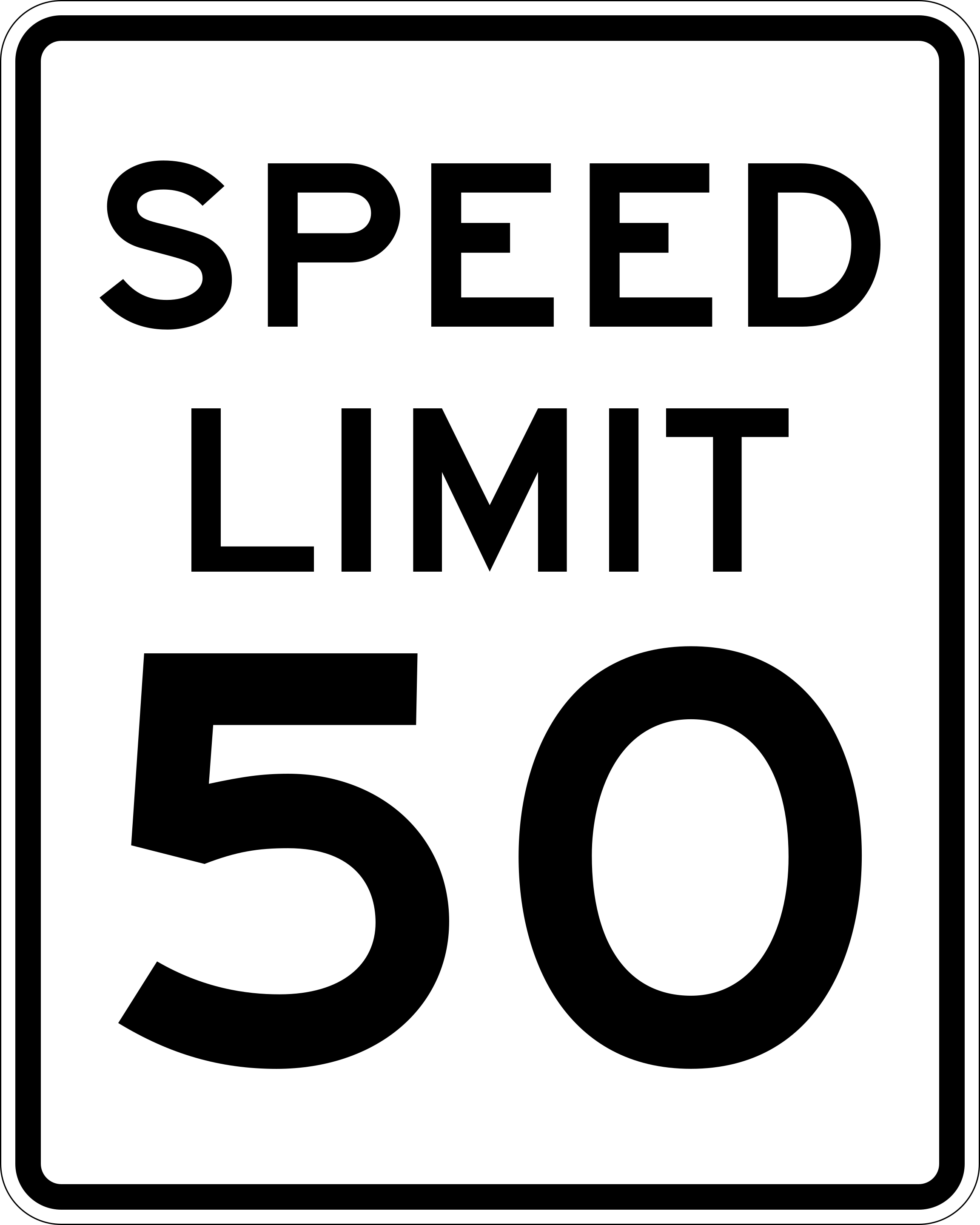
26. Under good weather conditions, what does a posted Speed Limit sign identify?
- The minimum speed for every vehicle
- A recommended speed that may always be exceeded
- The maximum legal speed on that road
- The speed allowed only while passing
Show answer
The maximum legal speed on that road. A Virginia Speed Limit sign states the maximum legal speed for that road when weather conditions are good. Full explanation in Test 6
27. Where do the Virginia requirements for yielding to vehicles with flashing lights not apply?
- Highway work zones
- Divided highways
- Residential streets
- Roads with posted speed limits
Show answer
Highway work zones. The manual expressly says these requirements do not apply in highway work zones. Full explanation in Test 7
28. A Virginia teen gets a third demerit point conviction for a violation committed before age 18. What is the penalty?
- Revocation for one year or until age 18, whichever is longer
- A 90-day suspension
- A driver improvement clinic only
- Revocation for 30 days
Show answer
Revocation for one year or until age 18, whichever is longer. The third conviction for a violation committed under 18 leads to revocation of the driving privilege for one year or until the driver reache Full explanation in Test 8
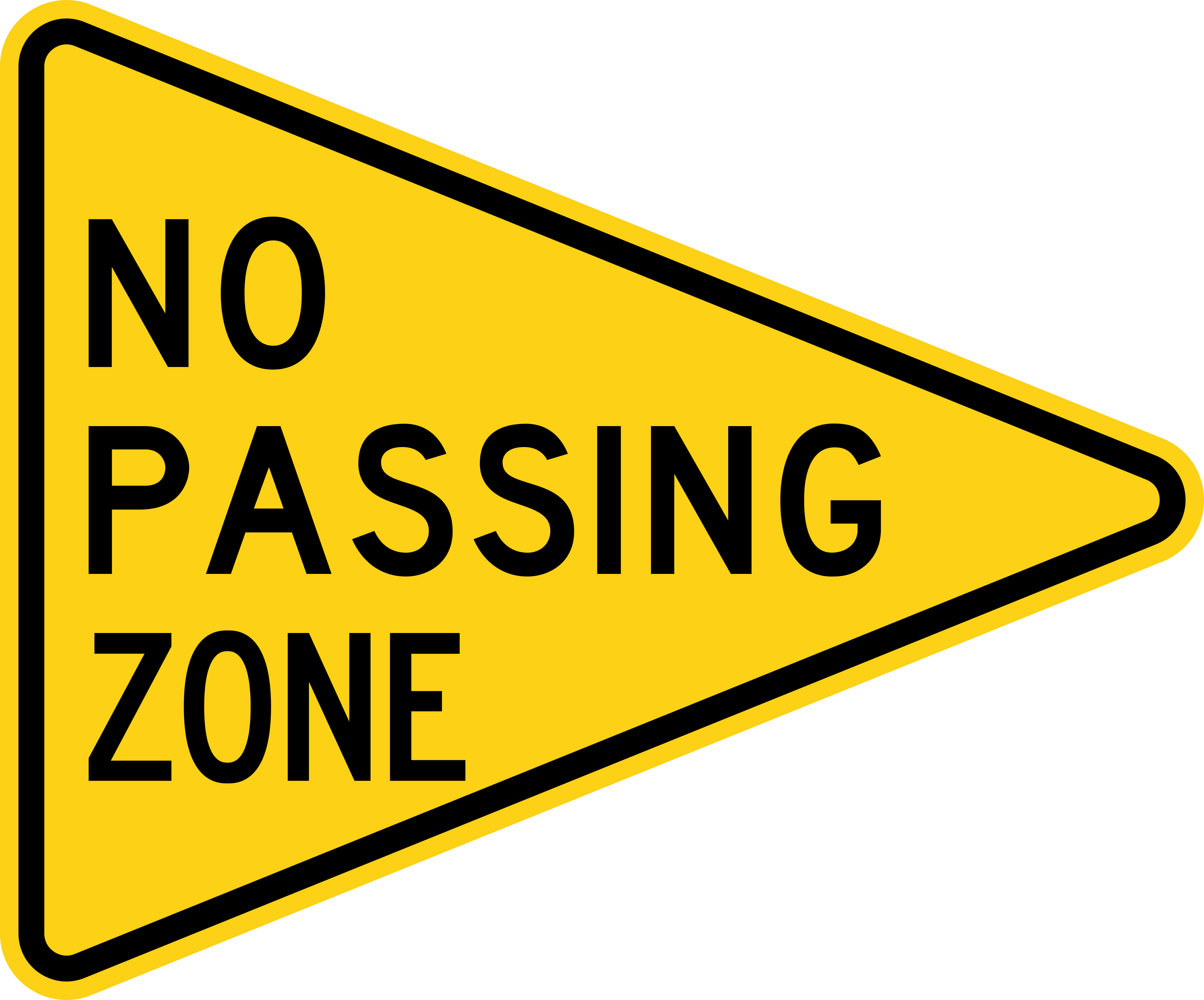
29. What does the pennant-shaped Do Not Pass sign identify?
- A place where passing is required
- The beginning of a no passing zone
- The end of every roadway restriction
- A lane reserved for emergency vehicles
Show answer
The beginning of a no passing zone. The pennant announces the beginning of a no passing zone. Full explanation in Test 9
30. Where must Virginia drivers yield to pedestrians or bicyclists under this crosswalk rule?
- Only after the person reaches the driver’s lane
- Only at a signalized crosswalk
- At a clearly marked crosswalk or an unmarked intersection
- Only when a crossing guard is present
Show answer
At a clearly marked crosswalk or an unmarked intersection. The Virginia rule covers a person crossing within a clearly marked crosswalk and a person crossing at an intersection even when the pavement Full explanation in Test 10
31. What must you do when an emergency vehicle approaches from behind using a siren or flashing lights?
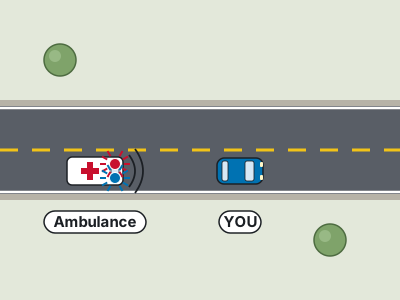
- Follow it closely through the intersection
- Yield, pull safely to the right edge, and stop until it passes
- Stop in the middle of the lane immediately
- Race ahead so it cannot pass
Show answer
Yield, pull safely to the right edge, and stop until it passes. An emergency vehicle approaching from behind has priority. Safely yield to the right edge of the road and stop until the vehicle has passed. Full explanation in Test 1
32. What is the maximum speed of a low speed vehicle, and where may it be driven in Virginia?
- 45 mph, on any road except interstates
- 21 to 25 mph, on public roads with limits of 35 mph or less
- 35 mph, on any road
- 15 mph, on sidewalks
Show answer
21 to 25 mph, on public roads with limits of 35 mph or less. Low speed vehicles are electrically or gas powered four wheel vehicles with a maximum speed ranging from 21 to 25 mph. Full explanation in Test 2
33. What should you do when a Keep Right sign marks an obstruction ahead?
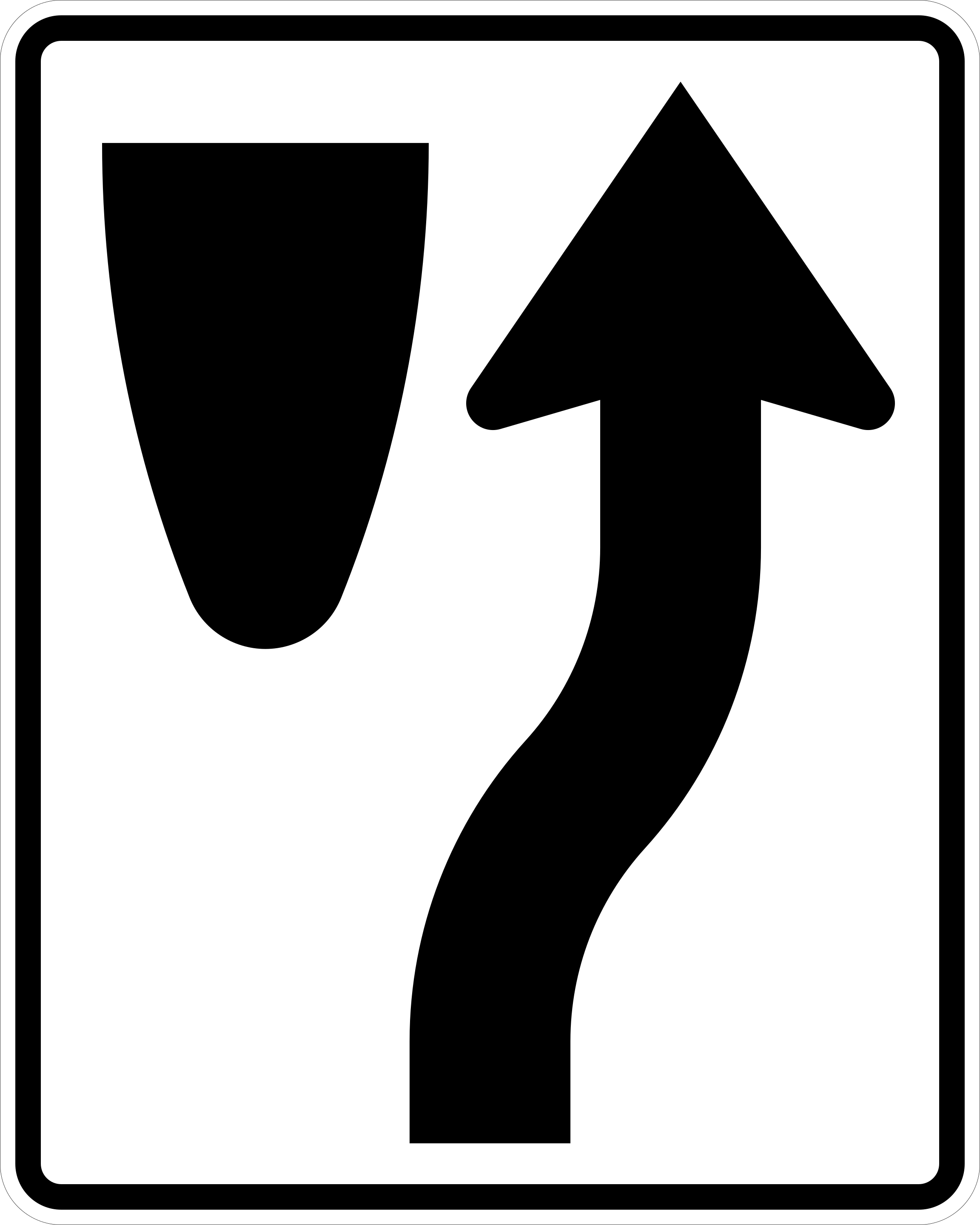
- Stop and wait for the obstruction to move
- Pass on the side shown by the arrow
- Drive left of the barrier if no traffic is visible
- Treat the arrow as a suggested passing lane
Show answer
Pass on the side shown by the arrow. Keep Right is used where a traffic island, median, or barrier lies ahead. Full explanation in Test 3
34. For a driver age 21 or older operating a noncommercial vehicle in Virginia, what is the lowest BAC covered by the general alcohol per se threshold?
- 0.02 percent or higher
- 0.05 percent or higher
- 0.10 percent or higher
- 0.08 percent or higher
Show answer
0.08 percent or higher. Virginia treats a driver who is at least 21 as driving under the influence when BAC reaches .08 percent. A reading of . Full explanation in Test 4
35. For a second Virginia DUI offense, how long is the administrative license suspension?
- Seven days with no alternative endpoint
- One year from the date of the stop
- Only until the driver leaves the police station
- 60 days or until trial, whichever comes first
Show answer
60 days or until trial, whichever comes first. Virginia lists a second offense administrative suspension as 60 days or until the driver goes to trial, whichever comes first. Full explanation in Test 5
36. What does Virginia’s implied-consent law mean when a person operates a motor vehicle on public roads?
- The driver may refuse every test without consequence
- The driver agrees only after signing a separate form
- The driver must submit only after a court conviction
- The driver agrees to take a breath test upon request
Show answer
The driver agrees to take a breath test upon request. Operating a motor vehicle on Virginia public roads carries agreement to take a breath test upon request under implied-consent laws. Full explanation in Test 6
37. A Virginia permit holder aged 19 or older wants a driver's license. Which path is described in the manual?
- Hold the permit 30 days and pass a motorcycle skills test
- Hold the permit one year with no education option
- Hold the permit 60 days or present a driver education completion certificate
- Skip the permit period by submitting a vehicle registration
Show answer
Hold the permit 60 days or present a driver education completion certificate. For an applicant who is 19 or older, Virginia describes two routes before applying for the driver's license: keep the learner's permit for 6 Full explanation in Test 7
38. You have a green light, but a pedestrian is still in the intersection. What must you do before turning?
- Turn first because the green light gives absolute priority
- Allow the pedestrian to cross before turning
- Drive around the pedestrian in the adjacent lane
- Sound the horn until the pedestrian stops
Show answer
Allow the pedestrian to cross before turning. A green signal permits movement only when the driver can proceed safely. Full explanation in Test 8
39. What should you do when a yellow traffic light warns that the signal is changing?
- Speed up to clear the intersection before red appears
- Treat it exactly like a green signal
- Stop if you have not entered, or proceed cautiously if stopping is unsafe
- Stop only when another vehicle is entering
Show answer
Stop if you have not entered, or proceed cautiously if stopping is unsafe. A changing yellow signal calls for a judgment about a safe stop. Full explanation in Test 9
40. Where must you stop at a red traffic light when there is no stop line?
- Before entering the intersection or reaching the crosswalk
- Only beside the nearest parked vehicle
- At least one full block before the signal
- After entering the intersection to improve visibility
Show answer
Before entering the intersection or reaching the crosswalk. At a red light, make a complete stop at the stop line. Full explanation in Test 10
