Every question below comes from the Rhode Island question bank on this page. Open a question to see the correct answer and the explanation. Nothing here is hidden behind a signup.
1. What following-distance adjustment is recommended during adverse weather or road conditions?
- Reduce the gap because slower traffic needs less space
- Add another second or two to the normal following distance
- Keep exactly three seconds in every condition
- Follow within one second when visibility is limited
Show answer
Add another second or two to the normal following distance. The normal three-second method is a starting point, not an unchanging measurement. Full explanation in Test 1
2. A 19-year-old in Rhode Island is convicted of a first Driving While Impaired offense with a BAC of 0.04%. What does the table list?
- 30 to 180 day suspension and a $100 to $300 fine
- 6 to 12 month suspension and a $150 assessment
- 1 to 3 month suspension, a fine of up to $250, 30 hours of community service
- Suspension until age 21
Show answer
1 to 3 month suspension, a fine of up to $250, 30 hours of community service. For drivers 18 to 21 with a BAC of 0.02% to 0. Full explanation in Test 2
3. A Rhode Island driver under 18 commits a second Driving While Impaired violation (BAC 0.02% to 0.08%). What happens to the license?
- A 30 day suspension
- A 6 month suspension
- A warning letter to the parents
- Suspension until age 21
Show answer
Suspension until age 21. The under 18 Driving While Impaired table lists a 6 to 12 month suspension for a first violation and a license suspension until age 21 for a Full explanation in Test 3
4. How does Rhode Island law classify an adult's second chemical test refusal violation within a ten year period?
- A first-offense civil warning
- A misdemeanor, because it falls within the ten year period
- A license renewal issue with no violation class
- A felony only when the refusal follows a crash
Show answer
A misdemeanor, because it falls within the ten year period. Rhode Island's refusal statute now counts prior violations over a ten year period. Full explanation in Test 4
5. What should a driver do when approaching a roundabout entrance?
- Enter clockwise so the nearest exit is reached sooner
- Stop inside the circle until every approaching vehicle has passed
- Yield to vehicles already in the roundabout, then enter counterclockwise through a safe gap
- Enter without yielding because traffic in the circle must stop
Show answer
Yield to vehicles already in the roundabout, then enter counterclockwise through a safe gap. Before entering a roundabout, slow down and yield to vehicles already circulating. Full explanation in Test 5
6. An adult Rhode Island driver is convicted of a first DUI with a BAC between 0.08% and 0.1%. What license suspension and fine does the table list?
- 1 to 2 year suspension and $400 fine
- Suspension until age 21 and $250 fine
- 3 to 18 month suspension and $500 fine
- 30 to 180 day suspension and $100 to $300 fine
Show answer
30 to 180 day suspension and $100 to $300 fine. For drivers 21 or older with a BAC of 0.08% to 0. Full explanation in Test 6
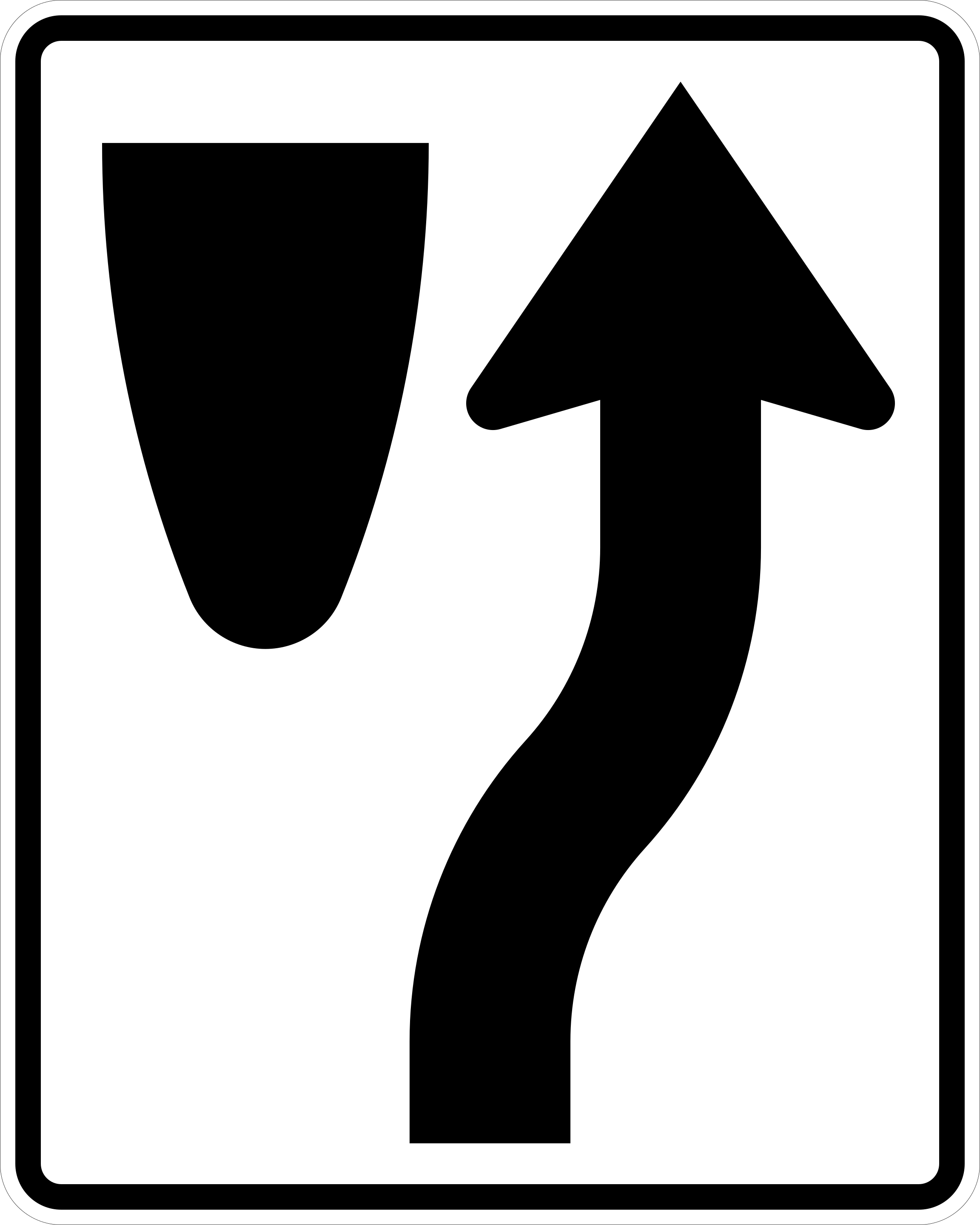
7. When this KEEP RIGHT sign marks an obstruction, which side should you use?
- Use the shoulder on whichever side is open
- Pass to the left regardless of pavement markings
- Stop and wait for a police escort
- Pass to the right of the divider or obstruction
Show answer
Pass to the right of the divider or obstruction. KEEP RIGHT directs traffic around a divider or obstruction on its right side. Full explanation in Test 7
8. When must a Rhode Island driver turn on headlights during the day?
- Only when driving on an interstate highway
- Whenever visibility is reduced or the windshield wipers are in use
- Only after another driver flashes headlights
- Whenever the temperature falls below freezing
Show answer
Whenever visibility is reduced or the windshield wipers are in use. Rhode Island requires headlights when a driver cannot see 500 feet ahead and whenever wipers are operating because of rain, sleet, or snow. Full explanation in Test 8
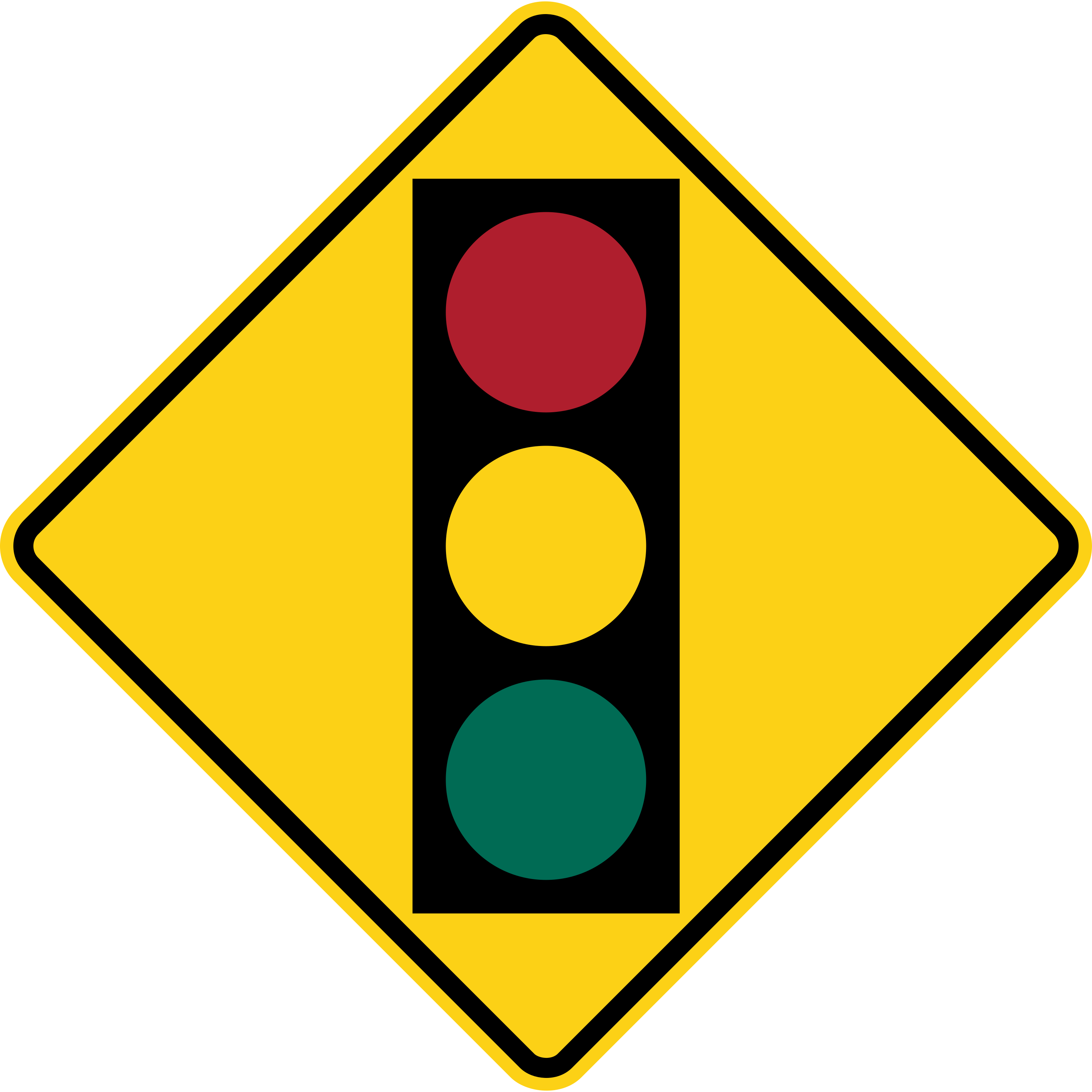
9. What should a driver expect after seeing this traffic signal warning sign?
- A police checkpoint will replace the next intersection
- A streetlight is broken and traffic control is suspended
- A traffic signal is ahead and requires preparation to obey it
- A signal applies only to vehicles turning left
Show answer
A traffic signal is ahead and requires preparation to obey it. The traffic signal warning sign announces a signal ahead, so the driver should adjust speed and prepare to respond to the upcoming light. Full explanation in Test 9
10. How far from a crosswalk at an intersection must a Rhode Island driver avoid parking?
- Within 20 feet
- Within 5 feet
- Within 50 feet
- Only directly on the painted stripes
Show answer
Within 20 feet. Rhode Island's parking restrictions include the space within twenty feet of a crosswalk at an intersection. Full explanation in Test 10
11. What does a red arrow displayed at a traffic light require?
- Stop and do not proceed in the direction of the arrow
- Turn in the arrow's direction after yielding to pedestrians
- Continue straight until the arrow becomes flashing yellow
- Treat the arrow as permission to pass the intersection
Show answer
Stop and do not proceed in the direction of the arrow. A red arrow controls movement in the direction it points. The driver must stop and may not proceed that way until the signal changes. Full explanation in Test 1
12. A Rhode Island 18-year-old is caught possessing an alcoholic beverage for the first time. Besides a fine, what license consequence does the law set?
- A 5 year revocation
- No license consequence
- Suspension until age 21
- A minimum 60 day license suspension
Show answer
A minimum 60 day license suspension. Under the underage possession law, anyone under 21 who possesses an alcoholic beverage is fined $150 to $750 for a first offense and is subj Full explanation in Test 2
13. Which roadway warning is represented by the listed sign description?

- A traffic signal is ahead
- The road narrows from the right
- A school crossing is ahead
- The highway is entering a divided section
Show answer
The road narrows from the right. The warning-sign panel identifies a road narrowing from the right as an upcoming roadway change. Full explanation in Test 3
14. For the first twelve months of a Rhode Island limited provisional license, what passenger limit applies to a passenger younger than 21?
- No passengers younger than 21 under any circumstance
- No more than two passengers, including household members
- No more than one passenger, with immediate family and household members exempt
- No limit when every occupant is properly restrained
Show answer
No more than one passenger, with immediate family and household members exempt. During the first twelve months, the license allows no more than one licensed passenger younger than twenty-one. Full explanation in Test 4
15. At a red octagonal STOP sign, where must the driver stop before proceeding?
- Past the crosswalk so the front wheels reach the next lane
- Only after entering the intersection far enough to see cross traffic
- At the center of the intersection
- Before entering the crosswalk on the near side of the intersection
Show answer
Before entering the crosswalk on the near side of the intersection. The stop requirement applies before entering the near-side crosswalk. Full explanation in Test 5
16. What condition does this pedestrian crossing sign tell a driver to anticipate?

- People may cross ahead, so be prepared to yield
- Pedestrians are prohibited from entering the roadway
- Sidewalk repairs have closed the crossing permanently
- Only bicycles may use the marked crossing
Show answer
People may cross ahead, so be prepared to yield. A pedestrian crossing warning tells drivers to expect people crossing the roadway ahead. Full explanation in Test 6
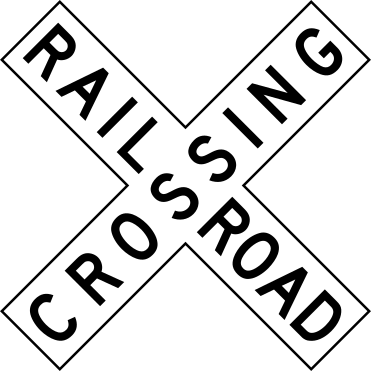
17. What does the RAILROAD CROSSING sign identify at the tracks?
- A pedestrian-only path that vehicles may not cross
- A hospital entrance where horns are prohibited
- A temporary construction detour around the tracks
- The crossing itself, where a driver must yield to trains
Show answer
The crossing itself, where a driver must yield to trains. The crossbuck marks the railroad crossing itself. Full explanation in Test 7
18. Which group of Rhode Island signs contains rules such as STOP, YIELD, and DO NOT ENTER?
- Regulatory signs
- Guide signs
- Tourist attraction signs
- Mile marker signs
Show answer
Regulatory signs. The manual places STOP, YIELD, and DO NOT ENTER under the heading Regulatory Signs. Full explanation in Test 8
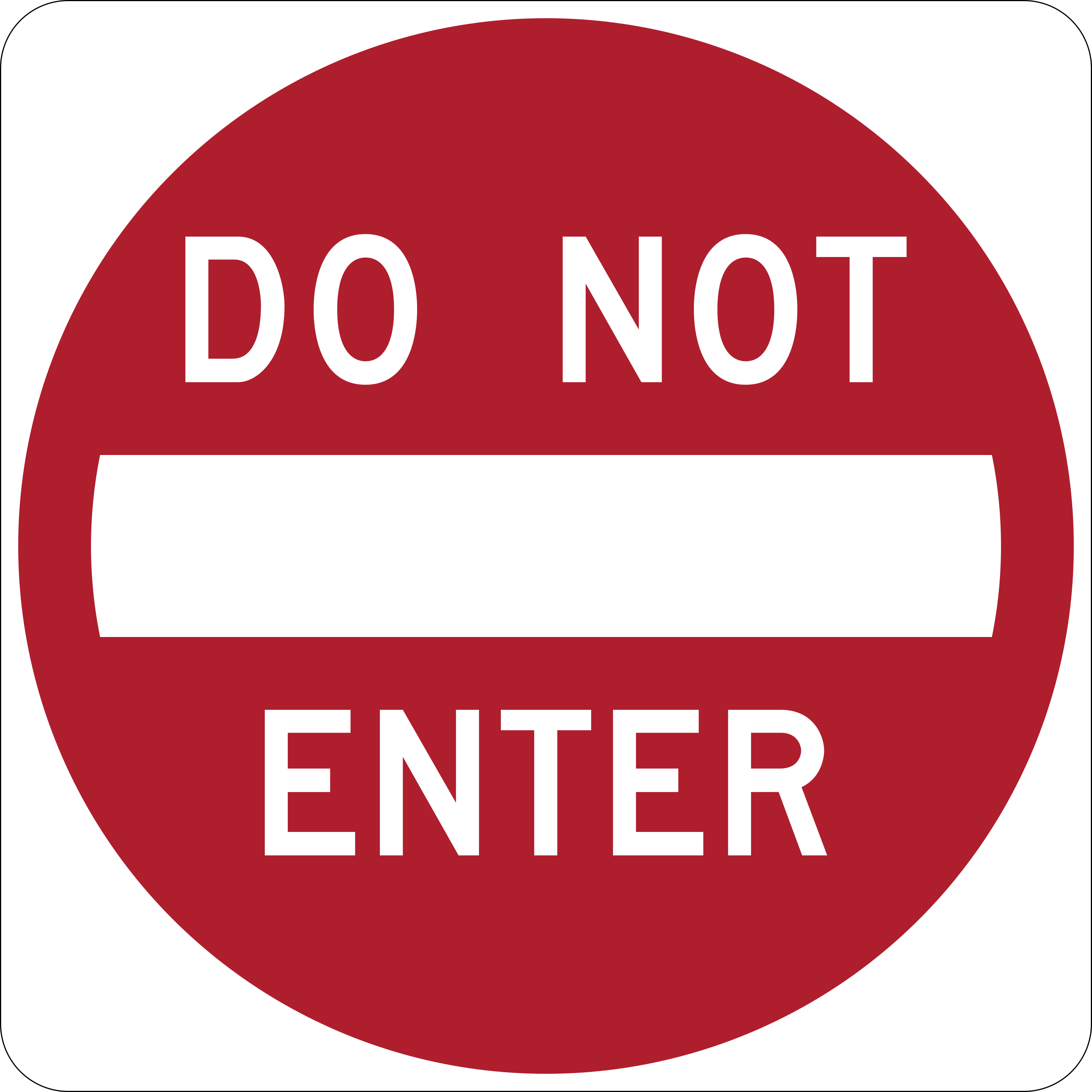
19. What does this DO NOT ENTER sign tell a driver?
- Continue straight but reduce speed for a work zone
- Parking is allowed only on the side displaying the sign
- The road is a two-way street with priority traffic
- Do not proceed into that roadway or ramp entrance
Show answer
Do not proceed into that roadway or ramp entrance. DO NOT ENTER prohibits entering the roadway from the sign’s approach, commonly at a one-way street or ramp exit. Full explanation in Test 9
20. After holding a Rhode Island Limited Instructional Permit for the required period and passing the road test, what comes next?
- A second classroom permit
- A Full Operator's License immediately
- A motorcycle-only permit
- A Limited Provisional License
Show answer
A Limited Provisional License. The next graduated stage is the Limited Provisional License. Full explanation in Test 10
21. How does the Rhode Island three-second rule show that a driver is following too closely?
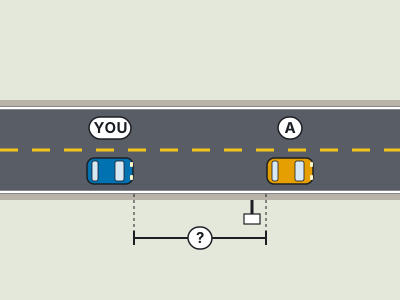
- The vehicle remains behind the lead vehicle for exactly one second
- The vehicle reaches the chosen fixed point before the count is finished
- The driver reaches the point only after counting ten seconds
- The driver uses the speedometer instead of a roadside reference
Show answer
The vehicle reaches the chosen fixed point before the count is finished. The following-distance check uses a fixed object such as a sign, pole, or line on the pavement. Full explanation in Test 1
22. What upcoming control does this STOP sign warning tell the driver to anticipate?

- A stop sign ahead, requiring preparation to stop
- The end of a priority roadway with no stop control
- A no-stopping zone beginning immediately at the warning sign
- A yield sign that replaces all stop signs ahead
Show answer
A stop sign ahead, requiring preparation to stop. This warning sign indicates that a STOP sign is ahead. Full explanation in Test 2
23. What does a crossroad warning sign tell a driver to anticipate?

- A hospital entrance with emergency vehicles
- An intersection where traffic may cross from both sides
- A road closed to all turning movements
- A one-way lane that must be used for passing
Show answer
An intersection where traffic may cross from both sides. A crossroad warning indicates an intersection ahead, with traffic potentially entering from either side. Full explanation in Test 3
24. Before turning left at an intersection, which road user must the driver yield to?
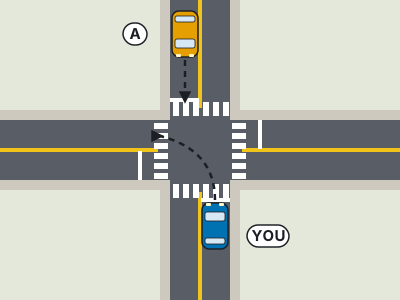
- Only pedestrians already standing in a marked crosswalk
- Only vehicles larger than the turning vehicle
- Oncoming traffic, including an oncoming bicyclist
- No one, because a left turn has priority over straight traffic
Show answer
Oncoming traffic, including an oncoming bicyclist. A left turn crosses the path of people traveling toward the intersection. Full explanation in Test 4
25. What is the first step if the brake pedal goes to the floor?
- Turn off the engine immediately
- Pump the brake pedal
- Accelerate toward the shoulder
- Steer into oncoming traffic
Show answer
Pump the brake pedal. When the brake pedal drops to the floor, the manual first directs the driver to pump it. Full explanation in Test 5
26. Which assessment does the Rhode Island manual specifically list among the chemical test refusal penalties?
- $500 highway safety assessment
- $150 community restitution assessment
- $300 road test assessment
- $86 ignition assessment
Show answer
$500 highway safety assessment. The refusal consequences include a highway safety assessment, along with the fine, community service, and education or treatment response de Full explanation in Test 6
27. What does a broken yellow line between opposing traffic generally permit?
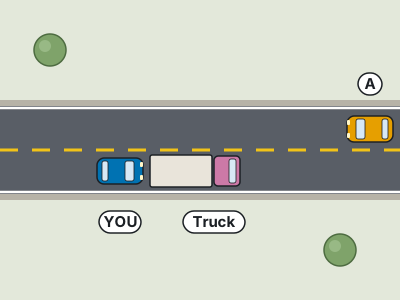
- Traveling only in the direction of an arrow
- Parking in the center of the roadway
- Passing another vehicle with care
- Crossing without checking opposing traffic
Show answer
Passing another vehicle with care. Broken yellow lines separate traffic traveling in opposite directions, and the manual says passing another vehicle is permitted with care. Full explanation in Test 7
28. For a Rhode Island driver age 21 or older, which BAC range is listed under the first DUI violation?
- 0.02% to less than 0.05%
- 0.1% to 0.15% only
- 0.08% to 0.1%
- 0.15% or above only
Show answer
0.08% to 0.1%. The adult DUI table begins its first violation category at a BAC of 0.08% to 0.1%. The choice “0.02% to less than 0. Full explanation in Test 8
29. May a Rhode Island driver wear earphones or a headset while driving on a public highway?
- No, operating a vehicle on a public highway while wearing earphones or headsets is prohibited
- Yes, if the volume is low
- Yes, for navigation directions only
- Yes, in one ear only
Show answer
No, operating a vehicle on a public highway while wearing earphones or headsets is prohibited. Rhode Island lists among its driver rules that no one may operate a motor vehicle upon a public highway while wearing earphones or headsets. Full explanation in Test 9
30. Under Rhode Island's texting law, which use of a wireless handset is prohibited while operating a motor vehicle?
- Calling emergency services during an actual emergency
- Using a phone only after parking in a legal space
- Composing, reading, or sending a text message
- Listening to a passenger's spoken directions
Show answer
Composing, reading, or sending a text message. The manual states that, regardless of age, a driver may not use a wireless handset to compose, read, or send a text message while operating Full explanation in Test 10
31. Where are signs posted, how far from a fire station driveway must a Rhode Island driver stay when parking on the opposite side of the street?
- 20 feet
- 75 feet
- 30 feet
- 100 feet
Show answer
75 feet. Rhode Island bars parking within 20 feet of the driveway of a fire station and, across the street, within 75 feet of the driveway where sign Full explanation in Test 1
32. How far from a stop sign, traffic light, or flashing signal must a Rhode Island driver park?
- At least 8 feet
- At least 20 feet
- At least 30 feet
- At least 50 feet
Show answer
At least 30 feet. Parking is prohibited within 30 feet of a flashing red or yellow light, a stop sign, or a traffic light, so approaching drivers can see the Full explanation in Test 2
33. What is the only stated circumstance in which a Rhode Island minor may use a cell phone while driving?
- An emergency
- A hands-free call to a friend
- A call while stopped at a red light
- A work call during daylight
Show answer
An emergency. Drivers under eighteen are prohibited from using a cell phone while operating a motor vehicle, including hands-free devices and speakerphone Full explanation in Test 3
34. Why should a driver avoid taking the right-of-way for granted?
- Another driver may fail to yield, and giving way can prevent a collision
- The law never assigns right-of-way at intersections
- Yielding automatically causes a traffic violation
- The driver with priority must always stop first
Show answer
Another driver may fail to yield, and giving way can prevent a collision. Having legal priority does not guarantee that another road user understands or obeys the rule. Full explanation in Test 4
35. When must motorists stop for a school bus with flashing red lights?
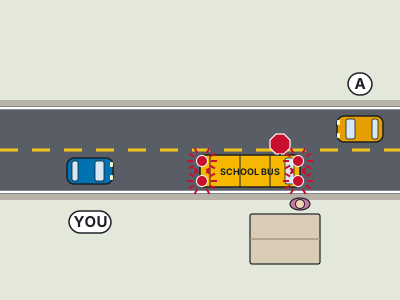
- Only when following the bus on a two-lane road
- When approaching from either direction, until the red lights stop flashing
- Only if children are visible in the roadway
- Never when the bus is stopped on a private road
Show answer
When approaching from either direction, until the red lights stop flashing. Flashing red lights on a school bus require motorists approaching from either direction to make a full stop and remain stopped until the red Full explanation in Test 5
36. When stopping at a Rhode Island intersection, how long should you completely stop before proceeding with caution?
- At least one second
- Until the vehicle behind you honks
- A minimum of three seconds
- Exactly ten seconds
Show answer
A minimum of three seconds. Rhode Island guidance calls for a complete stop that lasts at least three seconds. Full explanation in Test 6
37. Which adjustment helps prevent hydroplaning on a wet Rhode Island road?
- Brake hard whenever the roadway begins to shine
- Increase speed so water passes beneath the tires faster
- Reduce speed and keep tires inflated to the manufacturer's recommendation
- Steer toward areas where water has pooled
Show answer
Reduce speed and keep tires inflated to the manufacturer's recommendation. Hydroplaning begins when the front tires lose contact with a wet road, taking away steering capability. Full explanation in Test 7
38. On a two-lane Rhode Island road, how close must a parked vehicle's right wheels be to the right side or curb?
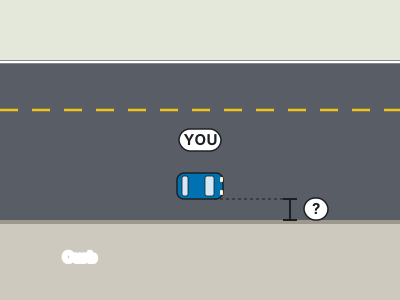
- A maximum of three feet
- A maximum of twelve inches
- At least six feet
- Any distance if hazard lights are on
Show answer
A maximum of twelve inches. Unless another law prohibits parking, the manual says a vehicle on a two-lane road must place its right wheels no more than twelve inches fr Full explanation in Test 8
39. What minimum suspension does the Rhode Island manual state for refusing to take a chemical test?
- Until the driver turns 21
- Thirty days
- One year
- Six months
Show answer
Six months. A person who refuses a chemical test faces a license suspension of at least six months. Full explanation in Test 9
40. What does the Rhode Island manual list as the first-offense penalty for failing to stop for a school bus with flashing red lights?
- A fine of up to $1,000 and a 1 year suspension
- A $75 fine with no suspension
- A fine of up to $300 and/or suspension up to 30 days
- A warning for the first offense
Show answer
A fine of up to $300 and/or suspension up to 30 days. A first violation of the school bus stop law brings a fine of up to $300 and/or a license suspension of up to 30 days, and penalties increas Full explanation in Test 10
