Every question below comes from the Texas question bank on this page. Open a question to see the correct answer and the explanation. Nothing here is hidden behind a signup.
1. What does the Texas Standard Colors table explain?
- How to calculate a driver’s BAC
- What commonly used road-sign colors mean
- When a vehicle inspection expires
- Which lane a bicycle must use
Show answer
What commonly used road-sign colors mean. The Standard Colors table explains the meanings of colors commonly used on road signs. Full explanation in Test 1
2. What does Texas's Administrative License Revocation law provide for driving while intoxicated?
- A vehicle registration discount
- An administrative penalty
- A replacement license without review
- A requirement to retake the road test
Show answer
An administrative penalty. Administrative License Revocation is a licensing consequence for driving while intoxicated, separate from the ordinary process of renewing o Full explanation in Test 2
3. Why should drivers learn the shapes used on Texas traffic signs?

- Every sign shape gives permission to speed up
- Shape recognition replaces reading the sign's message
- Shape recognition helps drivers know what to do from a distance
- Only round signs can communicate warnings
Show answer
Shape recognition helps drivers know what to do from a distance. Recognizing sign shapes helps a driver understand what to do while approaching from a distance. Full explanation in Test 3
4. What does this sharp-turn warning sign tell a driver to expect?

- A railroad crossing with several tracks
- A lane that ends at the next block
- A sharp turn in the arrow's direction
- A traffic signal that changes ahead
Show answer
A sharp turn in the arrow's direction. The arrow warns that the road will turn sharply in the direction it points. Full explanation in Test 4
5. What alcohol-related conduct does Texas zero tolerance prohibit for a minor?
- Purchasing alcohol is allowed if it is not consumed
- Possessing alcohol is allowed with a parent present
- Consuming alcohol is allowed when the minor is not driving
- Purchasing, consuming, or possessing an alcoholic beverage
Show answer
Purchasing, consuming, or possessing an alcoholic beverage. Texas says a minor may not purchase, attempt to purchase, consume, or possess an alcoholic beverage. Full explanation in Test 5
6. How should a driver respond to a flashing red traffic signal?
- Slow slightly and continue without stopping
- Wait until the signal becomes a steady green
- Treat it as a flashing yellow signal
- Stop completely, then proceed when safe
Show answer
Stop completely, then proceed when safe. A flashing red signal requires a complete stop before the crosswalk or intersection, followed by movement only when it is safe. Full explanation in Test 6
7. What confinement range applies to a first DWI offense by an adult in Texas?
- No jail is possible for a first offense
- 72 hours to 180 days in jail
- 30 days to 1 year in jail
- 2 to 10 years in prison
Show answer
72 hours to 180 days in jail. A first adult DWI in Texas carries a fine of up to $2,000, 72 hours to 180 days in jail, and a license suspension of 90 days to 365 days. Full explanation in Test 7
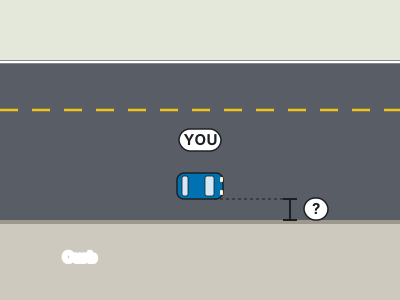
8. When parallel parking beside a right-hand curb, how far may the vehicle's wheels be from the curb or edge of the road?
- At least 3 feet
- No more than 6 feet
- Exactly 24 inches
- No more than 18 inches
Show answer
No more than 18 inches. The parallel-parking procedure says the vehicle should not be more than 18 inches from the curb or edge of the road. Full explanation in Test 8
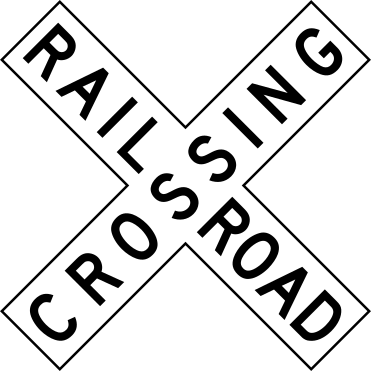
9. What does a railroad crossbuck identify and what should you do when approaching it?
- A hospital entrance; stop and turn off the radio
- The location of train tracks; slow, look, listen, and be ready to yield
- A no-passing zone; accelerate before the tracks
- A work zone; pass the sign on the shoulder
Show answer
The location of train tracks; slow, look, listen, and be ready to yield. A crossbuck marks the location of railroad tracks. Full explanation in Test 9
10. When conditions are poor, what should a driver do with the following interval?
- Allow more time than the normal interval
- Use a fixed 10-foot distance
- Follow more closely to avoid spray
- Keep exactly two seconds in every condition
Show answer
Allow more time than the normal interval. Texas advises drivers to allow more time between vehicles during poor road conditions. Full explanation in Test 10
11. How much following distance is prohibited behind a fire truck answering an alarm with flashing red lights?
- Following within 50 feet is allowed if traffic is light
- Following is unrestricted once the truck enters a highway
- Following within 100 feet is required to see the truck
- Following within 500 feet is not allowed
Show answer
Following within 500 feet is not allowed. The emergency-vehicle rules prohibit driving within 500 feet of a fire truck answering an alarm when its flashing red lights are on. Full explanation in Test 1
12. What does the Texas Speed Limits table identify?
- Only minimum speeds for commercial trucks
- Recommended speeds that may always be exceeded
- Maximum speed limits for all vehicles under different conditions
- A single statewide speed for every roadway
Show answer
Maximum speed limits for all vehicles under different conditions. The Speed Limits table organizes maximum speeds for all vehicles under different roadway and vehicle conditions. Full explanation in Test 2
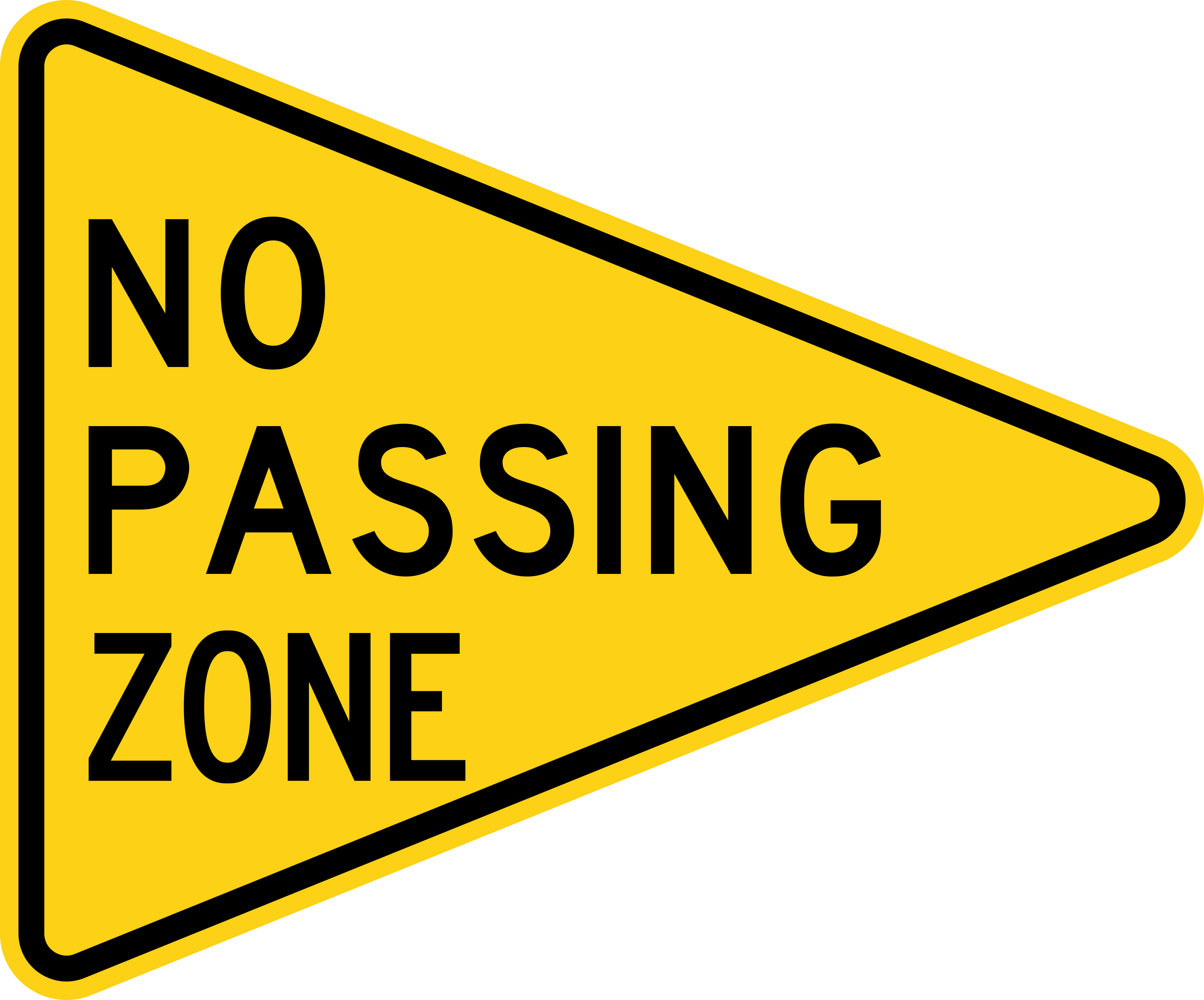
13. Why do sign shapes help drivers approaching from a distance?
- They identify the vehicle owner
- They replace every traffic signal
- They help drivers know what to do before reaching the sign
- They guarantee the road is clear
Show answer
They help drivers know what to do before reaching the sign. The handbook explains that knowing sign shapes helps drivers know what to do when approaching from a distance. Full explanation in Test 3
14. On a Texas numbered highway outside an urban district, what is the table speed limit for passenger cars?
- 70 mph
- 55 mph
- 60 mph
- 85 mph
Show answer
70 mph. The Texas speed table lists 70 mph for passenger cars on a highway numbered by Texas or the U.S. Full explanation in Test 4
15. Which situations can a Texas warning sign announce?
- Only a posted speed limit change
- Only a service facility at the next exit
- A road hazard, change in direction, or another situation ahead
- Only a railroad crossing
Show answer
A road hazard, change in direction, or another situation ahead. Warning signs alert drivers to conditions immediately ahead and tell them what to look for. Full explanation in Test 5
16. What can an adult's breath or blood specimen determine after a qualifying DWI arrest?
- Only whether the driver has a valid license
- Whether alcohol is present, its amount, and whether other controlled substances or drugs are present
- Only the vehicle's mechanical condition
- Whether the driver committed a parking violation
Show answer
Whether alcohol is present, its amount, and whether other controlled substances or drugs are present. After a qualifying arrest, the handbook says a breath or blood specimen determines whether alcohol is present and identifies the amount in t Full explanation in Test 6
17. A 16-year-old Texas driver holds a provisional license. How many passengers under 21 who are not family members may ride along?
- None at all
- No more than one
- Up to two
- Up to three, if all wear seat belts
Show answer
No more than one. During Phase Two of the Texas Graduated Driver License program, a provisional driver may not drive with more than one passenger under 21 who Full explanation in Test 7
18. When a stop line is present at a traffic sign or signal, where must the driver stop?
- Behind the stop line
- After the crosswalk or intersection
- Only beside the curb
- On top of the stop line
Show answer
Behind the stop line. White stop lines are painted across pavement lanes at traffic signs or signals, and drivers are required to stop behind the line. Full explanation in Test 8
19. When passing on a two-lane road, when should the driver return to the right lane?
- Before the passed vehicle disappears from the left mirror
- As soon as the front bumper passes the other vehicle
- After safely clearing the vehicle and seeing it in the rearview mirror
- Only after an oncoming driver flashes the headlights
Show answer
After safely clearing the vehicle and seeing it in the rearview mirror. The passing procedure says to remain left until the overtaken vehicle has been safely cleared and can be seen in the rearview mirror. Full explanation in Test 9
20. At a stop sign, is slowing without stopping fully sufficient under the Texas handbook?
- Yes, if the intersection appears empty
- No, but only at a school crossing
- Yes, if the vehicle is traveling below 10 mph
- No, the driver must come to a complete stop
Show answer
No, the driver must come to a complete stop. The stop-sign description specifically says that slowing down is not adequate. Full explanation in Test 10
21. On a one-way road marked with broken white lines, what lane-use rule applies?
- The driver must remain in the far-left lane
- The driver may travel in any lane
- The lines prohibit every lane change
- Only buses may cross the markings
Show answer
The driver may travel in any lane. The handbook states that when each lane on a one-way road is marked with a broken white line, a driver may travel in any lane. Full explanation in Test 1
22. What should a driver do when the road is wet?
- Keep the same speed and interval
- Speed up and follow more closely
- Slow down and increase the following distance
- Brake hard while turning
Show answer
Slow down and increase the following distance. When the road is wet, Texas tells drivers to slow down and increase the following distance. Full explanation in Test 2
23. A court judgment from your Texas crash is still unpaid. After how many days can your license and registration be suspended?
- After 10 days
- After 60 days
- After 30 days
- After two years
Show answer
After 60 days. Texas suspends the registration, license, or driving privilege when a judgment from a crash is not satisfied within 60 days. Full explanation in Test 3
24. A court impounds the vehicle of an owner convicted a second time of driving in Texas without evidence of financial responsibility. For how long?
- Impounded for 30 days
- Impounded for 60 days
- Impounded for one year
- Impounded for 180 days
Show answer
Impounded for 180 days. A second or later conviction for driving without evidence of financial responsibility brings a license suspension, a fine of $350 to $1,000, Full explanation in Test 4
25. How closely may you follow a fire truck answering an alarm with flashing red lights?
- You may follow within 100 feet if traffic is light
- You must stay at least 500 feet behind it
- You may follow closely after changing lanes
- There is no stated following restriction
Show answer
You must stay at least 500 feet behind it. Texas prohibits following within 500 feet of a fire truck answering an alarm when its flashing red lights are on. Full explanation in Test 5
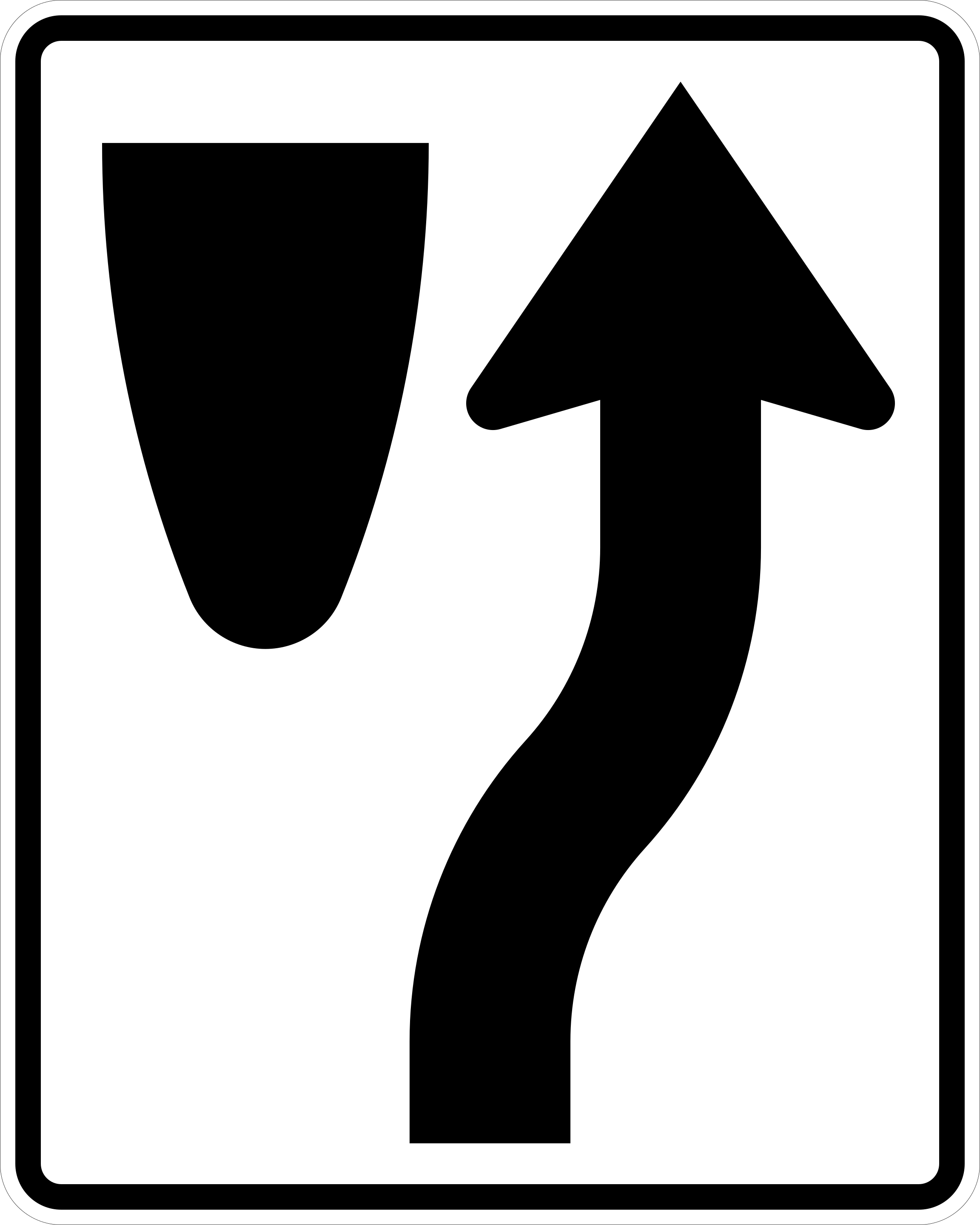
26. When a keep right sign marks an obstruction or island, where should you drive?
- To the left of the sign unless passing
- Across the median to avoid the obstruction
- To the right of the sign
- In either direction without slowing
Show answer
To the right of the sign. The keep right sign directs traffic around an island, median, or other obstruction. Full explanation in Test 6
27. What should you do if an emergency vehicle approaches and you cannot pull to the right edge?
- Slow down and leave a clear path for it
- Speed up until the emergency vehicle turns away
- Stop across both lanes immediately
- Continue at the same speed in the center of the road
Show answer
Slow down and leave a clear path for it. Texas directs drivers who cannot pull to the right to slow down and leave a clear path for the approaching emergency vehicle. Full explanation in Test 7
28. On the Texas driving exam, what point deduction causes automatic failure?
- More than 10 points deducted
- Any point deducted
- More than 30 points deducted
- More than 50 points deducted
Show answer
More than 30 points deducted. The Texas driving exam grades four basic skills: control, observation, positioning, and signaling. Full explanation in Test 8
29. What do warning signs tell drivers about conditions ahead?
- They establish only the legal maximum speed for the road
- They alert drivers to hazards, direction changes, or another situation ahead
- They identify the driver's license class required nearby
- They guarantee that the roadway ahead is free of conflict
Show answer
They alert drivers to hazards, direction changes, or another situation ahead. Warning signs alert drivers to conditions immediately ahead, including road hazards, changes in direction, or another situation that require Full explanation in Test 9
30. Who may establish or alter Texas speed limits under the handbook?
- Only individual drivers on the roadway
- Only vehicle manufacturers
- Only the federal government for every road
- The Texas Transportation Commission, regional mobility authorities, and local governments
Show answer
The Texas Transportation Commission, regional mobility authorities, and local governments. The handbook gives authority to the Texas Transportation Commission, regional mobility authorities, and local governments to raise or lower Full explanation in Test 10
31. Which vehicles must display the slow-moving vehicle emblem?
- Vehicles designed to operate at 25 mph or less
- Every vehicle traveling below the posted speed
- Only passenger cars on rural roads
- Vehicles traveling above 45 mph
Show answer
Vehicles designed to operate at 25 mph or less. The slow-moving vehicle emblem is required for vehicles designed to operate at a maximum speed of 25 mph or less. Full explanation in Test 1
32. A Texas minor gives a breath specimen showing a detectable amount of alcohol, but below 0.08. What is the suspension for a first offense?
- Suspended for 30 days
- Suspended for 60 days
- Suspended for 180 days
- No suspension, because the BAC is under 0.08
Show answer
Suspended for 60 days. Under Texas zero tolerance, a minor whose specimen shows any detectable alcohol while driving in a public place loses the license, even belo Full explanation in Test 2
33. If an officer directs traffic differently from a traffic signal, whose instruction must the driver follow?
- The law enforcement officer directing traffic
- The illuminated signal because it always controls
- The driver in the adjacent lane
- The instruction on the nearest route sign
Show answer
The law enforcement officer directing traffic. Texas requires drivers to obey a law enforcement officer whenever that officer is directing traffic, even when the instruction would ordinar Full explanation in Test 3
34. After a property-damage-only crash when all vehicles can be safely driven, where should drivers move them?
- Leave them in the main lane until insurance arrives
- Drive directly home without exchanging information
- Move them only if the damage exceeds $10,000
- To a designated crash investigation site or another suitable nearby location
Show answer
To a designated crash investigation site or another suitable nearby location. For a crash involving only vehicle damage, when each vehicle can be normally and safely driven, drivers must move as soon as possible to a d Full explanation in Test 4
35. A pedestrian entered a crosswalk before the traffic light changed. What must a driver do when the light changes?
- Proceed immediately because the new light gives the driver priority
- Continue yielding until the pedestrian has cleared the crosswalk
- Pass behind the pedestrian without checking the remaining crossing
- Sound the horn so the pedestrian returns to the curb
Show answer
Continue yielding until the pedestrian has cleared the crosswalk. Texas requires drivers to continue giving the pedestrian the right-of-way when the light changes after the pedestrian has entered the crossw Full explanation in Test 5
36. How should drivers watch for pedestrians, whether or not the pedestrian has the right-of-way?
- Look only for pedestrians at traffic lights
- Always remain alert for individuals on foot
- Watch only after a horn is sounded
- Assume pedestrians will yield to vehicles
Show answer
Always remain alert for individuals on foot. The handbook says drivers should always look out for pedestrians whether those pedestrians have the right-of-way or not. Full explanation in Test 6
37. If the brakes fail while driving, which control can help slow the vehicle?
- The accelerator held down to stabilize the engine
- The parking brake applied cautiously, together with a lower gear
- The steering wheel released so the vehicle can coast
- The parking brake yanked hard until the tires lock
Show answer
The parking brake applied cautiously, together with a lower gear. During brake failure, the handbook advises that the driver can use the parking brake and shift to a lower gear. Full explanation in Test 7
38. What are solid white lines commonly used to control on a Texas roadway?
- The direction of opposing traffic only
- Railroad crossing gates
- The legal boundary of a parking lot
- Lane use, road edges, shoulders, and transitions
Show answer
Lane use, road edges, shoulders, and transitions. Solid white lines may mark pavement edges and shoulders, channelizing, transitions, and lane use control. Full explanation in Test 8
39. When a school bus displays alternately flashing red lights, what must approaching drivers do?
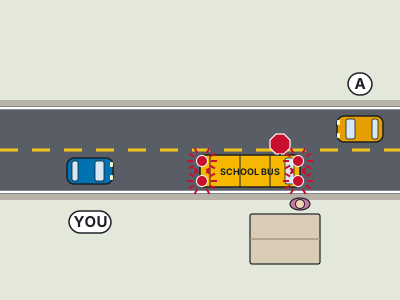
- Slow down and pass if no child is visible
- Stop and wait until the bus resumes, signals, or stops flashing red
- Stop only when approaching from behind the bus
- Pass after the first red flash
Show answer
Stop and wait until the bus resumes, signals, or stops flashing red. Drivers approaching a school bus from either direction must stop when its alternately flashing red lights are displayed. Full explanation in Test 9
40. What must a driver do when facing a flashing yellow arrow for a left turn?
- Stop and wait for a green arrow
- Turn left without checking because opposing traffic must stop
- Turn left only after yielding to oncoming traffic
- Continue straight and ignore the arrow
Show answer
Turn left only after yielding to oncoming traffic. A flashing yellow arrow permits a left turn, but it is not a protected movement. Full explanation in Test 10
