Every question below comes from the Tennessee question bank on this page. Open a question to see the correct answer and the explanation. Nothing here is hidden behind a signup.
1. Besides YIELD, which other message may Tennessee display on a triangular sign?
- Railroad crossing ahead
- School zone
- No Passing Zone
- Stop
Show answer
No Passing Zone. The downward pointing triangle is the yield sign, but Tennessee also says a triangular No Passing Zone sign can be used. Full explanation in Test 1
2. What does the lane-ending warning require a driver to anticipate?

- A new lane will open on the right
- The lane will end and traffic should merge left
- The right lane is reserved for slow vehicles
- Passing is required before the lane narrows
Show answer
The lane will end and traffic should merge left. The lane-ending sign warns that the marked lane will disappear and directs drivers to merge left. Full explanation in Test 2
3. What is an accepted Tennessee practice for oncoming traffic meeting a funeral procession?
- Pass the procession on the shoulder
- Pull to the side of the roadway as a sign of respect
- Drive between vehicles in the procession
- Stop in the travel lane and leave the vehicle
Show answer
Pull to the side of the roadway as a sign of respect. Tennessee describes oncoming traffic pulling to the side of the roadway as a common and accepted sign of respect when meeting a funeral proc Full explanation in Test 3
4. If you are already in an intersection when an emergency vehicle approaches, when should you pull over?
- Drive through the intersection first, then pull over when clear
- Stop immediately in the intersection
- Back up before the emergency vehicle arrives
- Turn left across its path
Show answer
Drive through the intersection first, then pull over when clear. A vehicle already in an intersection should continue through before pulling over, because stopping there can block the emergency vehicle's r Full explanation in Test 4
5. Who has the right-of-way when a driver approaches railroad tracks?
- The vehicle that reaches the crossing first
- The vehicle traveling faster
- The train
- The driver closest to the center line
Show answer
The train. Tennessee requires drivers to yield the right-of-way to trains because a train cannot stop or swerve like a passenger vehicle. Full explanation in Test 5
6. What kind of traffic message does this yellow diamond sign provide?
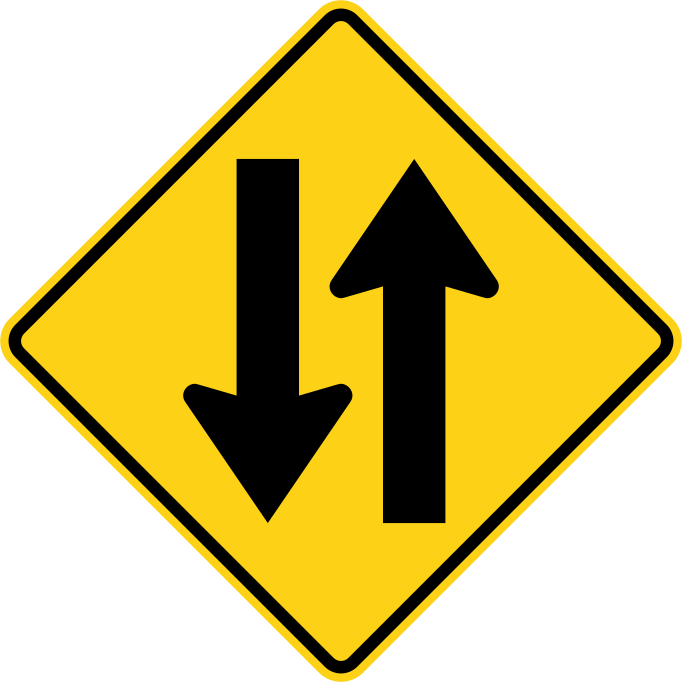
- A regulatory order that applies only to trucks
- A warning about a roadway condition ahead
- A motorist-services sign for a rest area
- A guide sign for a recreational destination
Show answer
A warning about a roadway condition ahead. The yellow diamond is a warning sign, so it alerts drivers to a roadway condition that may require caution or a slower speed. Full explanation in Test 6
7. What maximum speed may Tennessee law set for interstate highways?
- 65 mph
- 55 mph
- 70 mph
- 80 mph
Show answer
70 mph. Tennessee law permits a maximum interstate speed of 70 mph. Full explanation in Test 7
8. How far from a crosswalk must you stay when parking in Tennessee?
- 5 feet
- 10 feet
- 15 feet
- 20 feet
Show answer
20 feet. Tennessee bars parking in a marked crosswalk area and within 20 feet of a crosswalk. Full explanation in Test 8
9. What penalty applies when someone drives under the influence of drugs, including prescription drugs?
- A lesser penalty than for alcohol
- Only a warning for a first occurrence
- No penalty if the drug was prescribed
- The same penalties as for alcohol
Show answer
The same penalties as for alcohol. Tennessee treats driving under the influence of drugs, even prescription drugs, as carrying the same penalties as driving under the influenc Full explanation in Test 9
10. When does a Tennessee driver have a duty to yield to a pedestrian in a crosswalk?
- Only when the crosswalk has painted stripes
- Only when a crossing guard is present
- Only after the pedestrian reaches the center line
- When the pedestrian is in a marked or unmarked crosswalk
Show answer
When the pedestrian is in a marked or unmarked crosswalk. Tennessee's pedestrian rule applies when a pedestrian is in a crosswalk, whether that crossing is marked or unmarked. Full explanation in Test 10
11. When turning left on a green circular signal, whom must you yield to?
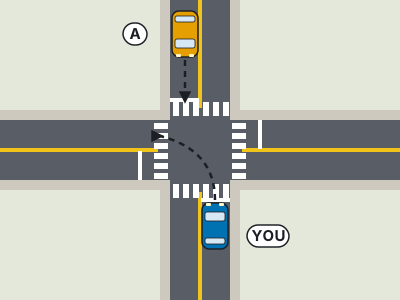
- Only vehicles approaching from the left
- Oncoming vehicles and pedestrians when they have the right-of-way
- No one, because a green signal makes every turn protected
- Only a vehicle that is larger than yours
Show answer
Oncoming vehicles and pedestrians when they have the right-of-way. A green circular signal permits movement when the intersection is clear, but it does not create a protected left turn. Full explanation in Test 1
12. Where does the X-shaped crossbuck sign identify the railroad tracks?
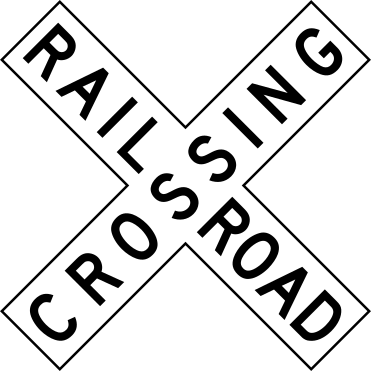
- Only at a hospital entrance
- At the beginning of a school zone
- At the railroad grade crossing itself
- On the far side of a construction detour
Show answer
At the railroad grade crossing itself. The crossbuck is placed at the railroad grade crossing and shows where the tracks are located. Full explanation in Test 2
13. What action is required when a driver faces a DO NOT ENTER sign?
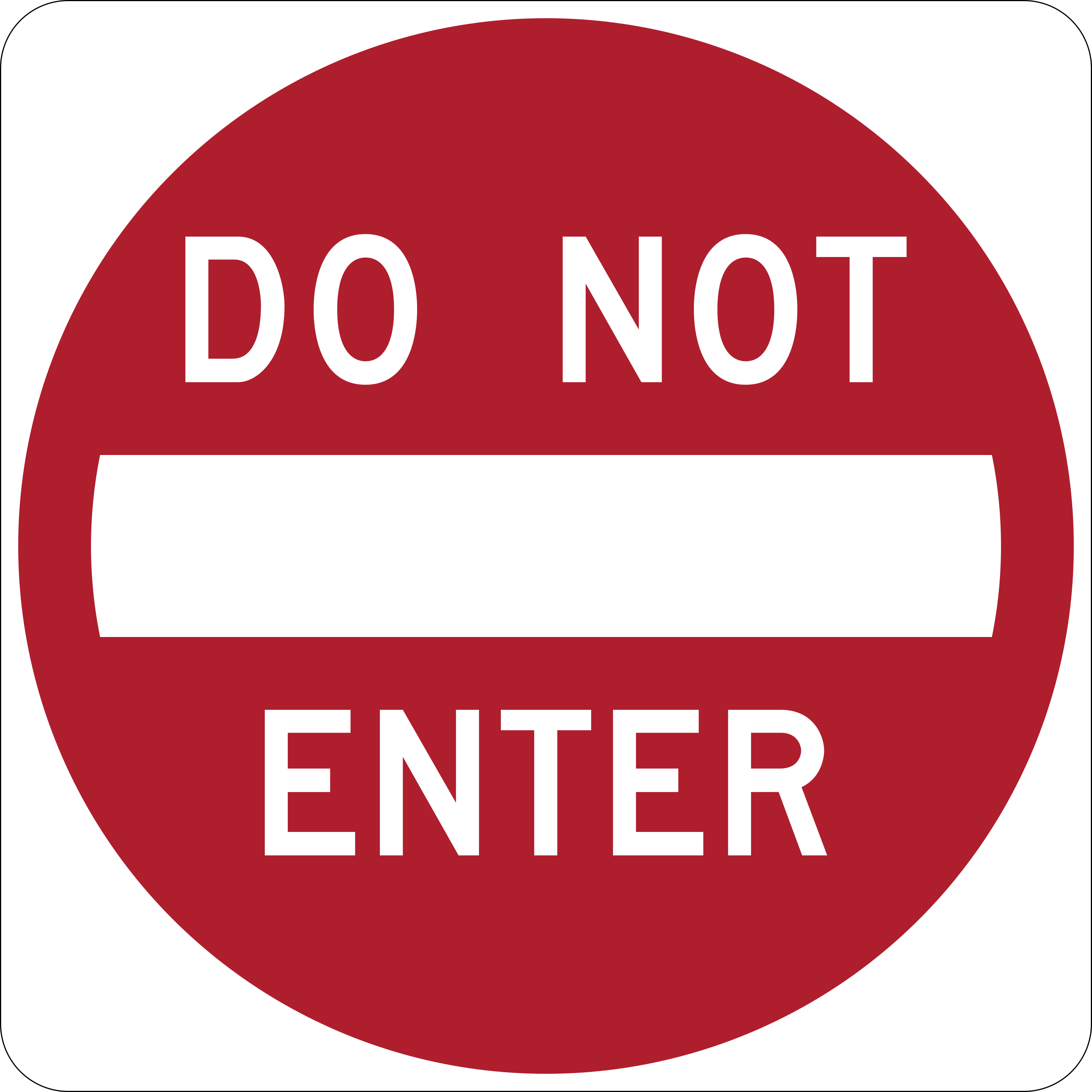
- Use the lane only for a U-turn
- Enter after slowing if no vehicles are visible
- Park beside the sign until traffic clears
- Do not enter that roadway or ramp
Show answer
Do not enter that roadway or ramp. The DO NOT ENTER sign tells you that you are approaching a one-way street and that you must not enter from the direction you are traveling. Full explanation in Test 3
14. What should a driver do if a vehicle without anti-lock brakes starts to skid?
- Pump the brake rapidly while turning away from the skid
- Accelerate hard to force the tires straight
- Lock the steering wheel and keep the brake fully pressed
- Release the brake and steer in the direction of the skid when it can be done safely
Show answer
Release the brake and steer in the direction of the skid when it can be done safely. For a vehicle without anti-lock brakes, the manual recommends taking your foot off the brake and steering in the direction of the skid, prov Full explanation in Test 4
15. Which phone activity does Tennessee specifically prohibit while driving?
- Hearing an incoming call through a vehicle speaker
- Following directions that were entered before the trip
- Recording or broadcasting video on a cellphone or mobile device
- Keeping a cellphone stored in a closed bag
Show answer
Recording or broadcasting video on a cellphone or mobile device. Tennessee's listed hands-free prohibitions include recording or broadcasting video on a cellphone or mobile device while driving. Full explanation in Test 5
16. What movement is prohibited by the sign shown here?
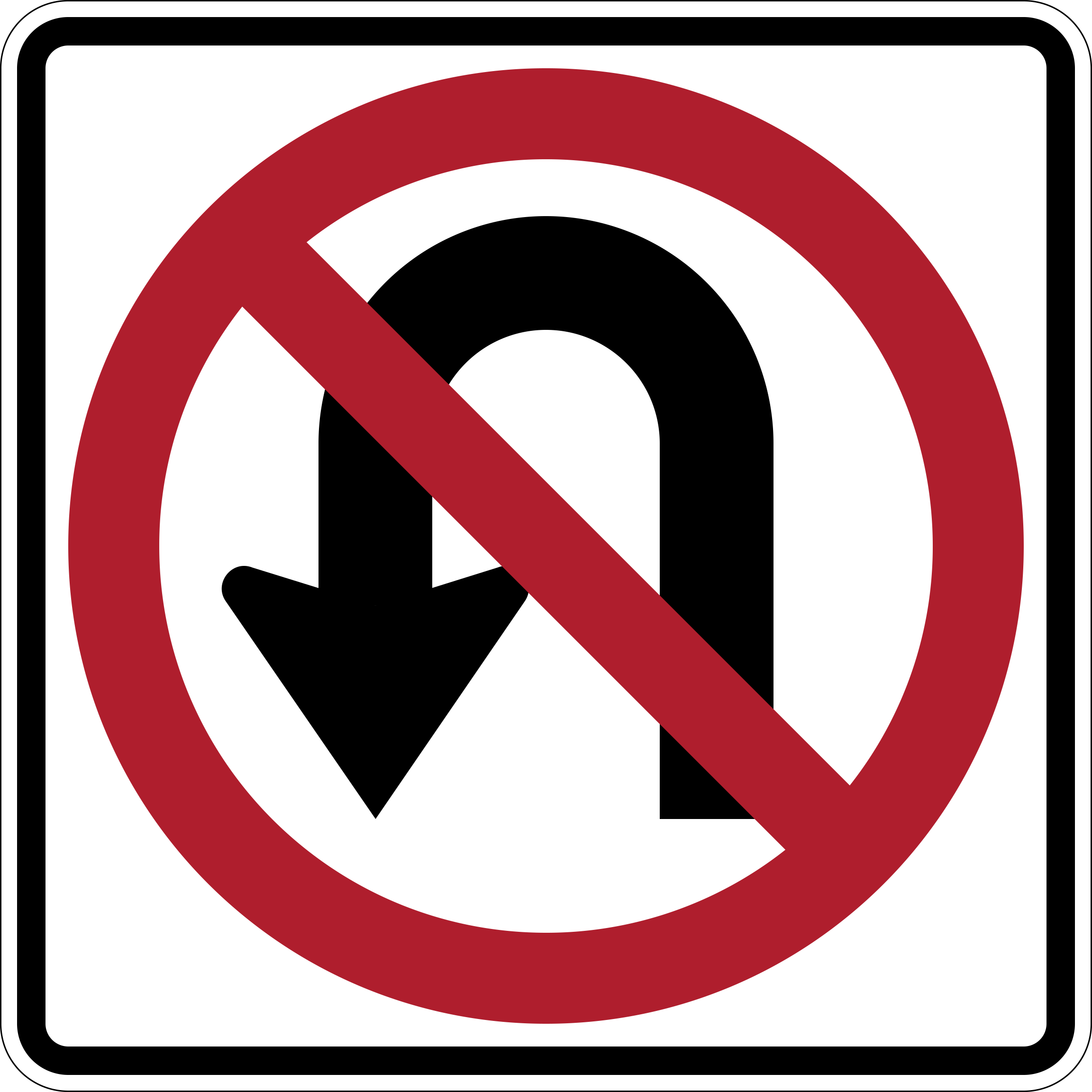
- Making every left turn
- Making a U-turn
- Turning into any driveway
- Passing another vehicle
Show answer
Making a U-turn. The displayed symbol is the regulatory message that U-turns are prohibited at that location. Full explanation in Test 6
17. Which type of medication does Tennessee include in its warning about driving under the influence?
- Prescription drugs
- Only vitamins and mineral supplements
- Only medication taken in a hospital
- Prescription drugs are always safe for driving
Show answer
Prescription drugs. Tennessee's discussion of impaired driving expressly includes prescription drugs among substances that can affect a driver's ability. Full explanation in Test 7
18. When may a Tennessee driver get a regular Class D license without the Intermediate level?
- Only at age 21
- At 18, or on graduating from high school or earning a GED, whichever is sooner
- At 17 after any six months of driving
- At 16 after passing the road test
Show answer
At 18, or on graduating from high school or earning a GED, whichever is sooner. A Class D regular license is available at 18 or when the driver graduates from high school or receives a GED, whichever comes first. Full explanation in Test 8
19. What does Tennessee require when a driver uses high beams and an oncoming vehicle is within 500 feet?
- Dim or lower the high beam headlights
- Sound the horn and keep high beams on
- Switch to parking lights only
- Turn off every exterior light
Show answer
Dim or lower the high beam headlights. High beams must be dimmed or lowered when an oncoming vehicle is within 500 feet, approximately one city block. Full explanation in Test 9
20. What does a flashing yellow left arrow permit?
- A left turn without slowing or yielding
- A left turn after yielding to oncoming traffic, bicyclists, and pedestrians
- A straight movement only until the arrow turns green
- A complete stop followed by a right turn only
Show answer
A left turn after yielding to oncoming traffic, bicyclists, and pedestrians. A flashing yellow left arrow is permissive. Full explanation in Test 10
21. When should Tennessee drivers turn on their headlights even during daylight?
- When windshield wipers are in use
- Only when parked on a shoulder
- Never during daylight hours
- Only when following another vehicle within 500 feet
Show answer
When windshield wipers are in use. Tennessee requires headlights when windshield wipers are in use, including conditions involving rain, mist, snow, or other precipitation. Full explanation in Test 1
22. How many points within 12 months bring a Tennessee adult driver a notice of proposed suspension?
- 6 or more
- 8 or more
- 12 or more
- 18 or more
Show answer
12 or more. Adult drivers 18 or older with 12 or more points in a 12-month period receive a notice of proposed suspension, and those with 6 to 11 points Full explanation in Test 2
23. What information do black and white regulatory signs provide?
- Only directions to parks and cultural attractions
- Selected traffic laws, regulations, or instructions
- Temporary warnings about construction workers
- Motorist service locations such as rest areas
Show answer
Selected traffic laws, regulations, or instructions. Black and white regulatory signs communicate selected traffic laws or regulations and may instruct drivers about matters such as speed limit Full explanation in Test 3
24. What kind of information is generally conveyed by a rectangular regulatory sign?
- A warning that a railroad crossing is immediately ahead
- A recommendation for a scenic recreation area
- Laws, regulations, or instructions such as speed and lane use
- A notice that a road surface is slippery
Show answer
Laws, regulations, or instructions such as speed and lane use. A rectangular regulatory sign communicates a rule or instruction that governs road use. Full explanation in Test 4
25. What should you do when an emergency vehicle approaches using a siren, air horn, or red or blue flashing light?
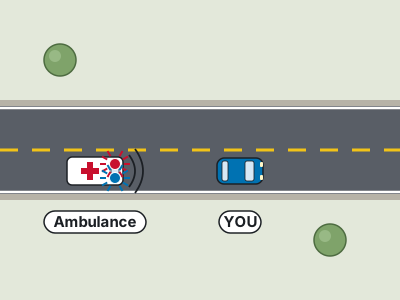
- Stop in the middle of the intersection
- Follow it closely to get through traffic faster
- Continue through a green light without checking for it
- Yield the right of way and move close to the right edge or curb until it passes
Show answer
Yield the right of way and move close to the right edge or curb until it passes. Tennessee requires traffic meeting or being overtaken by an emergency vehicle to yield and move parallel to, and as close as possible to, th Full explanation in Test 5
26. A Tennessee teen holding an Intermediate Restricted License has accumulated more than 6 points. What happens to the move to the unrestricted license?
- Nothing changes as long as the teen is 17
- The license is revoked until age 18
- The teen must retake the knowledge test only
- The restricted license must be held for an additional 90 days
Show answer
The restricted license must be held for an additional 90 days. Points are the brake on Tennessee's graduated licensing. Full explanation in Test 6
27. What does an advisory speed plate beneath a warning sign provide?
- The minimum speed required on the entire roadway
- The recommended maximum safe speed for the condition ahead
- The speed at which every vehicle must travel regardless of conditions
- The legal speed limit for all roads in that county
Show answer
The recommended maximum safe speed for the condition ahead. An advisory speed plate supplements a warning sign by giving a recommended maximum safe speed for the upcoming condition. Full explanation in Test 7
28. Under Tennessee's Implied Consent Law, a driver under arrest for DUI refuses the officer's request for a test. What suspension does the handbook say is the likely result?
- Twelve months
- 30 days
- 90 days
- Six months
Show answer
Twelve months. The handbook says that if you are placed under arrest and refuse an officer's request to take the test, it will likely result in the court s Full explanation in Test 8
29. When turning left at an intersection, what must you do if an oncoming vehicle is going straight?
- Turn first because left turns have priority
- Stop and wait for the oncoming vehicle to turn left
- Yield to the oncoming vehicle
- Accelerate so the oncoming vehicle must brake
Show answer
Yield to the oncoming vehicle. A driver making a left turn must yield to an oncoming vehicle that is proceeding straight or turning right, unless a protected green arrow a Full explanation in Test 9
30. What should you do when a steady yellow light appears and stopping can be done safely?
- Accelerate so the vehicle enters before red
- Prepare to stop and stop rather than speeding up to beat the light
- Treat yellow as permission to turn without checking
- Stop only when a pedestrian signal is also red
Show answer
Prepare to stop and stop rather than speeding up to beat the light. A steady yellow signal warns that the red stop signal will appear immediately afterward. Full explanation in Test 10
