Every question below comes from the Kentucky question bank on this page. Open a question to see the correct answer and the explanation. Nothing here is hidden behind a signup.
1. On a main road and a minor road, which driver must yield?
- The driver who reaches the center line first
- The driver on the main road
- The driver traveling below the speed limit
- The driver on the minor road
Show answer
The driver on the minor road. Kentucky assigns the yield duty to the driver on the minor road when traffic meets a main road. Full explanation in Test 1
2. Which situation is an exception to a funeral procession’s intersection right-of-way rule?
- The procession includes more than three cars
- A driver is running late for work
- An emergency vehicle requires the right of way
- The weather is clear and dry
Show answer
An emergency vehicle requires the right of way. The manual lists an emergency vehicle’s required right of way as an exception to a funeral procession’s intersection priority. Full explanation in Test 2
3. What type of roadway location can the pictured fluorescent yellow school sign identify?

- A one-way street entrance
- A railroad crossing with several tracks
- A school zone or school crossing
- A general guide route to a city
Show answer
A school zone or school crossing. Fluorescent yellow warning signs can identify school zones and school crossings. Full explanation in Test 3
4. Where should most of a trailer’s cargo weight be placed for stability?
- All cargo behind the axle
- About 60 percent in back and 40 percent in front
- Exactly half at each end
- About 60 percent in front and 40 percent in back
Show answer
About 60 percent in front and 40 percent in back. The manual recommends placing about 60 percent of a trailer’s cargo weight in the front, nearest the towing vehicle, and 40 percent in the b Full explanation in Test 4
5. What information can pavement markings provide to drivers?
- A guarantee that all cross traffic will stop
- Only the names of nearby towns
- The mechanical condition of every vehicle ahead
- Directions, warnings, and places where stopping is required
Show answer
Directions, warnings, and places where stopping is required. Pavement markings communicate roadway guidance through lines, arrows, words, and symbols. Full explanation in Test 5
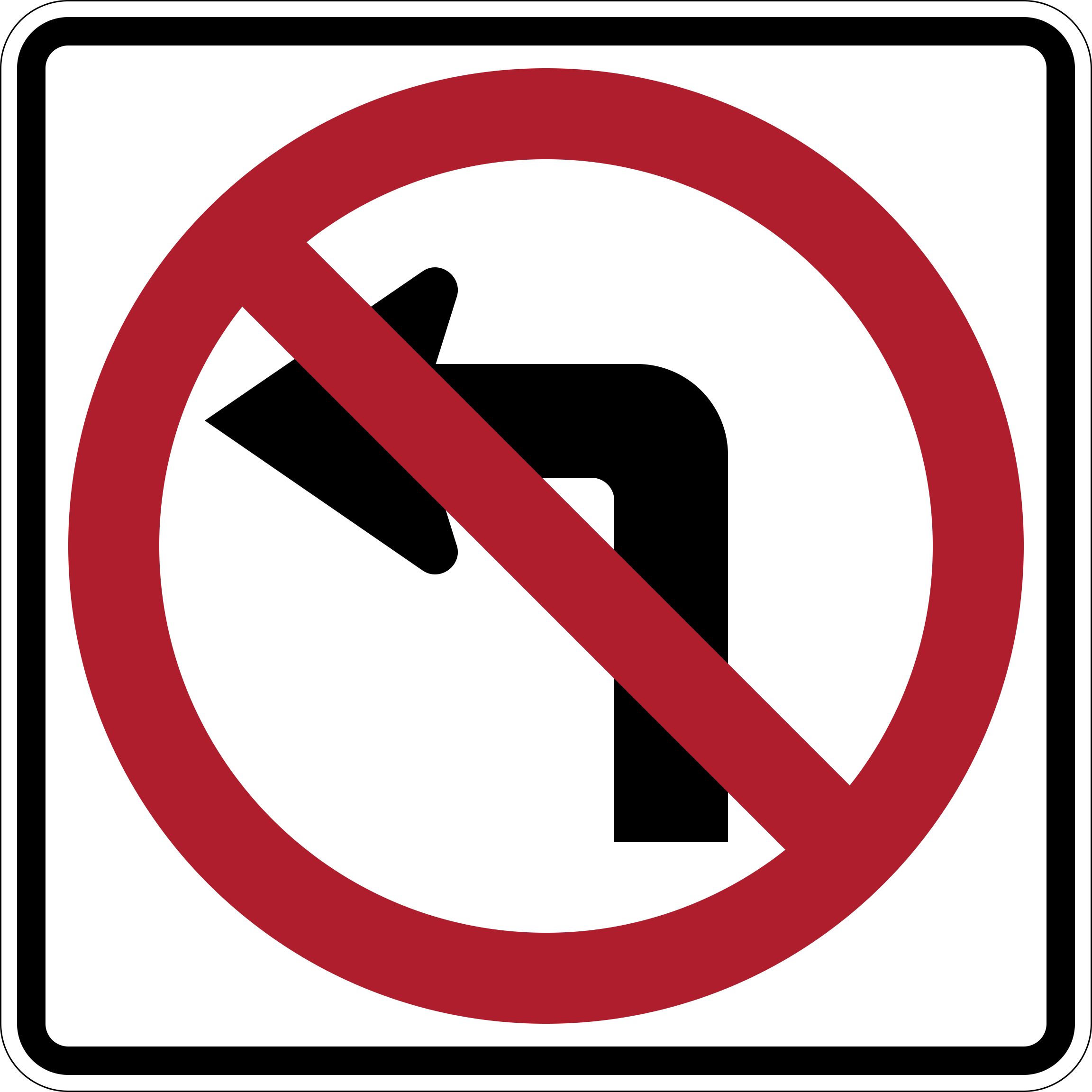
6. What does a red circle with a red slash over a symbol on a regulatory sign indicate?
- The sign marks a route used only by emergency vehicles
- The action shown is recommended at the next intersection
- The symbol identifies a nearby highway service area
- The action shown by the symbol is prohibited
Show answer
The action shown by the symbol is prohibited. A red circle with a red slash over a symbol marks an action that the regulatory sign prohibits. Full explanation in Test 6
7. What must a Kentucky intermediate license holder do to become eligible for a full unrestricted license?
- Hold it 30 days and pass a new written test
- Hold the intermediate license 180 days, complete driver education, and reach age 17
- Turn 21
- Log 100 more practice hours
Show answer
Hold the intermediate license 180 days, complete driver education, and reach age 17. The July 2026 Kentucky manual says drivers are eligible for a full unrestricted license after holding an intermediate license for 180 days w Full explanation in Test 7
8. How many unrelated passengers under 20 may a Kentucky permit holder carry?
- None
- 1 (one)
- 2 (two)
- 3 (three)
Show answer
1 (one). Kentucky limits a permit holder to 1 (one) unrelated person under 20 years of age as a passenger, and the permit holder must always drive wi Full explanation in Test 8
9. How may a refusal to take a breath, blood or urine test be used in a Kentucky DUI case?
- As evidence against you in court, in addition to a license suspension
- It cannot be mentioned in court
- Only to reduce the charge
- Only if the driver is under 21
Show answer
As evidence against you in court, in addition to a license suspension. If you refuse to submit to the breath, blood or urine tests, your license is suspended by the Transportation Cabinet and the refusal may be Full explanation in Test 9
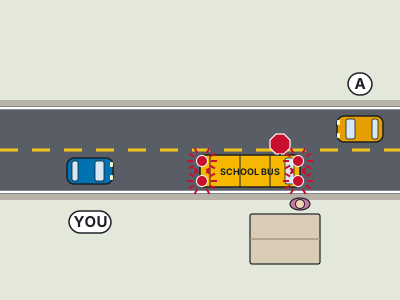
10. A school bus is stopped on a two-lane road to load or unload passengers. What must approaching drivers do?
- Continue if the opposite lane appears empty
- Pass slowly if no child is visible
- Stop only when traveling behind the bus
- Stop and remain stopped until people are clear and the bus moves
Show answer
Stop and remain stopped until people are clear and the bus moves. A stopped school bus loading or unloading passengers requires a complete stop. Full explanation in Test 10
11. After escaping a vehicle stalled on Kentucky railroad tracks, whom does the manual say to call?
- Only a tow truck
- The railroad's business office
- The 800 number posted on or near the crossbuck, or 911
- No one until the train has passed
Show answer
The 800 number posted on or near the crossbuck, or 911. If your vehicle stalls on the tracks, get out immediately and run away from the track in the direction the train is coming from to avoid fly Full explanation in Test 1
12. What does a flashing yellow traffic light require a driver to do?
- Stop and remain stopped until a green light appears
- Slow down and watch for other road users
- Speed up because cross traffic must stop completely
- Turn only if the signal changes to a red arrow
Show answer
Slow down and watch for other road users. A flashing yellow light calls for reduced speed and careful observation of others. Full explanation in Test 2
13. Is a moped legal on a road where the minimum speed limit is more than 30 mph?
- No, mopeds cannot be operated on limited-access highways where the minimum speed exceeds 30 mph
- Yes, if the moped has a headlight and the rider is over 18
- Yes, but only in the left lane with hazard flashers on
- No, mopeds are prohibited on every Kentucky roadway
Show answer
No, mopeds cannot be operated on limited-access highways where the minimum speed exceeds 30 mph. Kentucky prohibits mopeds on limited-access highways where the minimum speed is more than 30 mph. Full explanation in Test 3
14. What does the online version of Kentucky's graduated licensing course cost?
- $12.50, while the classroom version is free
- $50
- Both versions are free
- $100
Show answer
$12.50, while the classroom version is free. Kentucky's July 2026 driver manual lists the acceptable ways to complete graduated licensing training: the classroom version is free for Ken Full explanation in Test 4
15. What minimum following interval should a driver generally keep behind the vehicle ahead?
- Exactly one car length
- At least four seconds
- Two seconds only when traveling below 25 mph
- Less than one second when traffic is moving steadily
Show answer
At least four seconds. The manual recommends a minimum four-second gap between your vehicle and the one ahead. Full explanation in Test 5
16. How often may a Kentucky driver complete State Traffic School?
- Whenever a driver receives any ticket
- Once every two years
- Once every twelve months
- Only once during a lifetime
Show answer
Once every twelve months. Kentucky’s manual permits a driver to complete State Traffic School once every twelve months. Full explanation in Test 6
17. A Kentucky driver does not pay a court judgment for damages from a crash. When is the driving privilege suspended?
- Only after 5 years
- Never, because judgments are civil
- If it is not satisfied within 60 days of the judgment
- Immediately on the day of the crash
Show answer
If it is not satisfied within 60 days of the judgment. Any person failing to satisfy a judgment for damages from operating a motor vehicle within 60 days from the date of the judgment will have t Full explanation in Test 7
18. What does a Kentucky yield sign look like?
- A white rectangle with a green route number
- A yellow diamond with black arrows
- A red and white downward-pointing triangle with red letters
- An orange circle with blue letters
Show answer
A red and white downward-pointing triangle with red letters. A Kentucky yield sign is a red and white downward-pointing triangle with red letters. Full explanation in Test 8
19. On a two-lane road, when may an approaching vehicle proceed after a school bus finishes loading or unloading?
- After waiting five seconds even if the bus remains stopped
- As soon as the driver sees no child nearby
- After the bus is in motion
- Before the bus finishes receiving or discharging passengers
Show answer
After the bus is in motion. On a two-lane road, a vehicle approaching a stopped school or church bus must remain stopped until the bus has completed receiving or discha Full explanation in Test 9
20. Why must speed be reduced on a wet roadway?
- Rain affects only vehicles with worn tires
- The posted limit automatically becomes a minimum speed in rain
- Wet pavement improves braking, so speed should be increased
- Slippery conditions can reduce tire grip and cause a skid or hydroplane
Show answer
Slippery conditions can reduce tire grip and cause a skid or hydroplane. Water reduces the tires’ contact and grip, increasing the chance of a skid or hydroplaning. Full explanation in Test 10
21. A yellow traffic light appears while you are approaching the intersection. What is the proper response?
- Continue at the same speed because yellow permits unrestricted entry
- Accelerate so the signal cannot turn red before you enter
- Stop when stopping can be done safely
- Reverse away from the intersection immediately
Show answer
Stop when stopping can be done safely. Yellow warns that the signal is about to become red. Full explanation in Test 1
22. Before moving into another lane, which sequence is required for a safe lane change?
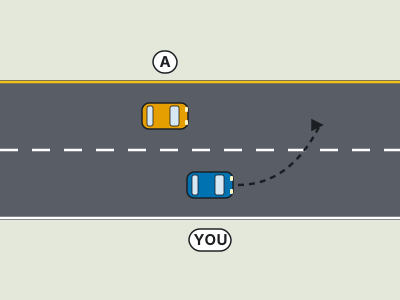
- Check mirrors, inspect the blind spot, signal, find a gap, and move when safe
- Signal only after crossing the lane line
- Rely on the inside mirror without turning your head
- Use emergency flashers and let surrounding traffic decide
Show answer
Check mirrors, inspect the blind spot, signal, find a gap, and move when safe. A safe lane change combines observation, communication, and a suitable opening. Full explanation in Test 2
23. Your vehicle breaks down on a roadway. Which action helps warn approaching drivers?
- Leave the vehicle in the lane with no lights so traffic can pass quietly
- Turn on emergency flashers and place warning flares behind the vehicle when available
- Stand in the travel lane and wave vehicles around the disabled car
- Turn off all lights to preserve the battery while waiting
Show answer
Turn on emergency flashers and place warning flares behind the vehicle when available. A disabled vehicle should be made visible and moved fully off the road when possible. Full explanation in Test 3
24. What must a Kentucky driver convicted of DUI complete before driving privileges can be reinstated?
- Only a new vision test
- Only State Traffic School
- Nothing beyond the suspension period
- An assessment and an approved alcohol education or treatment program
Show answer
An assessment and an approved alcohol education or treatment program. Every offender convicted of DUI must be assessed in a program licensed by the Cabinet for Human Resources and then attend an approved alcoho Full explanation in Test 4
25. Which warning signs may be fluorescent yellow?
- Work zones, detours, and construction equipment only
- Railroad crossings, hospitals, and fuel stations
- Interstate routes, city limits, and county roads
- School zones, school crossings, and pedestrian crossings
Show answer
School zones, school crossings, and pedestrian crossings. The manual names school zones, school crossings, and pedestrian crossings as examples of warning signs that may be fluorescent yellow. Full explanation in Test 5
26. For a person under 18 convicted of an alcohol offense, what does the manual say about the license suspension?
- It is replaced by a warning with no suspension
- It is automatically canceled permanently
- It is limited to exactly 30 days
- It may be longer than the listed suspension
Show answer
It may be longer than the listed suspension. Kentucky gives the under-18 driver a possible longer license suspension after an alcohol conviction. Full explanation in Test 6
27. How many points within two years can lead to a Kentucky suspension for a driver under 18?
- 12 points
- 4 points
- 10 points
- 7 points
Show answer
7 points. Under Kentucky's point system, accumulating 12 points within a two-year period, or 7 points if the driver is under eighteen, can lead to sus Full explanation in Test 7
28. What minimum following interval does the Kentucky manual recommend trying to keep?
- One second whenever the road is dry
- Four seconds between your vehicle and the vehicle ahead
- Two car lengths at every speed
- A half-second gap on a divided highway
Show answer
Four seconds between your vehicle and the vehicle ahead. The manual recommends trying to keep at least four seconds between your vehicle and the one ahead. Full explanation in Test 8
29. When turning left on a green circular traffic light, whom must the driver yield to?
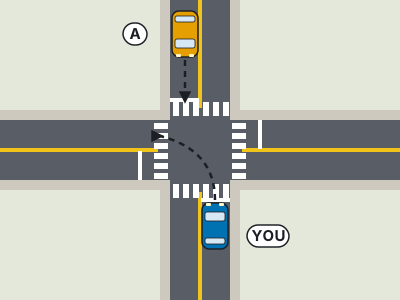
- Through traffic approaching from the opposite direction
- Only vehicles stopped behind the driver
- No one, because a green light gives an unconditional turn
- Only pedestrians walking away from the intersection
Show answer
Through traffic approaching from the opposite direction. A green circular signal permits movement only after the driver yields to traffic and pedestrians lawfully in the intersection. Full explanation in Test 9
30. A yellow signal is illuminated as you near an intersection. Which action follows the manual’s rule?
- Stop if you can do so safely
- Enter quickly because yellow guarantees the intersection remains open
- Stop in the middle of the intersection to wait for green
- Turn left without checking opposing traffic
Show answer
Stop if you can do so safely. The yellow phase means red is approaching, so the planned response is a safe stop. Full explanation in Test 10
31. At a narrow or single lane bridge in rural Kentucky, which driver generally has the right of way?
- The heavier vehicle
- The driver who reaches the bridge first
- The driver traveling uphill
- The vehicle with more passengers
Show answer
The driver who reaches the bridge first. At a narrow or single lane bridge, Kentucky's manual advises taking turns and generally gives priority to the first driver who reaches the b Full explanation in Test 1
32. How can a driver check whether the following distance is too short?
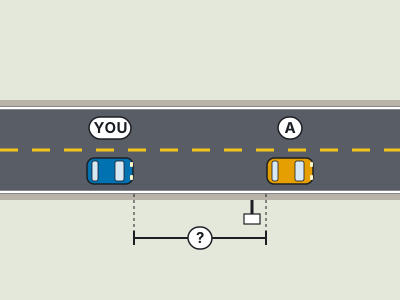
- Wait until the vehicle ahead brakes before measuring space
- Count the number of cars visible in the rearview mirror
- Count the seconds to reach a stationary point after the vehicle ahead passes it
- Use the posted speed limit as the distance in feet
Show answer
Count the seconds to reach a stationary point after the vehicle ahead passes it. To measure space, choose a sign, pole, or other stationary point. Full explanation in Test 2
33. What single limit policy satisfies Kentucky's minimum liability requirement?
- A single limit of $60,000
- A single limit of $10,000
- A single limit of $500,000
- Single limit policies are not accepted
Show answer
A single limit of $60,000. As an alternative to the split limits, a policy with a single limit of $60,000 is acceptable, and the policy must provide basic reparations Full explanation in Test 3
34. A Kentucky driver 18 or older reaches 12 points for the first time and fails to appear at the hearing. How long is the suspension?
- One year
- Two years
- Six months
- 30 days
Show answer
Six months. When a driver 18 or older reaches 12 points, or a driver under 18 reaches 7, the Transportation Cabinet holds a hearing. Full explanation in Test 4
35. When this curved-arrow warning sign appears, the driver should:

- Adjust speed so the vehicle can stop within the visible roadway
- Brake hard after entering the curve
- Maintain the same speed regardless of visibility
- Move across the center line to improve the view
Show answer
Adjust speed so the vehicle can stop within the visible roadway. A curve limits the distance a driver can see and changes the vehicle’s path, so speed should be reduced before the bend. Full explanation in Test 5
36. What response do warning signs encourage when a hazard may be ahead?
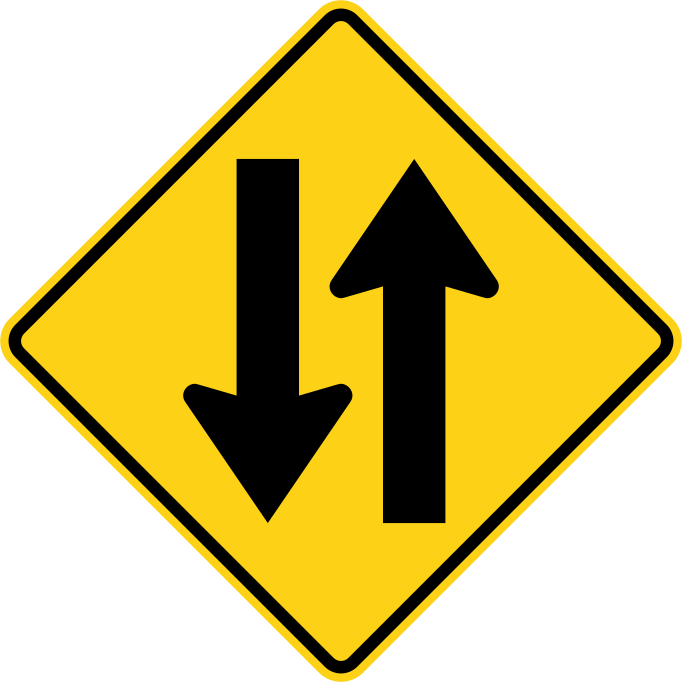
- Ignore the sign until another driver stops
- Accelerate so the hazard is passed immediately
- Slow down and be prepared to stop if necessary
- Change lanes without checking nearby traffic
Show answer
Slow down and be prepared to stop if necessary. The manual tells drivers that warning signs should prompt slower driving and readiness to stop when necessary. Full explanation in Test 6
37. Which of these is an aggravating circumstance that requires mandatory jail time in a Kentucky DUI case?
- Driving at 5 mph over the limit
- Having a passenger over 65
- Driving during daylight
- Transporting a passenger under 12 years of age
Show answer
Transporting a passenger under 12 years of age. Kentucky requires mandatory jail time when aggravating circumstances exist, including driving more than 30 mph over the limit, driving the w Full explanation in Test 7
38. At an uncontrolled rural intersection in Kentucky, what should a driver do?
- Accelerate because cross traffic must yield
- Slow down and be prepared to stop for crossing or oncoming traffic
- Stop only if a traffic signal is present
- Maintain speed because the intersection has priority signs
Show answer
Slow down and be prepared to stop for crossing or oncoming traffic. At an uncontrolled rural intersection, the manual advises approaching with caution, slowing down, and being prepared to stop for crossing or Full explanation in Test 8
39. What does the pictured fluorescent yellow pedestrian warning sign alert you to?

- A roadway where pedestrians are prohibited
- A pedestrian crossing ahead
- A route marker for a hospital
- A railroad crossing with a crossbuck
Show answer
A pedestrian crossing ahead. The manual lists pedestrian crossings among the locations identified by fluorescent yellow warning signs. Full explanation in Test 9
40. In about what share of fatal crashes are alcohol and other impairing drugs involved, according to the Kentucky manual?
- About 5 percent
- Approximately 40 percent
- About 90 percent
- About 15 percent
Show answer
Approximately 40 percent. Alcohol and other impairing drugs are involved in approximately 40 percent of all traffic crashes in which someone is killed each year, and Full explanation in Test 10
