Every question below comes from the Illinois question bank on this page. Open a question to see the correct answer and the explanation. Nothing here is hidden behind a signup.
1. During the Illinois permit phase, how many passengers may ride with a teen driver?
- Any number, as long as an adult supervises
- One in the front seat and no more than the number of safety belts in the back seat
- None at all
- Two in the front seat and three in the back
Show answer
One in the front seat and no more than the number of safety belts in the back seat. In the Illinois permit phase, passengers are limited to one in the front seat and no more than the number of safety belts in the back seat. Full explanation in Test 1
2. How long does a DUI conviction stay on an Illinois driving record?
- Five years
- Ten years
- Permanently
- Until the fine is paid
Show answer
Permanently. Illinois classifies DUI as a violent crime, and a DUI conviction remains on the driving record permanently. Full explanation in Test 2
3. Which DUI facts can bring enhanced penalties in Illinois?
- Any BAC over .08% on a weekday
- Driving a car older than 10 years
- Driving during daylight hours
- A BAC of .16% or more, or transporting a child under 16
Show answer
A BAC of .16% or more, or transporting a child under 16. Illinois may impose enhanced penalties when a DUI involves a BAC of .16% or more or a child under age 16 in the vehicle. A BAC over . Full explanation in Test 3
4. For an Illinois second offender, what happens after refusing chemical testing?
- Driving privileges are suspended for 45 days
- Driving privileges are suspended for three years
- Driving privileges are suspended for six months
- Driving privileges are revoked for five years
Show answer
Driving privileges are suspended for three years. Illinois treats a qualifying prior statutory summary suspension, refusal, court supervision, or DUI conviction within the last five years as Full explanation in Test 4
5. What subjects are covered by the basic Illinois written driver examination?
- Vehicle repairs, insurance pricing, and county registration procedures
- Traffic signs, signals, pavement markings, traffic laws, safety, crash prevention, and equipment
- Only road signs and the names of Illinois highways
- Parking fees, fuel economy, and commercial vehicle loading rules
Show answer
Traffic signs, signals, pavement markings, traffic laws, safety, crash prevention, and equipment. The basic written examination covers visual controls and practical driving knowledge. Full explanation in Test 5
6. What classroom and behind-the-wheel training does an approved Illinois driver education course include?
- At least 30 classroom hours and six hours behind the wheel
- Exactly 12 classroom hours and two hours behind the wheel
- At least 50 classroom hours with no required vehicle training
- Six classroom hours followed by 30 hours behind the wheel
Show answer
At least 30 classroom hours and six hours behind the wheel. An approved driver education course has two required components: a minimum of 30 hours studying in the classroom and six hours of behind-the Full explanation in Test 6
7. How long is an Illinois instruction permit valid?
- Up to six months
- Up to nine months
- Up to 24 months
- Until the holder turns 18, regardless of issue date
Show answer
Up to 24 months. An Illinois instruction permit is valid for up to 24 months. Full explanation in Test 7
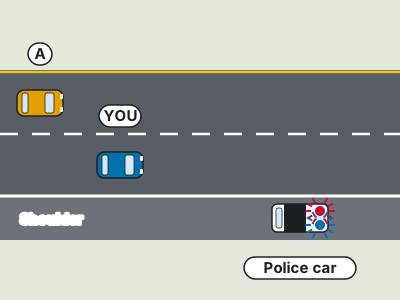
8. When approaching a stationary emergency vehicle with flashing lights, what should an Illinois driver do if a lane change is possible?
- Keep the same speed and remain in the lane nearest the emergency vehicle
- Stop in the traffic lane until the emergency vehicle turns off its lights
- Pass the emergency vehicle on the shoulder without reducing speed
- Change to a lane away from the emergency workers, yield, and proceed cautiously
Show answer
Change to a lane away from the emergency workers, yield, and proceed cautiously. Illinois requires a driver nearing a stationary emergency or maintenance vehicle with visual signals to yield, move to a lane away from work Full explanation in Test 8
9. After an Illinois DUI conviction, how long must the driver file Financial Responsibility Insurance?
- For six months
- For three years
- For one year
- For ten years
Show answer
For three years. An Illinois DUI conviction requires filing Financial Responsibility Insurance, the SR-22, for three years. Full explanation in Test 9
10. What does an Illinois round railroad-crossing sign tell a driver to do?
- Slow down, look, and stop if necessary for a train
- Accelerate because the crossing is several miles away
- Stop only after entering the crossing
- Treat it as a school-zone warning
Show answer
Slow down, look, and stop if necessary for a train. The round yellow railroad-crossing sign is an advance warning that tracks cross the roadway ahead. Full explanation in Test 10
11. Who is exempt from the Illinois ban on drinking alcohol in a vehicle?
- Passengers in chartered buses for nonschool purposes, motor homes, and limousines
- Passengers in any car when the driver is sober
- Drivers stopped at a red light
- Passengers over 65
Show answer
Passengers in chartered buses for nonschool purposes, motor homes, and limousines. In Illinois it is illegal for anyone to drink alcohol in a vehicle, and both the driver and passengers can be cited. Full explanation in Test 1
12. A driver leaves the scene of an Illinois crash that caused more than $1,000 in property damage but no injuries. What happens to the license?
- Nothing, if no one was hurt
- It will be revoked permanently
- It will be suspended
- Only a $50 fine applies
Show answer
It will be suspended. Leaving the scene of a crash in Illinois carries criminal charges, and the license action depends on the harm. Full explanation in Test 2
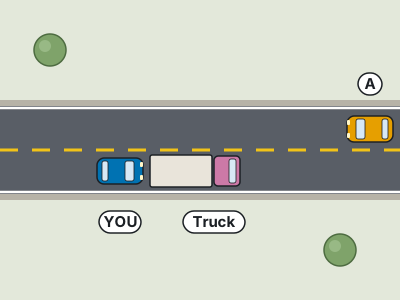
13. What does a broken yellow centerline generally allow on an Illinois roadway?
- Passing when it is safe
- Travel only in the shoulder
- Crossing only to park on the opposite side
- Passing only after stopping completely
Show answer
Passing when it is safe. A broken yellow line separates opposing traffic lanes and permits passing when it is safe. Full explanation in Test 3
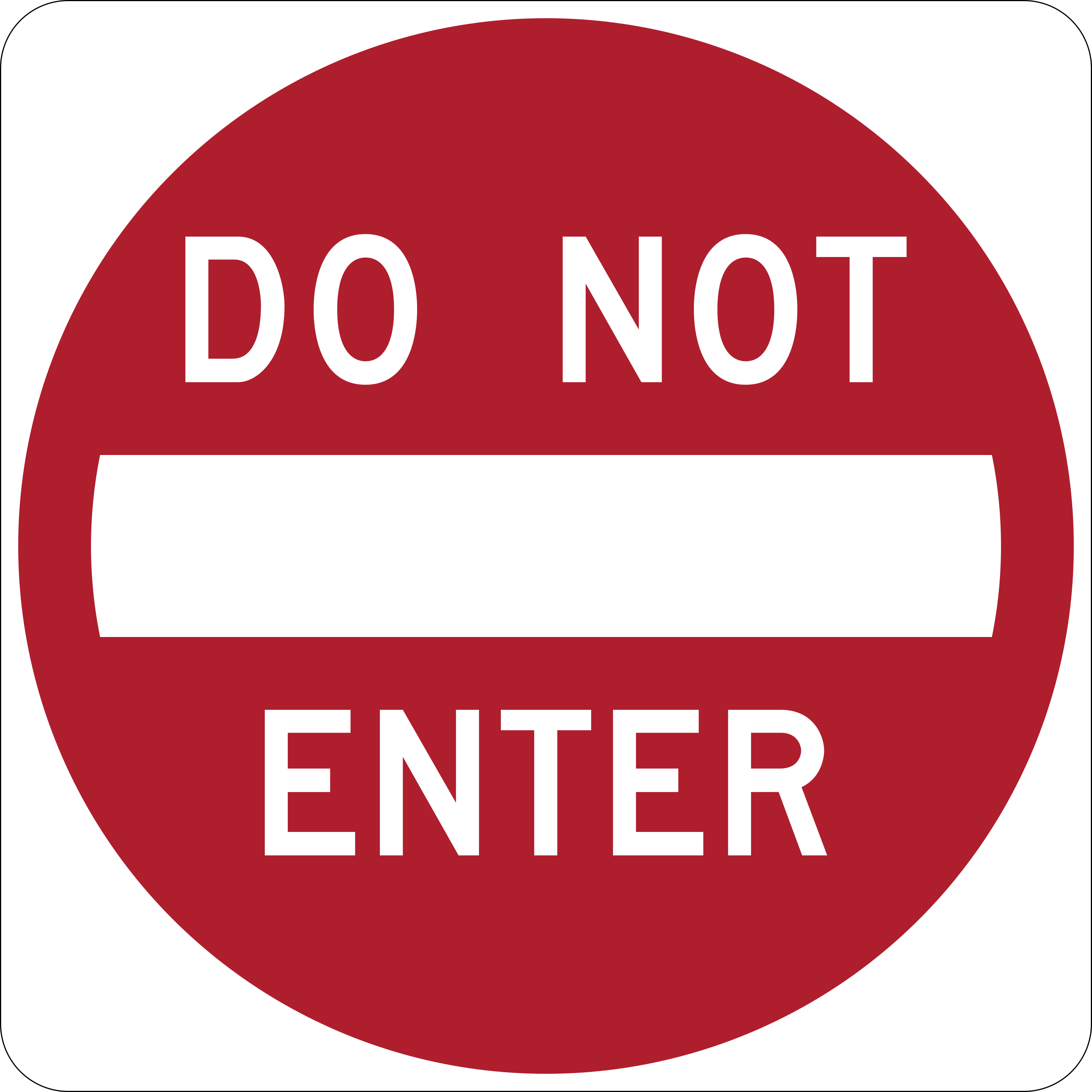
14. Where might an Illinois driver encounter a DO NOT ENTER sign?
- At every legal entrance to a two-way residential street
- Only where parking is reserved for emergency vehicles
- At a one-way street or an expressway ramp entered in the wrong direction
- At a railroad crossing where trains have stopped
Show answer
At a one-way street or an expressway ramp entered in the wrong direction. Illinois uses DO NOT ENTER signs on one-way streets and other roadways where entry is prohibited. Full explanation in Test 4
15. Who has the right of way at an Illinois crosswalk?
- Pedestrians crossing in the crosswalk
- Vehicles approaching from the nearest lane
- The vehicle traveling at the posted speed limit
- The driver who reaches the crosswalk first
Show answer
Pedestrians crossing in the crosswalk. Illinois gives pedestrians the right of way in a crosswalk. Full explanation in Test 5
16. A first time Illinois DUI offender skips the Monitoring Device Driving Permit and is caught driving during the suspension. What is the offense?
- A petty offense
- A felony
- A warning
- A parking violation
Show answer
A felony. A first time DUI offender may apply for a Monitoring Device Driving Permit, which requires a breath alcohol ignition interlock on the vehicl Full explanation in Test 6
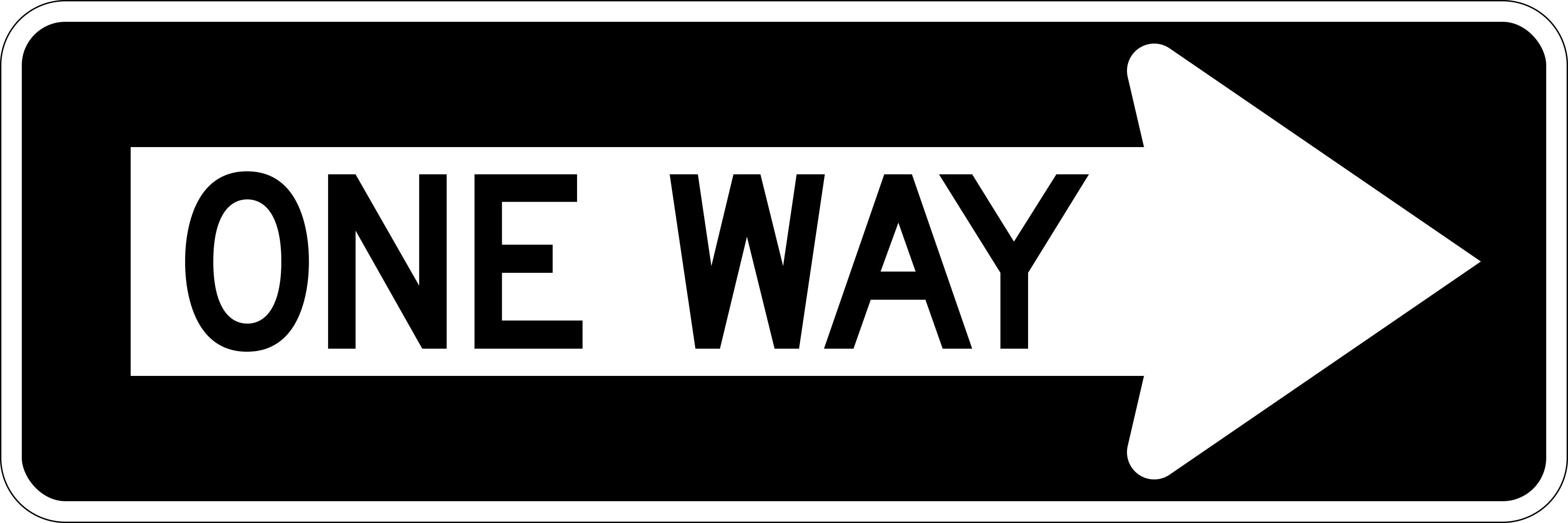
17. How should a driver follow an Illinois ONE-WAY sign?
- Use the street in either direction until another sign appears
- Turn against the arrow when the intersection is empty
- Drive there only during daylight hours
- Travel only in the direction shown by the arrow
Show answer
Travel only in the direction shown by the arrow. An Illinois ONE-WAY sign identifies a street or driveway where traffic must travel in the arrow's direction. Full explanation in Test 7
18. How long should an Illinois driver keep speed reduced after passing a disabled vehicle when a lane change was not safe?
- Only until the front bumper reaches it
- Until the next traffic signal
- Until well past the disabled vehicle
- For exactly 500 feet
Show answer
Until well past the disabled vehicle. When a safe lane change is unavailable near a disabled vehicle, Illinois tells the driver to reduce speed while approaching and passing. Full explanation in Test 8
19. What does the round yellow railroad crossing sign warn an Illinois driver about?

- A roundabout where traffic moves clockwise
- A railroad track crossing the roadway ahead
- A no-passing zone caused by a hill
- A reduced speed school zone
Show answer
A railroad track crossing the roadway ahead. The round yellow railroad crossing sign is an advance warning that a railroad track will cross the roadway ahead. Full explanation in Test 9
20. What do red roadway signs indicate?
- Warnings about construction equipment only
- Optional directions to recreation areas
- Regulatory instructions that must be obeyed
- Services such as fuel or food
Show answer
Regulatory instructions that must be obeyed. Red signs are regulatory signs and must be obeyed. Illinois examples include STOP, YIELD, DO NOT ENTER, and WRONG WAY. Full explanation in Test 10
21. At a railroad crossing, what must a driver do when the flashing lights begin?
- Stop and remain stopped until the train passes and the lights stop flashing
- Continue if the crossing appears clear from the driver's lane
- Drive around a lowered gate before it reaches the pavement
- Stop only if a horn can be heard
Show answer
Stop and remain stopped until the train passes and the lights stop flashing. Flashing railroad crossing lights are a command to stop, not a suggestion based on whether a train is immediately visible. Full explanation in Test 1
22. What hazard is shown by the yellow crossroad warning sign?

- An intersection ahead where traffic may cross
- A hospital entrance ahead
- A divided highway begins
- A school bus stop with a reduced speed zone
Show answer
An intersection ahead where traffic may cross. The crossroad symbol belongs to the group of intersection warning signs. Full explanation in Test 2
23. At a railroad crossing marked only by a crossbuck, what should an Illinois driver do?
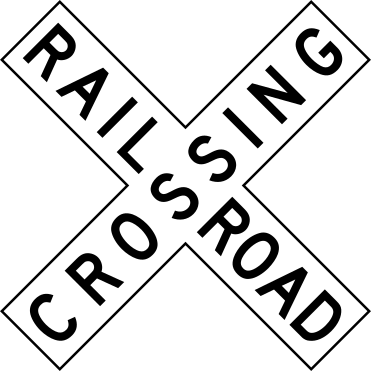
- Accelerate because a crossbuck means the tracks have priority over drivers only
- Stop on the tracks to check whether another train is coming
- Proceed without looking because the crossbuck is not a warning device
- Slow down, look in both directions, listen, and cross cautiously if safe
Show answer
Slow down, look in both directions, listen, and cross cautiously if safe. When a railroad crossing has no warning devices or only a crossbuck, Illinois tells drivers to slow down, look in both directions, and liste Full explanation in Test 3
24. What is the proper entry movement when approaching an Illinois roundabout?
- Accelerate and enter from the left side
- Slow down and enter by turning right when it is safe
- Change lanes while entering without checking mirrors
- Stop inside the circle before choosing an exit
Show answer
Slow down and enter by turning right when it is safe. Illinois directs drivers approaching a roundabout to slow down and enter by turning right when it is safe to do so. Full explanation in Test 4
25. What does a small speed panel below a curve warning sign show?
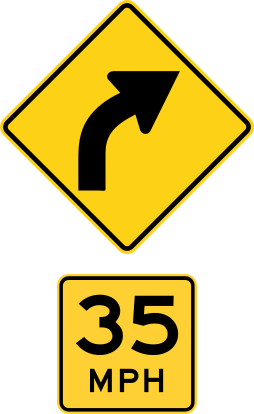
- The number of lanes after the curve
- The minimum legal speed for the roadway
- The distance to the next service area
- The maximum safe speed for the curve or turn
Show answer
The maximum safe speed for the curve or turn. The small panel used with a curve or turn warning sign gives the maximum safe speed for that feature. Full explanation in Test 5
26. Where is the yellow triangular no-passing sign placed when a no-passing area begins?
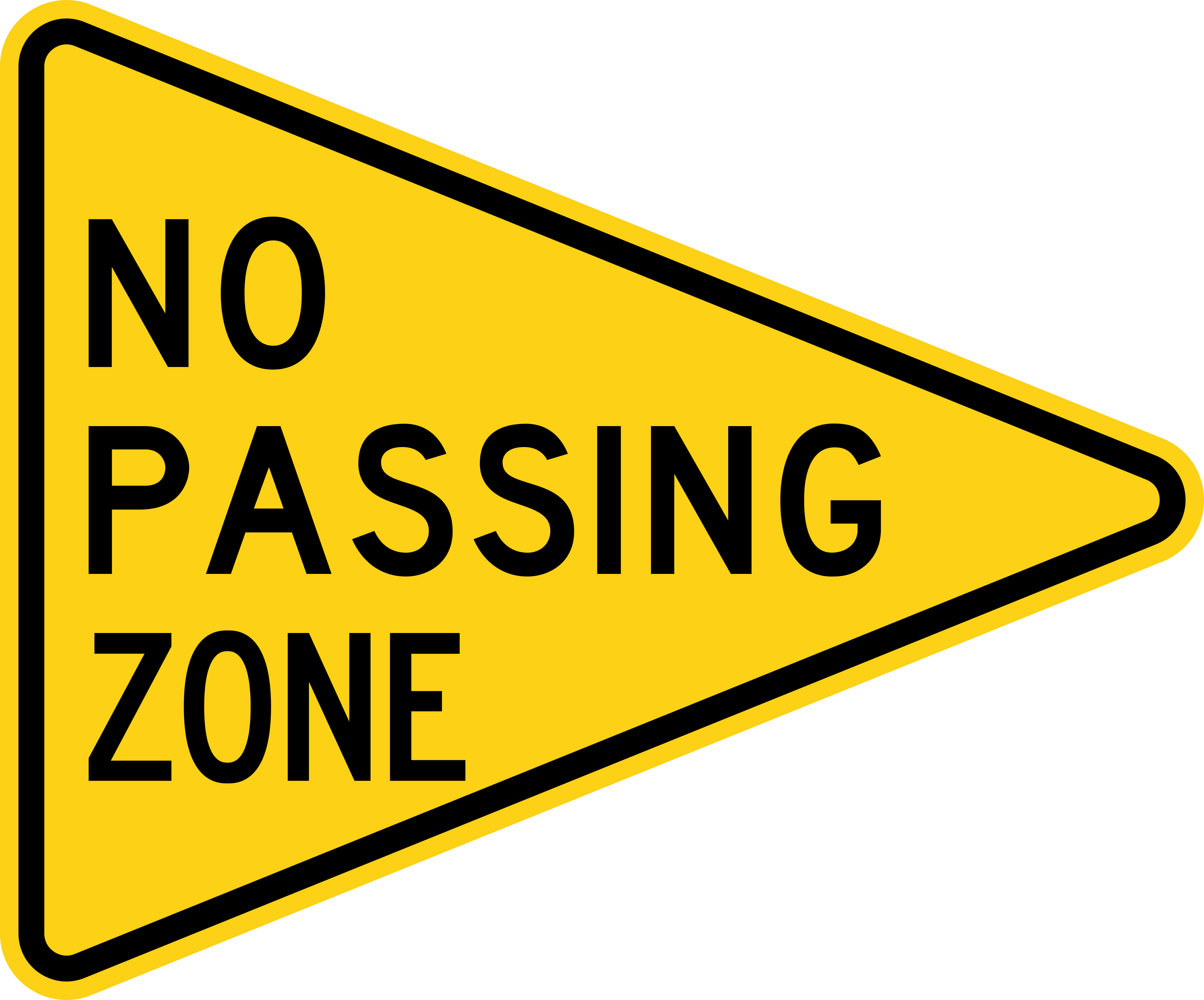
- On the right side of every multilane roadway
- Above the entrance to a parking garage
- On the left side of a two-lane, two-way roadway
- At the end of a railroad crossing
Show answer
On the left side of a two-lane, two-way roadway. Illinois describes the no-passing sign as a three-sided yellow sign with black letters. Full explanation in Test 6
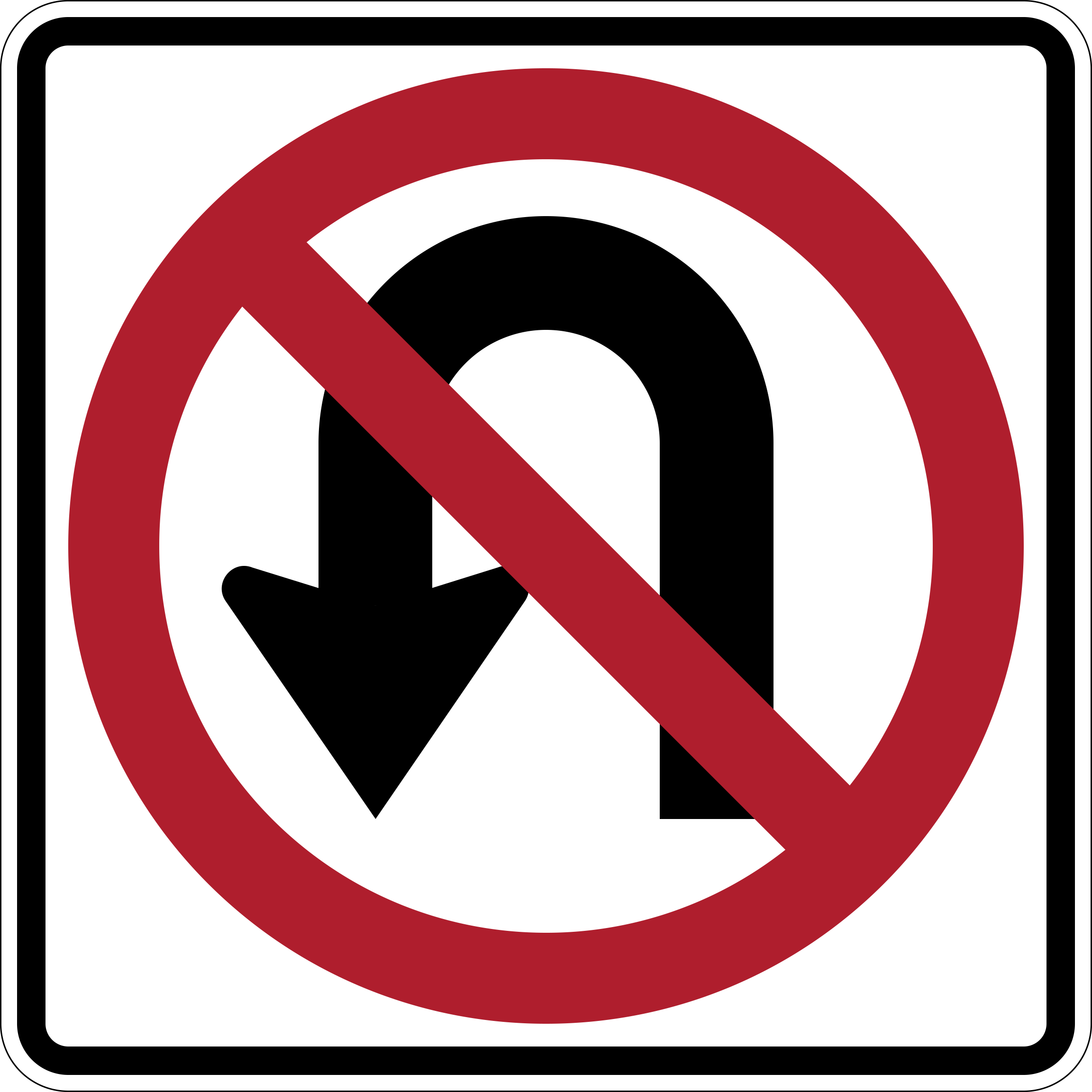
27. What movement is prohibited by an Illinois NO U-TURN sign?
- Making a left turn at a normal intersection
- Stopping at the shoulder to check directions
- Changing lanes before a divided highway begins
- Turning the vehicle around to travel in the opposite direction
Show answer
Turning the vehicle around to travel in the opposite direction. A NO U-TURN sign prohibits the U-shaped movement that reverses the vehicle's direction. Full explanation in Test 7
28. Within what distance of an intersection or railroad crossing is passing banned on an Illinois two-lane road?
- 50 feet
- 100 feet
- 200 feet
- 500 feet
Show answer
100 feet. On an Illinois two-lane, two-way road, passing is not allowed within 100 feet of an intersection or railroad crossing, or within 100 feet of Full explanation in Test 8
29. What is an Illinois Occupational Driving Permit?
- A permit for farm equipment
- A permit for drivers under 16
- A permit letting a professional driver suspended for three moving violations drive for work
- A permit to drive after a DUI without an interlock
Show answer
A permit letting a professional driver suspended for three moving violations drive for work. An Occupational Driving Permit allows a professional driver whose license has been suspended for three moving violations to operate a vehicl Full explanation in Test 9
30. When must an Illinois driver use headlights because of windshield wiper operation?
- Only when wipers have been running for ten minutes
- Only when another vehicle flashes its headlights
- Only after sunset, even if the wipers are on during daylight
- Whenever the driver is operating the windshield wipers
Show answer
Whenever the driver is operating the windshield wipers. Illinois ties headlight use to the operation of windshield wipers. Full explanation in Test 10
31. How should a driver treat an intersection when its traffic signals are not working?
- As a green light unless another vehicle is visible
- As a flashing yellow signal with no required stop
- As an all-way stop, coming to a complete stop and yielding before entering
- By driving around the signal without entering the intersection
Show answer
As an all-way stop, coming to a complete stop and yielding before entering. A failed traffic signal does not create an uncontrolled intersection. Full explanation in Test 1
32. Which cellphone action is a violation of Illinois law while driving?
- Reporting an emergency with a cellphone
- Using a cellphone while holding the device and using the speaker phone
- Using a cellphone while parked on the shoulder
- Using a cellphone while stopped because traffic is obstructed, with the vehicle in park
Show answer
Using a cellphone while holding the device and using the speaker phone. Using a cellphone while holding it and using speaker phone is still not hands-free under Illinois law, so that action is prohibited while dr Full explanation in Test 2
33. What is required when entering an Illinois highway construction or maintenance area?
- Maintain the normal speed if workers are not visible
- Slow down, yield to authorized vehicles or workers, move away from workers when possible, and proceed cautiously
- Use a handheld cellphone to report the work zone while driving
- Pass through the work area on the shoulder
Show answer
Slow down, yield to authorized vehicles or workers, move away from workers when possible, and proceed cautiously. Illinois work zone duties apply when approaching or entering a highway construction or maintenance area. Full explanation in Test 3
34. When entering a roundabout, whom must a driver yield to?
- Only vehicles approaching from the left
- All traffic, including pedestrians and bicycles
- No one, because entering traffic has priority
- Only vehicles already stopped outside the circle
Show answer
All traffic, including pedestrians and bicycles. Vehicles entering or exiting an Illinois roundabout must yield to all traffic, and the manual specifically includes pedestrians and bicycles Full explanation in Test 4
35. After a crash damages an unattended vehicle in Illinois, what should the driver do first?
- Move the unattended vehicle before stopping
- Leave immediately to avoid blocking the roadway
- Stop in an area away from traffic
- Wait for the owner without securing the scene
Show answer
Stop in an area away from traffic. For a crash involving damage to an unattended vehicle or other property, Illinois directs the driver to stop in an area away from traffic. Full explanation in Test 5
