Every question below comes from the Idaho question bank on this page. Open a question to see the correct answer and the explanation. Nothing here is hidden behind a signup.
1. What should you do on seeing a steady yellow circular traffic indication before entering the intersection?
- Stop safely if you have not entered the intersection
- Accelerate because yellow guarantees extra crossing time
- Treat it as permission to turn without checking traffic
- Stop only if a pedestrian is visible
Show answer
Stop safely if you have not entered the intersection. A steady yellow circular light warns that the signal is about to change to red. Full explanation in Test 1
2. When may opposite-direction traffic pass a stopped school bus without stopping?
- Whenever the bus is stopped less than one minute
- On any rural road with a visible bus
- On a highway with four or more lanes when two lanes travel in each direction
- Only when the bus driver waves traffic through
Show answer
On a highway with four or more lanes when two lanes travel in each direction. A stopped school bus displaying flashing red lights normally requires approaching traffic to stop. Full explanation in Test 2
3. Under Idaho's basic rule, which driving behavior can violate the law even when the vehicle is below the posted limit?
- Driving at the posted limit during clear weather
- Driving 5 mph below the limit on an empty road
- Driving slowly enough to impede the safe flow of traffic
- Driving below the limit while leaving extra space
Show answer
Driving slowly enough to impede the safe flow of traffic. Idaho treats speed as a safety judgment, not merely a comparison with a sign. Full explanation in Test 3
4. Why might the pictured traffic-signal-ahead sign be installed on a road?
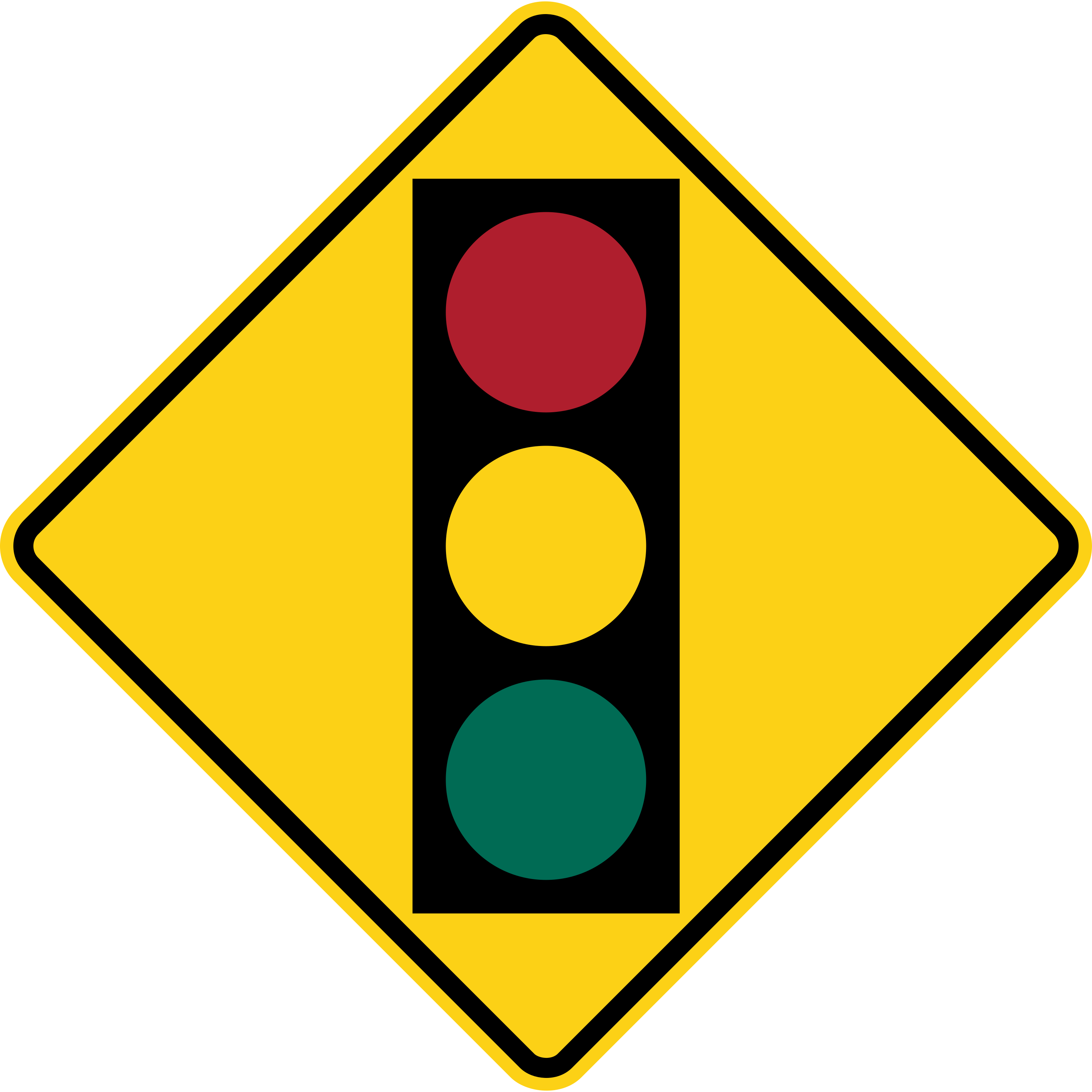
- The intersection or signal view is blocked or traffic speeds are higher
- The road has no intersections for several miles
- Streetlights are permanently out of service
- A police checkpoint is guaranteed beyond the sign
Show answer
The intersection or signal view is blocked or traffic speeds are higher. Idaho uses the traffic-signal-ahead warning on higher-speed roads or where a driver’s view of the intersection or light is blocked. Full explanation in Test 4
5. When turning left on a green circular signal, which traffic must you yield to before turning?
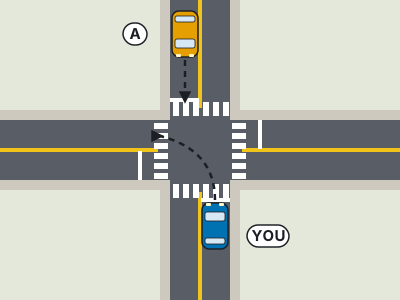
- No one, because a green signal protects every left turn
- Only vehicles approaching from the right
- Oncoming traffic and pedestrians in crosswalks
- Only pedestrians who are outside the crosswalk
Show answer
Oncoming traffic and pedestrians in crosswalks. A green circular signal permits movement, but it does not protect a left turn from conflicts. Full explanation in Test 5
6. Which Idaho vehicles must have flashing electric turn signals?
- All vehicles regardless of age
- Only vehicles built after 1980
- Only commercial vehicles
- All motor vehicles built after January 1, 1955, visible from 100 feet front and rear
Show answer
All motor vehicles built after January 1, 1955, visible from 100 feet front and rear. All motor vehicles built after January 1, 1955 must have flashing electric left and right turn signals on the front and rear, visible from 1 Full explanation in Test 6
7. What does Idaho require of a driver during the GDL supervised instruction period?
- Observe all laws regarding alcohol and other intoxicating substances
- Avoid alcohol only while carrying passengers
- Follow alcohol rules only after dark
- Carry a zero BAC permit from the county
Show answer
Observe all laws regarding alcohol and other intoxicating substances. The supervised period carries a broad obligation concerning alcohol and intoxicating substances. Full explanation in Test 7
8. Why does the Idaho handbook say a 12 foot lane cannot be shared with a bicyclist?
- Bicycles are banned from 12 foot lanes
- Bicyclists must ride on the sidewalk
- It is not wide enough to pass safely, so change lanes to pass
- Because cyclists ride in the center by law
Show answer
It is not wide enough to pass safely, so change lanes to pass. A typical 12 foot wide travel lane is not wide enough to safely share with a bicyclist, and cycling instructors teach riders to stay away fr Full explanation in Test 8
9. After stopping for a flashing red indication, when may a driver proceed?
- Immediately, because flashing signals do not control traffic
- After yielding to cross traffic and pedestrians, when the way is clear
- Only after another driver waves the vehicle through
- Only when the signal changes to solid green
Show answer
After yielding to cross traffic and pedestrians, when the way is clear. A flashing red indication has the same stopping effect as a stop sign. Full explanation in Test 9
10. Which Idaho license applicants are required to complete an approved Driver Training program?
- Every first time applicant, whatever their age
- Only applicants under 16
- Anyone under 17 who is applying for an Idaho driver's license
- Only applicants who have failed the skills test
Show answer
Anyone under 17 who is applying for an Idaho driver's license. Idaho requires Driver Training for anyone under 17 years of age who applies for a driver's license. Full explanation in Test 10
11. Who may attend Idaho's Alive at 25 defensive driving course?
- Drivers over 65
- Only drivers with a DUI
- Drivers who are 15 through 24 years old
- Only commercial drivers
Show answer
Drivers who are 15 through 24 years old. Alive at 25 is a defensive driving course offered for those who are 15 through 24 years old, presented by law enforcement with traffic safet Full explanation in Test 1
12. What maximum speed may be posted for travel on an urban interstate in Idaho?
- 65 miles per hour
- 55 miles per hour
- 70 miles per hour
- 80 miles per hour
Show answer
65 miles per hour. Idaho permits travel up to 65 miles per hour on urban interstate highways when the road is designated for that speed and conditions permit, Full explanation in Test 2
13. When may a pedestrian have to yield to a motor vehicle?
- Whenever the pedestrian is walking more slowly than traffic
- Whenever the driver sounds the horn first
- Only when the pedestrian is outside a city
- When crossing where there is no crosswalk or intersection, or when directed by a traffic signal
Show answer
When crossing where there is no crosswalk or intersection, or when directed by a traffic signal. Idaho lists two circumstances in which a pedestrian must yield to motor vehicles: crossing a street where there is no crosswalk or intersect Full explanation in Test 3
14. For a first DUI conviction in Idaho, what are the maximum jail term and fine listed in the handbook?
- Up to one year in jail and up to a $2,000 fine
- Up to six months in jail and up to a $1,000 fine
- Up to ten years in jail and up to a $5,000 fine
- No jail and a flat $250 civil penalty
Show answer
Up to six months in jail and up to a $1,000 fine. A first Idaho DUI conviction carries up to six months in jail and up to a $1,000 fine, plus a license suspension. Full explanation in Test 4
15. At night, how far ahead should low beams allow a driver to see the roadway?
- About 25 feet
- About 100 feet
- About 350 feet
- About 1,000 feet
Show answer
About 100 feet. The handbook distinguishes the visibility distances produced by the two headlight settings. Full explanation in Test 5
16. When making a left turn, which traffic must you yield to unless a device directs otherwise?
- No traffic because the turning vehicle has priority
- Only vehicles stopped behind you
- Vehicles approaching from the same direction only
- Oncoming traffic in the intersection
Show answer
Oncoming traffic in the intersection. A left turn crosses the path of vehicles coming toward you, so the turning driver must wait for that traffic to clear. Full explanation in Test 6
17. Under Idaho's open container law, where must an unsealed alcoholic beverage be carried in a vehicle?
- In the trunk, or behind the last upright seat if there is no trunk
- In the glove compartment
- Under the front passenger seat
- Anywhere, as long as only a passenger holds it
Show answer
In the trunk, or behind the last upright seat if there is no trunk. Idaho's open container law bars both drivers and passengers from drinking or possessing an open container of alcohol. Full explanation in Test 7
18. When may an Idaho bicyclist proceed through a red light?
- After stopping and yielding to vehicles already in or approaching the intersection, with caution
- Never
- Whenever no car is directly ahead
- Only when a police officer waves
Show answer
After stopping and yielding to vehicles already in or approaching the intersection, with caution. Idaho law lets bicyclists proceed with caution through a red light after stopping and yielding the right of way to vehicles already in the i Full explanation in Test 8
19. In Idaho's fee table for a commercial driver's license (CDL), what does the skills test cost?
- $5 total
- $25 total
- It is free
- $10 to the county DMV plus up to $190 to the skills test examiner
Show answer
$10 to the county DMV plus up to $190 to the skills test examiner. Idaho's fee table for a commercial driver's license lists the skills test as $10 paid to the county DMV plus up to $190 paid to the skills t Full explanation in Test 9
20. What does a flashing yellow arrow permit when turning?
- A turn only after waiting for a second green arrow
- A turn without checking for pedestrians because the arrow has priority
- A protected turn that requires oncoming traffic to stop
- A turn after yielding to oncoming traffic and pedestrians in the crosswalk
Show answer
A turn after yielding to oncoming traffic and pedestrians in the crosswalk. A flashing yellow arrow allows the turn, but it is permissive rather than protected. Full explanation in Test 10
21. A driver stops on the highway because the vehicle has stalled. Which action helps other drivers see it?
- Leave the vehicle unmarked with the hood closed
- Stand in the travel lane and wave vehicles around
- Park just beyond a hill so approaching traffic cannot react
- Turn on the emergency flashers and lift the hood
Show answer
Turn on the emergency flashers and lift the hood. For a stalled vehicle, Idaho advises pulling completely off the road when possible, turning on the emergency flashers, and lifting the hood Full explanation in Test 1
22. When does an Idaho administrative license suspension take effect after the notice is served?
- Immediately when the notice is served
- 7 days after the date of service
- 30 days after the date of service
- Only after a criminal DUI conviction
Show answer
30 days after the date of service. The notice of suspension becomes effective 30 days after the date of service, which is the date the driver received it. Full explanation in Test 2
23. Where is the pennant-shaped No Passing Zone sign placed, and what does it warn?
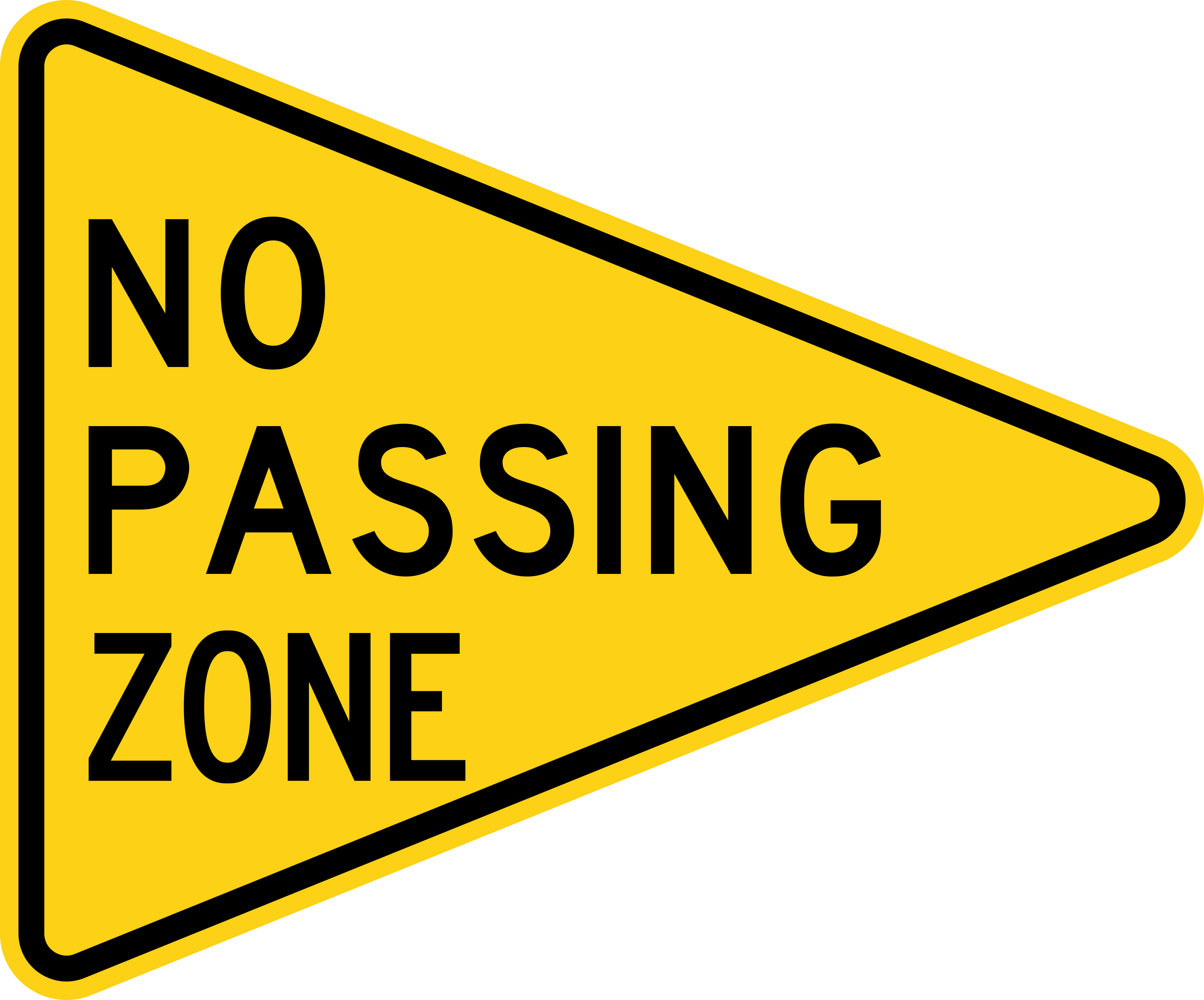
- On the right side, marking a permitted passing section
- On the left side, warning that passing is prohibited for your lane
- Above the road, identifying a mandatory truck route
- At the shoulder, showing that a bridge is open to bicycles only
Show answer
On the left side, warning that passing is prohibited for your lane. Idaho uses the unusual pennant shape for a No Passing Zone warning. Full explanation in Test 3
24. In daylight, what must mark a load that extends four feet or more beyond the rear of an Idaho vehicle?
- An orange triangle on the rear bumper
- A red flag at least 12 inches square at the end of the load
- A red flag at least 18 inches square at the end of the load
- Nothing, if the load is tied down securely
Show answer
A red flag at least 18 inches square at the end of the load. A load that sticks out four feet or more behind a vehicle must carry a red flag at least 18 inches square at its end. Full explanation in Test 4
25. What is the minimum space the Idaho handbook says a driver should leave when passing a bicyclist?
- 3 feet
- 1 foot
- 2 feet
- No set space, as long as you honk first
Show answer
3 feet. The Idaho handbook sets three feet as the minimum passing space when passing a bicyclist, and higher speeds call for more. Full explanation in Test 5
26. After stopping at a steady red light, when may a driver generally turn right?
- After yielding to cross-traffic, unless a sign prohibits the turn
- Whenever the driver has waited at least five seconds
- Before stopping, if no pedestrian is visible
- Only when a green arrow appears, even if no restriction is posted
Show answer
After yielding to cross-traffic, unless a sign prohibits the turn. Idaho permits a right turn at a steady red light after the driver stops and yields to cross-traffic, unless the location is posted otherwise Full explanation in Test 6
27. What does a double solid yellow centerline allow?
- Passing is allowed across the lines whenever visibility is good
- Crossing is allowed to merge into the opposite lane before a turn
- Passing a slow vehicle is allowed if the driver signals first
- Crossing is allowed for a safe left turn into or out of a driveway or business entrance
Show answer
Crossing is allowed for a safe left turn into or out of a driveway or business entrance. Two solid yellow lines mark a no-passing condition for both directions. Full explanation in Test 7
28. Before entering an Idaho roundabout, to whom must you yield?
- Vehicles behind you on the approach road
- Only vehicles approaching from the right outside the circle
- No one, because entering traffic has priority
- Vehicles already circulating in the roundabout, plus pedestrians and bicyclists
Show answer
Vehicles already circulating in the roundabout, plus pedestrians and bicyclists. A roundabout is one-way and traffic already in the circle has priority over entering traffic. Full explanation in Test 8
29. What should you do if your vehicle begins to skid?
- Take your foot off the gas and steer in the direction of the skid
- Pump the brakes repeatedly while looking away from the roadway
- Accelerate sharply to force the rear wheels straight
- Turn opposite the skid and hold the brake down
Show answer
Take your foot off the gas and steer in the direction of the skid. During most skids, Idaho advises removing your foot from the accelerator and steering toward the direction the vehicle is sliding. Full explanation in Test 9
30. An emergency vehicle approaches with a siren or flashing red or blue lights. Where should you stop?
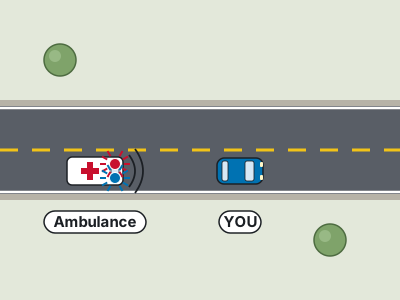
- In the nearest travel lane, even if it blocks the intersection
- At the next traffic light, without changing speed
- On the left shoulder so the emergency vehicle can pass on the right
- At the nearest right curb or roadway edge, clear of the intersection
Show answer
At the nearest right curb or roadway edge, clear of the intersection. Idaho requires a driver to stop for an approaching emergency or police vehicle and pull right to the nearest edge or curb. Full explanation in Test 10
31. How should a driver respond to a flashing yellow circular traffic signal?
- Stop and remain stopped until a green light appears
- Treat it as a flashing red signal and yield after stopping
- Accelerate because cross traffic must stop
- Slow down, check carefully for hazards, and proceed with caution
Show answer
Slow down, check carefully for hazards, and proceed with caution. A flashing yellow circular indication is a caution signal, so the driver should reduce speed, scan for conflicts, and continue only when the Full explanation in Test 1
32. What should a driver expect after seeing the pictured five-sided school warning sign?

- A park entrance with no crossing activity
- Children and a marked school crossing nearby
- A railroad platform at the next block
- A lane reserved for school buses only
Show answer
Children and a marked school crossing nearby. The five-sided school sign marks a school area with a crossing. Full explanation in Test 2
33. Two vehicles reach a four-way stop at exactly the same time. Which driver must yield?
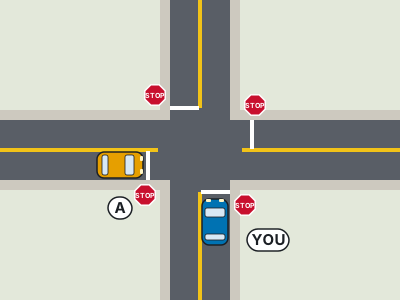
- The driver on the left yields to the driver on the right
- The driver on the right yields to the driver on the left
- The driver turning left always goes first
- The larger vehicle has priority
Show answer
The driver on the left yields to the driver on the right. When arrival is simultaneous at a four way stop, the vehicle on the left must yield to the vehicle on the right. Full explanation in Test 3
34. How does Idaho classify a third DUI conviction within 10 years?
- As an infraction with a fine only
- As a felony
- As a civil penalty handled by ITD alone
- As a misdemeanor that is sealed after one year
Show answer
As a felony. A third or later DUI conviction within 10 years is a felony in Idaho. Full explanation in Test 4
35. Under Idaho's passing exception on a two lane road posted 55 mph or higher, by how much may an eligible driver exceed the limit while passing a slower vehicle?
- Up to 5 mph
- Up to 10 mph
- Up to 15 mph
- Up to 25 mph
Show answer
Up to 15 mph. Idaho lets the driver of a passenger vehicle, motorcycle, or pickup that is not towing exceed the posted limit by up to 15 miles per hour wh Full explanation in Test 5
36. What should a driver never do when approaching someone riding a horse?
- Stop if necessary to prevent a hazard
- Slow down before passing
- Allow plenty of room
- Sound the horn
Show answer
Sound the horn. Idaho warns drivers never to sound the horn near a horseback rider because the noise may frighten the horse and cause an accident. Full explanation in Test 6
37. What is the safest response when a pedestrian unexpectedly enters the roadway?
- Sound the horn and steer toward the pedestrian to claim the lane
- Maintain speed because pedestrians must always yield outside a marked crosswalk
- Use extreme caution, reduce speed, and be prepared to stop
- Pass a stopped vehicle that is yielding in the adjacent lane
Show answer
Use extreme caution, reduce speed, and be prepared to stop. Idaho emphasizes that pedestrians can appear unexpectedly and that a driver must use extreme caution in areas where they may be present. Full explanation in Test 7
38. At what age can an Idaho teen get a Driver Training Permit to attend a driver training program?
- From 13 1/2, as long as the teen is enrolled in school
- From 14 1/2 up to, but not including, 17
- Only at exactly 16
- Only after turning 18
Show answer
From 14 1/2 up to, but not including, 17. The Driver Training Permit is the first step for young Idaho drivers and is open to anyone from 14 1/2 up to, but not including, age 17. Full explanation in Test 8
39. Which cars does Idaho's child safety seat law apply to?
- All cars regardless of year
- Only cars built after 2000
- Cars manufactured with safety belts after January 1, 1966
- Only cars with rear seats
Show answer
Cars manufactured with safety belts after January 1, 1966. Idaho law requires anyone carrying children 6 years of age or younger in a non commercial motor vehicle to protect them in approved child ca Full explanation in Test 9
40. How long must an Idaho driver keep an SR-22 on file after a suspension for a serious offense?
- Three years
- One year
- 30 days
- Ten years
Show answer
Three years. If your license was suspended for certain serious offenses such as reckless driving or driving under the influence, you must provide proof o Full explanation in Test 10
